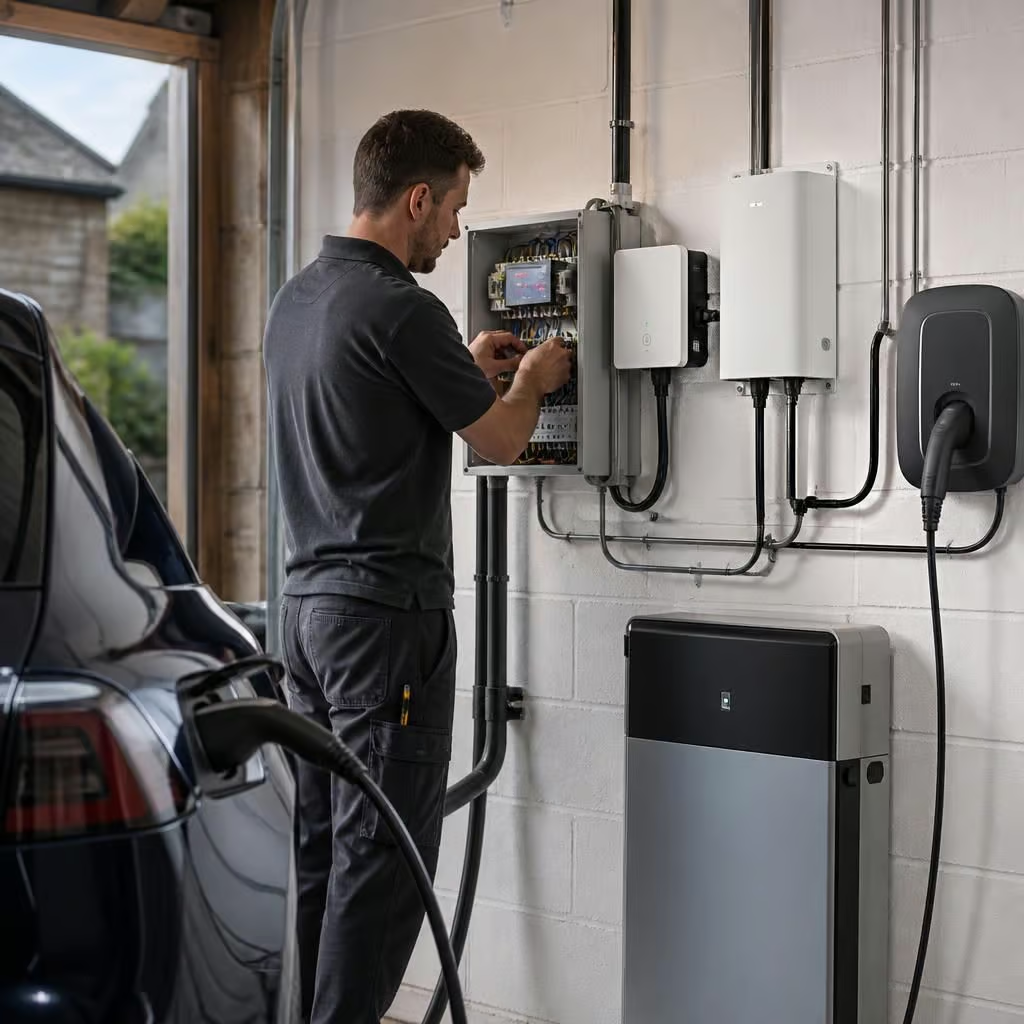
What does a bidirectional EV charger installation involve?
A bidirectional EV charger installation starts with checking your vehicle, consumer unit, electricity supply and existing energy equipment. We then install the charger, protection and cabling, configure the smart controls for vehicle-to-home use, and test the system before explaining how to operate it.
A bidirectional EV charger installation is planned around the whole energy system, not just the parking space. We confirm that the vehicle supports two-way charging, assess the home’s electrical capacity, plan the cable route and set up the controls that decide when energy flows into or out of the car.
First, we establish what the vehicle can do. A standard EV charger cannot automatically discharge a car battery. The vehicle, charger and control system must support the same bidirectional function. We check the vehicle’s compatibility, connection requirements and manufacturer conditions before recommending equipment. This prevents you paying for a charger that can charge the car but cannot supply energy back to the home.
Your existing electrical installation also affects the design. We inspect the consumer unit, earthing, available capacity and the proposed charger position. Older properties may need improvements to the consumer unit, cable route or earthing arrangement before the charger can be connected safely. We explain any required work before installation, rather than treating it as an unexpected addition on the day.
The charger position needs more thought than a convenient point beside the drive. We consider the distance from the consumer unit, the route through walls or loft spaces, protection from vehicle impact and how the cable will look inside and outside. If the parking space is away from the house, we plan the buried or surface-mounted cable route and identify any access work needed.
We also map the home’s other energy equipment. Solar panels, a home battery, an immersion heater or an electric heating system can all affect how the car should charge and discharge. We configure the energy controls so the system follows the agreed priorities, such as using available solar generation, retaining charge for later or supplying selected household loads.
On installation day, the work normally includes:
- isolating the relevant circuits and preparing the consumer unit;
- installing the charger and running the power and data cables;
- fitting the monitoring equipment needed to measure household demand;
- connecting the charger to the vehicle and energy-management controls;
- checking protective devices, earthing, cable termination and communication links; and
- testing charging, discharge controls and the agreed operating settings.
The charger may need a reliable internet connection for remote monitoring, software updates or energy scheduling. We check the signal at the proposed location and explain what happens if the connection drops. The vehicle should still remain safe, but some smart functions may be unavailable until communication is restored.
Bidirectional charging can place different demands on the electrical installation from ordinary overnight charging. We set the maximum charge and discharge rates to suit the vehicle, charger and home supply. The controls can also limit the charger when other large loads are running, reducing the risk of exceeding the property’s available electrical capacity.
Your car’s settings and the charger’s settings must agree after commissioning. We show you how to select charging schedules, set reserve levels and choose when the vehicle can discharge. We also explain which functions depend on the car being connected, having sufficient battery charge and meeting the conditions set by its manufacturer.
The installation is usually planned to keep disruption to the necessary electrical work and cable installation. We protect working areas, keep cable routes as neat as the building allows and test the system before leaving. Any changes to the consumer unit or internal wiring are recorded in the electrical paperwork, so you have a clear record of what was installed.
Because this is electrical work connected to the fixed installation, we carry it out under the relevant NICEIC requirements. You receive a written quotation before work starts, setting out the equipment, installation work and any alterations needed to make the system suitable. The final result is a commissioned charger with controls you understand, rather than a unit that has simply been fixed to the wall.
The charger may need more physical space than a conventional EV charge point because bidirectional systems can include additional control equipment. During the survey, we identify a suitable location for each component and check that the finished installation remains accessible for inspection or replacement. That avoids placing essential equipment behind stored items, in a cramped cupboard or where later electrical work would be difficult.