
Will I need approval before installing a bidirectional EV charger?
In most cases, a bidirectional EV charger needs approval or notification from your electricity network operator before installation, because it can export power to the grid. Planning permission is not usually required for a standard home installation, but listed buildings, conservation areas and unusual external equipment may need additional consent; we check the position and handle the relevant electrical paperwork.
Approval is usually needed before a bidirectional charger can export electricity. The exact route depends on the charger’s certified export capacity, the connection at your property and your Distribution Network Operator’s requirements.
This is different from choosing an electricity supplier. The DNO owns and manages the local network, and checks whether exporting power from your vehicle could affect the supply serving nearby properties. We submit the technical details for the charger, its export settings and the proposed connection so the DNO can confirm how the installation should proceed.
The application may follow the G98 or G99 process. The correct route depends on the equipment and its export characteristics. Some installations can use a notification process, while others need approval before any work connects the charger to the property’s electrical system. We confirm this from the manufacturer’s technical information rather than assuming that a standard EV charger process applies.
Your charger may also need an export limitation setting. This restricts the electricity sent to the grid if the DNO will not accept the charger’s full output. That limitation must be configured, tested and left in a condition that prevents the agreed export level being exceeded. It is not something to bypass later to increase the available power.
The DNO may ask for further information about the incoming supply, the consumer unit, the cable route and any existing generation or storage. An older property may need electrical work before the charger is suitable. For example, the supply arrangement, earthing, protective devices or consumer unit may need checking alongside the bidirectional equipment.
Planning permission is a separate issue from DNO approval. A chargepoint on a typical house may fall within permitted development rules, but the position and appearance still matter. Listed buildings, conservation areas, flats, shared parking spaces, outbuildings and properties with unusual cable routes can change the position. A landlord, freeholder or managing agent may also need to agree the work.
Building control requirements can depend on the property and the nature of the alteration. The electrical installation still needs to comply with the current wiring requirements, with suitable protection against faults and the conditions created by charging and exporting power. Our NICEIC and ECA electrical experience covers the inspection, testing and certification needed for the installation.
Before installation, we check four separate points:
- the vehicle supports the intended bidirectional charging function;
- the charger has the certification and settings needed for grid connection;
- the property’s supply and consumer unit can accommodate the equipment; and
- the DNO and any relevant planning, building or property permissions have been dealt with.
The DNO may approve the connection as proposed, require export limitation or request changes before approval. If network reinforcement appears necessary, we explain what it means for the work and the quotation before proceeding. We do not connect the export function on the assumption that approval will follow.
You receive the relevant electrical test results and connection paperwork when the installation is complete. If approval is still pending, the charger may need to remain configured for charging only until the DNO has confirmed that export can begin. That protects the network and avoids putting you in breach of the connection conditions.
A site survey gives the clearest answer because approval cannot be judged from the charger alone. We assess the supply, equipment location, cable route and property restrictions, then set out which permissions apply and what needs to happen before the bidirectional function is switched on.
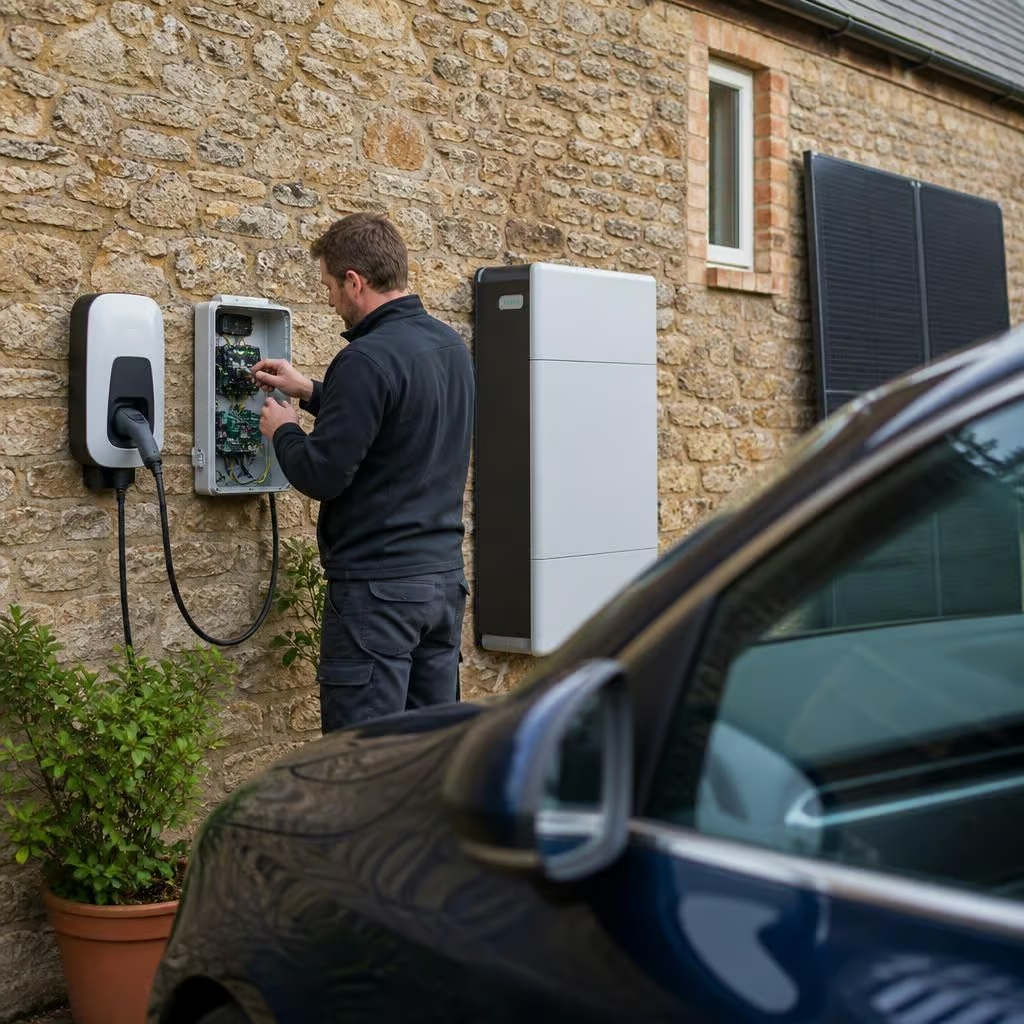
If your home already has solar panels or a battery, the bidirectional charger is assessed alongside them. The DNO may need the combined export capacity, rather than the charger’s output alone, so we include the existing equipment in the application.
Your export tariff does not replace DNO approval. We check that the agreed settings work with the existing system and explain any changes needed before the vehicle can send electricity to the grid.