
Can any electric car use any smart EV charger type?
Most electric cars can use a home smart charger, but the connector, onboard AC charging capacity and vehicle requirements must match. We check those details before recommending a charger, so you get the smart features your car can use without paying for charging capability it cannot accept.
Not every electric car can use every smart charger feature, even when it can plug into the charger and charge normally. The important distinction is between basic charging compatibility and advanced control.
Your car may accept a standard smart AC charging session but not communicate with every charger app or energy tariff. Some vehicles allow a charger to set a schedule, adjust the charging rate or respond to cheaper electricity prices. Others only accept the charge and leave all timing controls to the car or the charger.
The physical connection is the first check. Most newer electric cars use a Type 2 connection. Some older cars and plug-in hybrids use Type 1. A tethered charger has its own attached cable, while an untethered charger needs a separate lead that matches the car. We confirm the correct arrangement rather than relying on the word “universal” in a product description.
An adapter can sometimes connect a Type 1 car to a Type 2 charger, but it must be suitable for the charging equipment and the vehicle. A casual travel adapter is not an acceptable substitute. We check the connector, locking arrangement and charging communication before recommending one.
Your car’s AC charging system sets the practical speed. A charger may be capable of supplying more power than the vehicle can accept. The car then limits the session, so installing a higher-rated charger does not necessarily make that car charge faster. The same applies if the property’s electrical supply cannot support the requested load.
Three-phase charging creates another compatibility point. Your car must support it, and the property must have a suitable electrical supply and installation. If either is missing, the charger will operate at the lower available rate.
Smart functions vary from car to car. A charger may offer:
- scheduled charging during selected hours;
- automatic adjustment when the household is using other appliances;
- charging linked to a time-of-use electricity tariff;
- solar-surplus charging where the system can measure available generation; and
- remote monitoring through a charger or vehicle app.
Your car may support some of these functions but not others. For example, basic scheduled charging can often be controlled by the charger without deep integration with the vehicle. Tariff-led charging may need access to the vehicle’s battery state and charging status. Solar-led charging also depends on the charger receiving reliable information from the home energy system.
Some vehicles have their own charging timer. If that timer conflicts with the charger’s schedule, the car may refuse to start or stop earlier than expected. We check which device should control the schedule and set the system accordingly. That avoids having two separate apps issue competing instructions.
Older vehicles can still work well with a smart charger. They may simply use fewer of its connected features. A car does not need to support every cloud service for the charger to provide controlled AC charging, load management or a reliable start-and-stop schedule.
Plug-in hybrids need a slightly different assessment. Their smaller batteries and lower AC charging limits can make a powerful charger unnecessary. The right choice depends on the car’s charging limit, how far you drive and whether you want to use scheduled or tariff-based charging.
We check the exact make, model and model year, the car’s charging limit, the connector, the preferred cable arrangement and the features you want to use. We also look at the consumer unit, cable route, available electrical capacity and home network where connected functions depend on it. That gives you a charger that works with the car you have, rather than paying for features it cannot use.
If you change cars later, a compatible charger will usually continue to provide ordinary AC charging, but the available smart functions may change with the replacement vehicle. We explain that limitation before the installation so the decision is based on how you expect to charge over time.
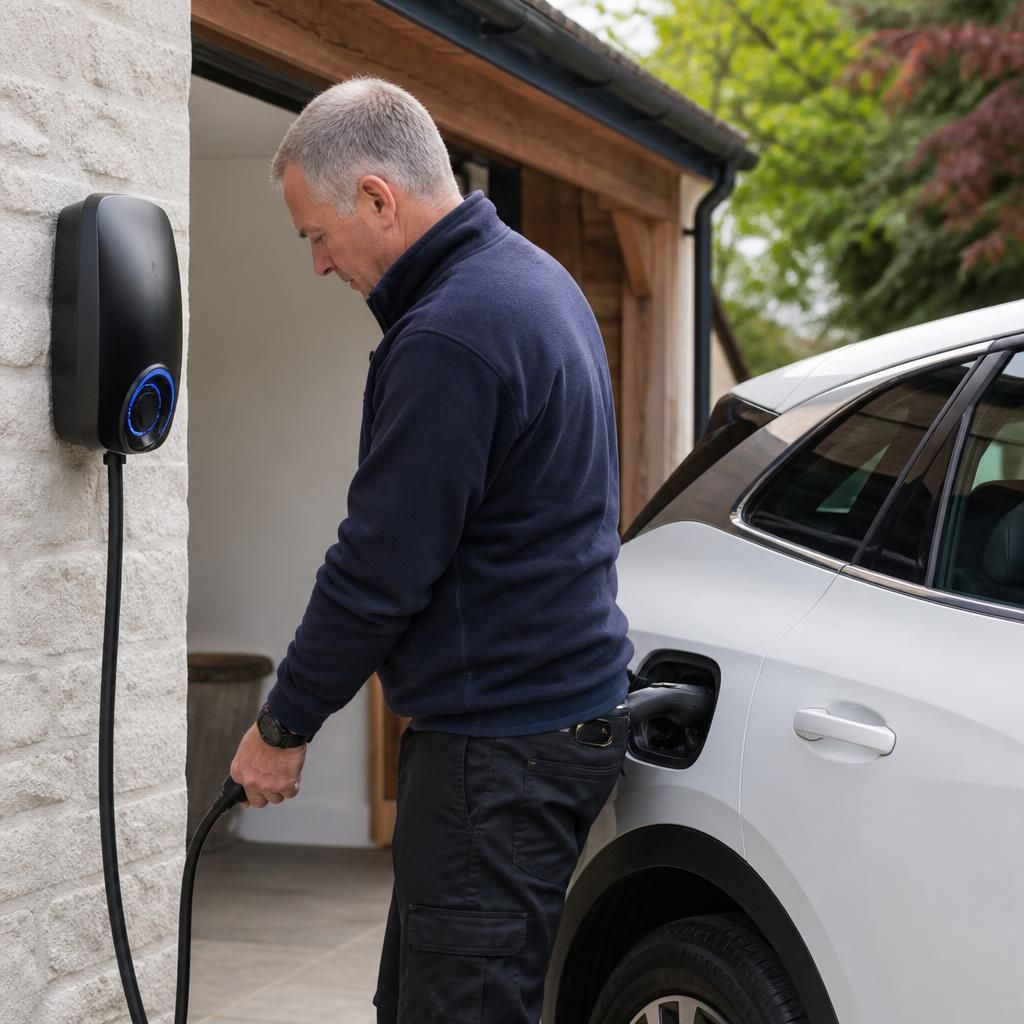
Compatibility is not fully proven until the charger and car have been tested together. At commissioning, we check that the car starts charging, stops correctly and responds to the selected controls. We also check that the cable locks and releases as expected.
If the car’s connected features are limited, the charger can still provide ordinary home charging. We explain which functions are available and show you how to override a schedule or start a charge manually. That leaves you with a system you can use confidently, rather than an app full of controls your car cannot support.