
How disruptive is installing a smart EV charger at home?
Installing a smart EV charger is usually a contained job, with the main disruption coming from routing the cable between the consumer unit and the parking space. We assess access, cable length and any required consumer-unit work beforehand, then explain what drilling, lifting or making-good the installation will involve.
For most homes, the main interruption is a short period without power while we connect and test the charger. The wider work depends on the route between the charger, the consumer unit and the electricity supply.
Before installation, we check the parts of the property that affect the work. These include:
- the position of the parking space and charger;
- the distance to the consumer unit;
- the wall, floor or ceiling construction along the cable route;
- the condition and capacity of the existing electrical installation;
- the position of any solar inverter, battery or other high-load equipment; and
- the strength of the Wi-Fi signal where the charger will operate.
This tells us whether the cable can run internally, along an external wall, through a loft space or within protective conduit. A surface-mounted route may be the least disruptive option. Concealing the cable usually involves more drilling and making good, particularly in solid walls, stonework or older properties.
Your consumer unit may need additional protection or an upgrade before the charger can be connected. We explain this before work starts rather than treating it as an unexpected extra. If the existing installation cannot safely support another substantial electrical load, we may recommend load management or other changes so the charger works alongside the rest of the house.
The installation itself normally involves four stages.
- We protect the working area and agree the cable route with you.
- We install the cable, protective equipment and charger, taking care around finishes, insulation and external surfaces.
- We connect the charger to the electrical installation and configure its smart functions.
- We carry out electrical tests, check the charging operation and explain the controls and app.
The power may need to be isolated while we work on the consumer unit. That interruption is planned with you, and we tell you which parts of the property it will affect. Your vehicle does not need to be connected during the electrical work, but it should be available for the final charging check if the installation arrangement allows it.
Smart features need a reliable connection as well as a sound electrical installation. If the charger cannot communicate with the home network, scheduled charging, usage monitoring or tariff-based controls may not work as intended. We check the connection during commissioning and make clear where a Wi-Fi limitation belongs to the home network rather than the charger installation.
Driveway and detached-garage installations can involve more disruption. A cable may need to cross an external wall, garden or drive. If trenching, core drilling or other ground work is required, we identify that separately because it can affect the programme and the finish. You should not assume that a charger can be fitted at the preferred parking position without considering the route back to the electrical supply.
Properties with stone walls, solid construction, rendered elevations or sensitive finishes need a little more planning. We select a practical route that protects the cable and avoids unnecessary damage. If the property is listed or subject to other restrictions, external alterations may need approval before installation. We can identify the physical implications, but any required consent remains the property owner’s responsibility.
Solar panels or a home battery do not automatically make the installation more disruptive. They do make the electrical design more important. We check how the charger will share available power with the existing system and whether its settings need to work with solar generation or battery charging. That helps prevent one device from drawing more than the property can safely supply.
At the end, we remove installation waste, leave the area tidy and provide the relevant test results and paperwork. Electrical work is carried out by our NICEIC-registered team, so the installation is tested rather than simply switched on and left for you to work out.
We set out the route, access requirements and any additional electrical or building work in a written quotation before installation starts. If the proposed route would cause more disruption than the charging position warrants, we can discuss a different position or a surface-mounted alternative before you commit to the work.
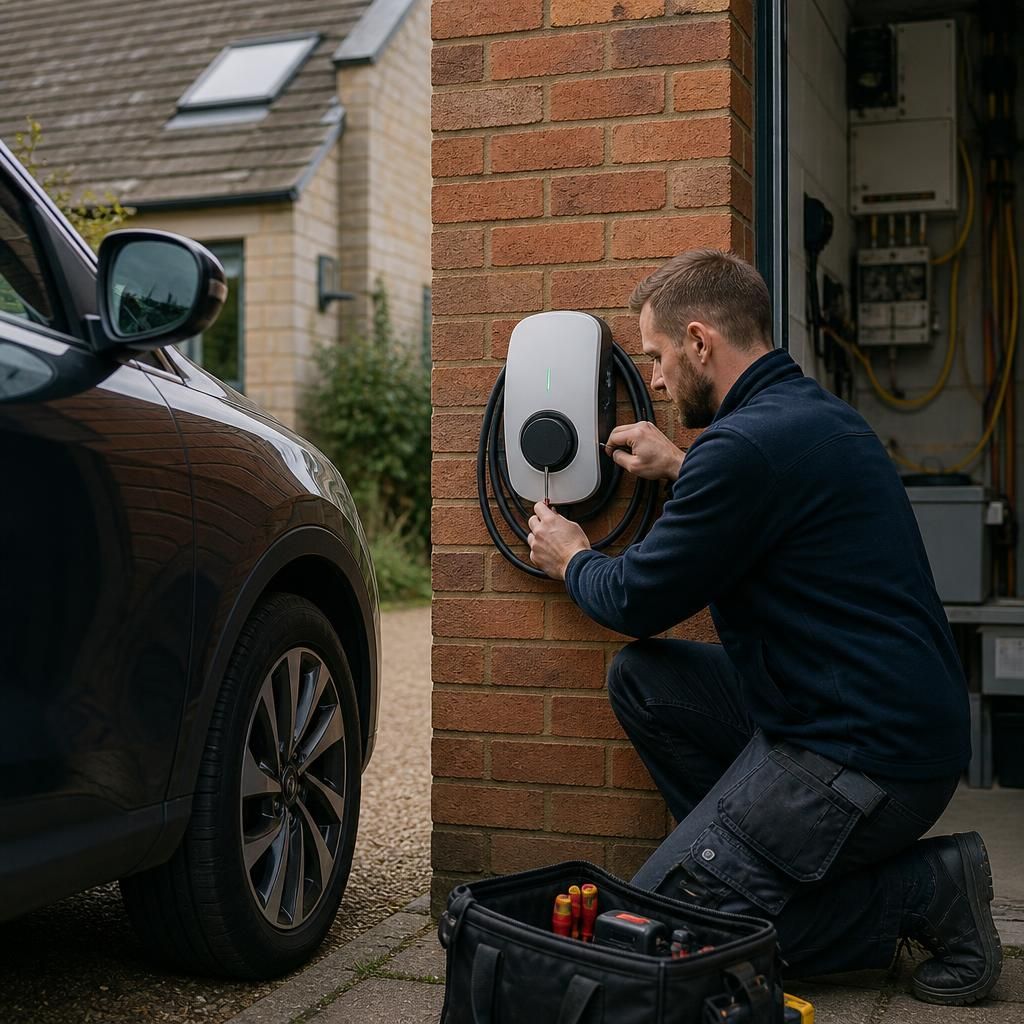
The amount of preparation depends on where the charger will sit, not just on the charger itself. A position that looks convenient from the driveway may create a longer route, extra drilling or work across a garden or drive.
We compare practical mounting positions before installation and explain the effect of each one on access, appearance and cost. That gives you a clear choice between a shorter surface route, a more concealed installation or a different parking position. The agreed option is recorded in the quotation, so the work on the day matches the plan.