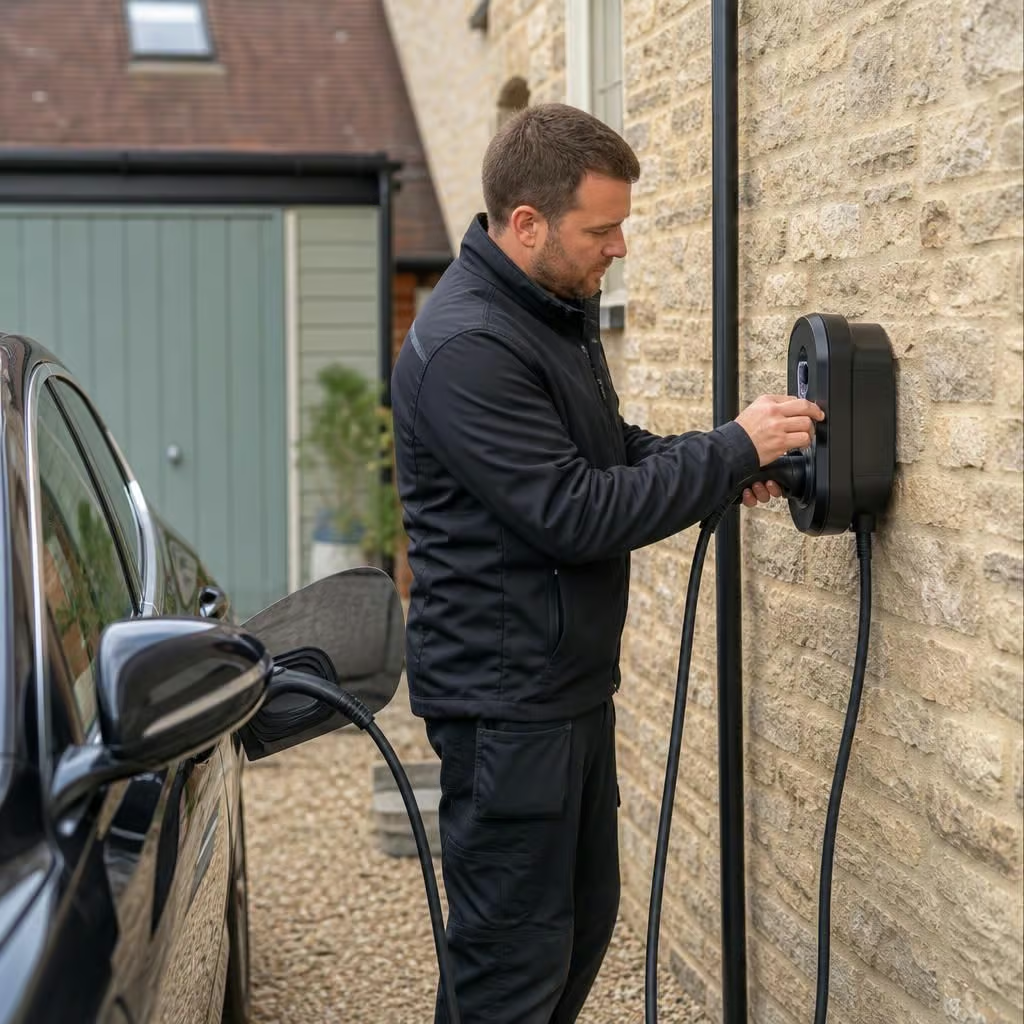
What information do you need to recommend the right smart EV charger type?
We need to know your electric car model, typical mileage, charging routine, home electrical supply and whether you have solar panels or battery storage. We use that information to recommend a smart charger type that matches your car, available power and how you plan to charge.
The right smart EV charger depends on three things: what your car can accept, how you plan to charge, and what your home’s electrical installation can support. We use that information to choose the charger type, power rating and control features rather than recommending a unit that only works on paper.
Your car’s charging capability comes first. We need the make and model, or the vehicle handbook details, including:
- the connector fitted to the car;
- the maximum AC charging rate;
- whether the car supports scheduled or managed charging;
- where the charge socket is positioned; and
- whether you expect to change vehicles during the charger’s working life.
A charger with a higher output will not make a car charge faster than the car’s own AC limit. If you have not chosen the vehicle yet, we can compare the charger requirements of the models you are considering.
Your charging routine affects the useful type of smart control. We ask whether the car is normally parked at home overnight, needs a top-up during the day, or is shared between several drivers. We also need to know whether you want to:
- set charging times around an electricity tariff;
- limit charging when other high-load appliances are running;
- start charging manually from the charger or an app; or
- use surplus solar generation rather than importing electricity from the grid.
That helps us distinguish between a charger with simple scheduling and one that needs more advanced load management or energy control.
The electrical supply determines what can be installed safely. We check the incoming supply, the main fuse, the consumer unit, earthing arrangement and the spare capacity available when the house is using other equipment. A heat pump, electric cooker, immersion heater or battery system can all affect the assessment. We also check whether the property has a single-phase or three-phase supply, where that information is relevant to the charger choice.
Older homes may need work before the charger can be connected. The consumer unit might need additional protection, the earthing arrangement might need attention, or the existing supply might not suit the proposed charging load. We explain any required electrical work before installation, so the charger type is based on the complete installation rather than the charger alone.
The cable route affects both the charger position and the installation work. We need to know where the car is parked, where the electricity meter and consumer unit are located, and whether the cable must cross an external wall, outbuilding, driveway or garden. Photos can help us understand the layout before a survey, but we confirm the route on site. The distance, access and wall construction can affect the cable size, protective equipment and installation cost.
If the car is parked away from the house, we check how the cable can reach it without creating a trip hazard or exposing it to avoidable damage. A garage, barn or detached outbuilding may also have its own supply that needs checking rather than assuming it can support vehicle charging.
Solar panels and batteries change the recommendation. We ask for the existing system details, inverter information and any battery controls. We then consider whether the charger should work with surplus generation, how household demand is measured, and how charging could interact with battery charging or export. The aim is to avoid two systems trying to control the same electricity flow without clear priority.
Your electricity tariff can matter as well. If you want the car to charge during selected tariff periods, we check that the charger’s controls and app can support the intended arrangement. Tariff rules and software features can change, so we confirm the current requirements rather than treating every smart charger as compatible with every tariff.
We also need practical information about the property. Tell us about listed-building restrictions, landlord or management-company requirements, shared parking, a leasehold driveway or any planned building work. These details can affect the charger position, cable route and permissions. If the charger will be used by tenants or several households, access controls and user management may be more important than the widest range of app features.
Before recommending a type, we normally want:
- the car make, model and charging details;
- your usual charging pattern and any tariff you want to use;
- the location of the parking space;
- photos showing the meter, consumer unit, parking area and likely cable route;
- details of solar panels, a battery or other large electrical loads; and
- any restrictions on the property or parking space.
We then survey the installation, confirm the vehicle connection and assess the available electrical capacity. The recommendation sets out the charger type, charging rate, control features, cable route and any work needed before connection. Our electrical engineers carry out the installation in-house, with NICEIC and ECA standards informing the safety checks and certification.
If the property needs an upgrade, that does not automatically rule out smart charging. It means we separate the charger decision from the remedial work and explain the order, scope and cost before work starts. You can then decide whether the proposed charger fits the way you use the car and the way your home uses electricity.
Smart features depend on more than the charger itself. If the parking space has weak Wi-Fi or mobile reception, tell us before we recommend a model. Some remote controls and software updates depend on a reliable connection at the charger.
It also helps to know who will use the charger. One driver may only need simple app control, while a household with several drivers may need separate access or clearer charging permissions. We match the control system to the people using it, so the charger remains practical after installation rather than becoming another device to manage.