
Which smart EV charger type charges fastest?
A 22kW smart charger is the fastest home type, but only if your electricity supply and car can both support three-phase charging. For most homes and EVs, a 7kW single-phase charger is the fastest practical choice, so we check the vehicle, incoming supply and installation requirements before recommending one.
The quickest charge at home comes from matching the charger’s power rating to the car, the electricity supply and the cable. A higher-rated charger does not automatically make an electric car charge faster if the car cannot accept that rate.
22kW AC chargers provide the highest domestic AC charging rate. They only deliver that rate when the property has a suitable three-phase supply and the car has a 22kW AC onboard charger. Many electric cars accept less through AC, so a 22kW unit may operate below its maximum rating.
11kW AC chargers also need three-phase electricity and a compatible vehicle. They can be a good fit where both are already available, but installing one does not make a car charge at 11kW if its onboard charger is limited to a lower rate.
7.4kW AC chargers are usually the fastest practical option for a typical home with a single-phase supply. They suit many electric cars, although the vehicle’s own AC charging limit still sets the actual rate. A car limited to a lower AC input will not charge faster simply because the wall unit has a higher rating.
Some homes use a lower-powered charger because the incoming supply, consumer unit or property demand makes that more appropriate. This can apply where several large electrical loads operate together, or where the network connection cannot support a higher rating without further work. A lower rate may also be preferable if the car is normally parked for long periods, because the fastest possible charger is not always necessary.
The car is often the limiting factor. The vehicle handbook or manufacturer’s specification should show its maximum AC charging rate. We use that information alongside the proposed charger rating when recommending an installation. The charger cannot bypass the car’s onboard AC charger, so checking this first avoids paying for capacity the vehicle cannot use.
Smart features affect control, not the charger’s basic power. Scheduled charging can move a charging session to a preferred tariff period. Load management can reduce the charging rate temporarily when the oven, immersion heater or other substantial load is running. Solar integration can direct available generation into the car rather than drawing as much electricity from the grid. These functions can make charging more convenient or better controlled, but they do not turn a 7.4kW charger into a 22kW one.
Dynamic load balancing is particularly useful where the house has a limited electrical capacity. The charger measures the property’s demand and adjusts its output to keep the total load within the available limit. That can make a higher-rated charger workable without running at its maximum all the time. It still cannot overcome the limits of the car, the supply or the network connection.
The cable matters as well. A tethered charger has its cable permanently attached, while an untethered charger uses a separate lead. The connector and cable must support the intended charging rate. If the cable or vehicle connection is rated lower, the charging session follows the lower limit.
A three-phase supply is not simply a faster version of a standard domestic connection. We need to establish what supply reaches the property, how the phases are arranged and what spare capacity remains in the consumer unit. Rural properties, older homes and buildings with outbuildings can have different supply arrangements from a modern house. The physical route to the parking space also affects the cable size, protective equipment and installation work.
We check the consumer unit, earthing, cable route and available load before confirming a charger rating. If the proposed charge point would place too much demand on the installation, we explain whether load management, an electrical upgrade or a different charger rating is the sensible approach. You receive the recommendation based on the car and property rather than the largest figure printed on a charger.
For a domestic installation, electrical work is carried out by engineers working to NICEIC and ECA standards. That matters because the charger needs the right protective devices, isolation and connection to the existing installation, not just a high-powered wall unit.
In practical terms, choose the fastest charger your car can use and your property can support. For most single-phase homes, that means a 7.4kW smart AC charger. A three-phase home and a car with a higher AC intake may justify an 11kW or 22kW model, but we confirm both points before specifying it.
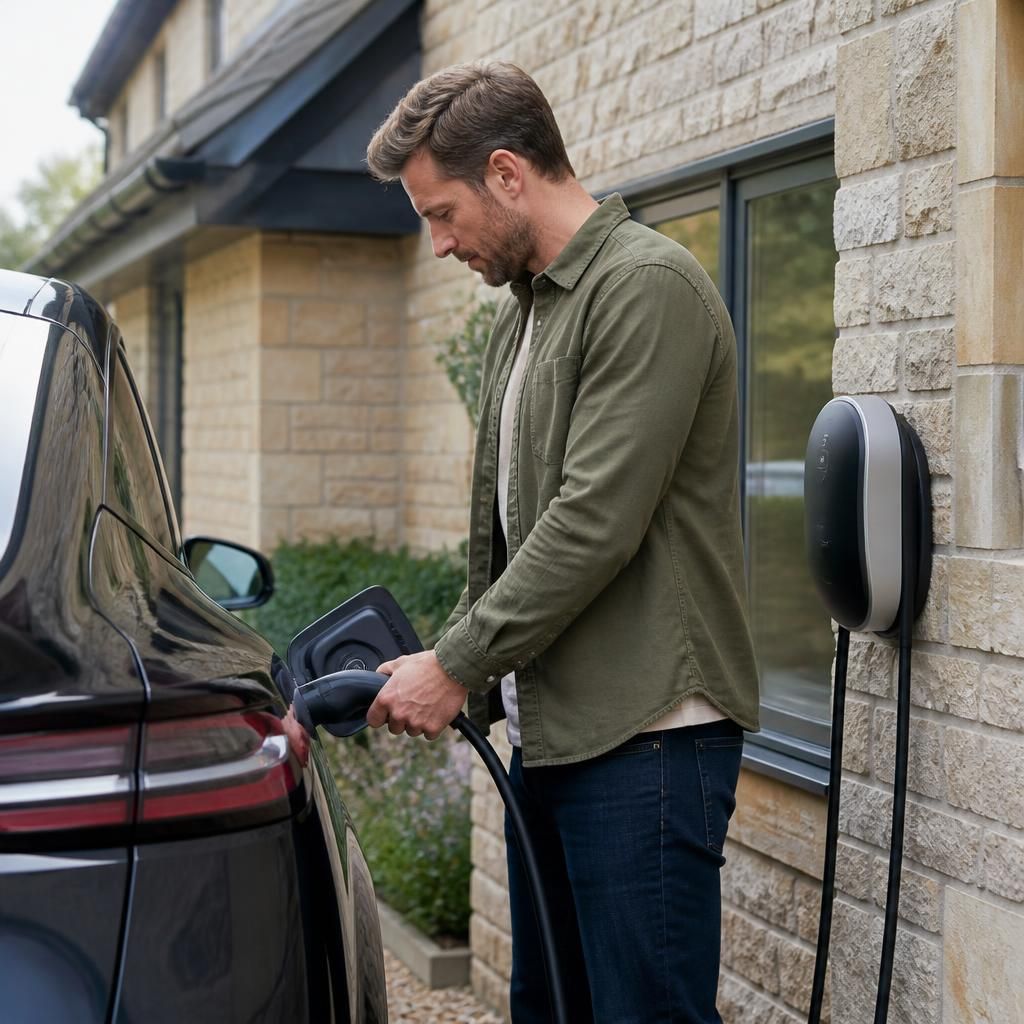
A charger’s power rating tells you the maximum rate, not how long every car takes to charge. A larger battery needs more energy than a smaller one, and a car arriving nearly empty needs more time than one returning with plenty of charge.
The car may also reduce its charging rate as the battery fills. We therefore compare the vehicle’s battery capacity and charging behaviour with how far you normally drive. That shows whether a higher-rated charger will make a useful difference, rather than judging it from the headline kW figure alone.