Can smart EV charger controls be changed after installation?
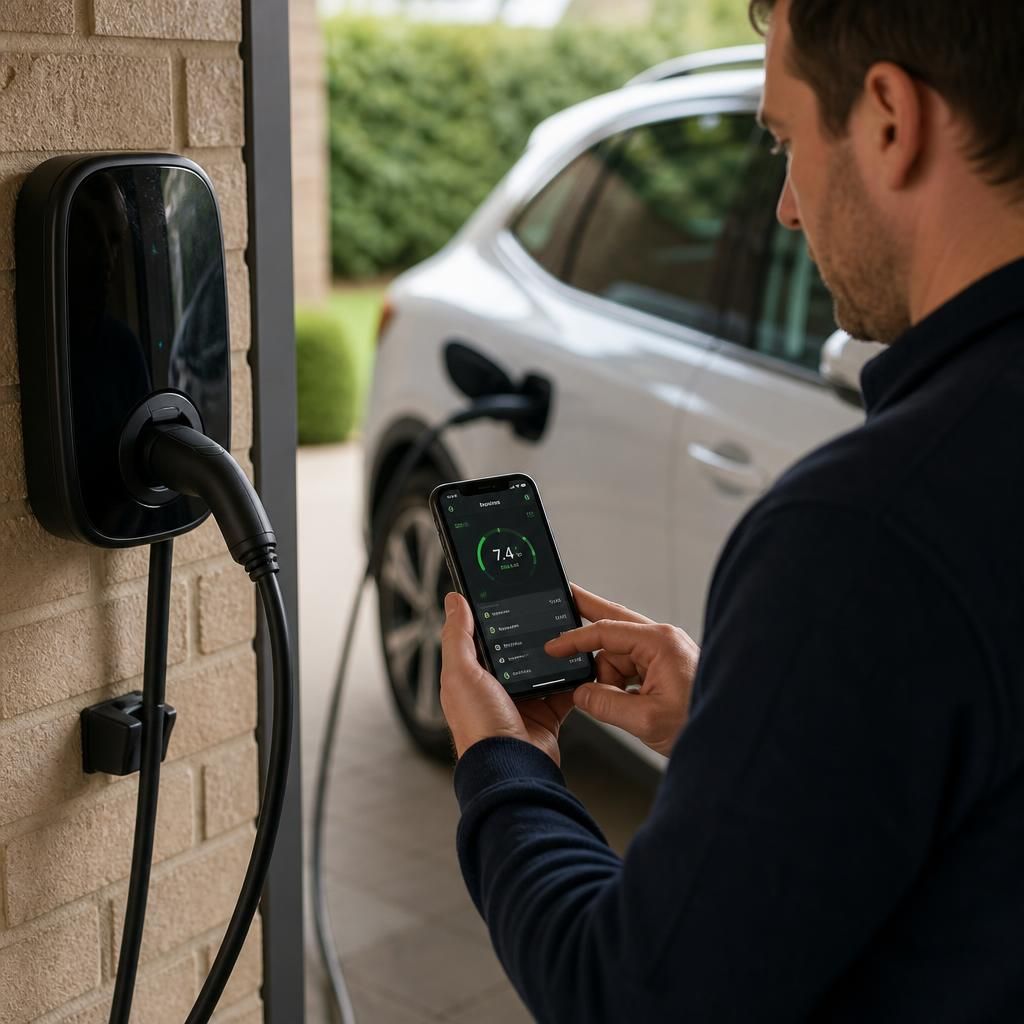
Yes. Most smart EV charger settings can be changed after installation through the charger or its app, including charging schedules and whether it prioritises solar or grid electricity.
The available controls depend on the charger, vehicle and home energy setup. If the change needs new wiring, load management or different hardware, we can assess what is required.
The important distinction is between changing a setting and changing the way the charger communicates with the rest of the system. Everyday charging preferences are usually adjustable by the account holder. Changes to wiring, protection, communications equipment or the charger itself need an engineer.
From the charger app, you may be able to change:
- the times when charging is allowed;
- the maximum current available to the vehicle;
- whether charging starts automatically when the vehicle is connected;
- whether the charger prioritises lower-cost electricity periods;
- whether it charges from surplus solar generation;
- the amount of charge reserved for a planned journey; and
- which vehicles or household users can operate the charger.
The exact list depends on the charger model, the vehicle and the software account linked to the installation. Some controls sit in the charger app, while others are governed by the vehicle manufacturer’s app or by the electricity tariff. Two apps can therefore appear to offer conflicting instructions. We check which system has priority before changing the programme.
A schedule can also behave differently from its description. A vehicle may remain connected but not accept charge because its own timer is active. The charger may pause because the property has reached its agreed electrical limit. Solar charging may wait for enough surplus generation rather than drawing from the grid. These are often control settings rather than faults, but we test the complete sequence so the result makes sense in the home.
Some changes require information from the electricity account. A tariff-controlled mode may need tariff details, an account connection or permission for the charger to respond to price signals. If those details change, the control may need setting up again. We can separate a tariff problem from a charger problem before recommending any alteration to the equipment.
Software updates can add, remove or rename controls. They can also reset a preference, disconnect an account or alter the way the charger reports energy use. If a setting has disappeared, we check the app version, charger firmware, account permissions and network connection. We do not assume that a missing control means the charger must be replaced.
There are limits to what an app can change. It cannot increase the capacity of the supply cable, alter the rating of protective devices or make an unsuitable load-management arrangement safe. A higher charging current may need a review of the consumer unit, cable route, earthing and overall demand at the property. Those changes are electrical work, not app configuration.
The same applies when the property gains solar panels, battery storage or another significant electrical load. A setting may need to be coordinated with the energy system so that the charger does not draw from the grid when the household expects to use stored or surplus energy. We review the control arrangement rather than treating the charger in isolation.
If you ask us to change the controls, we first record how the charger is currently connected and what you want it to do. We then check the charger, vehicle, app access, tariff information and any existing energy-management equipment. Where the hardware supports the change, we update the settings and explain which controls you can manage yourself.
Afterwards, we test the relevant operating modes. That may include connecting the vehicle, confirming that a scheduled start occurs, checking the current limit and observing how the charger responds when household demand changes. If solar charging is enabled, we also check that the chosen mode does not create an unexpected grid import. The aim is to leave you with a control programme you understand, not simply a setting changed without explanation.
When the existing charger cannot provide the function you need, we explain that before proposing replacement work. The reason might be an unsupported communication method, insufficient load management or a hardware limit. You can then compare a settings change with a wider alteration, based on the way you actually charge rather than on an assumed upgrade.
If the property changes hands, the charger account may still be linked to the previous owner or installer. We check who controls the account before changing settings, then help transfer access so the new user can manage schedules and charging preferences without altering the electrical installation.