
Where can an electric car charger be installed at home?
An electric car charger can usually be installed on an external wall, garage, carport or suitable driveway post, provided the parking position and cable route are safe and practical. We assess the charger position, cable run and electrical supply before recommending the least disruptive location for your home.
The best position is the one that serves the usual parking space without creating a trip hazard, obstructing access or requiring an unnecessarily complicated cable route. That may be an outside wall, a garage, a carport, a post or a small standalone mounting point.
On the front or side of the house
A wall beside the parking area is often the simplest option. The charger stays close to the vehicle, the cable remains on private property and we can usually route the supply through the building without disturbing much of the outside ground.
A side wall can work well when the car parks alongside the house rather than directly outside it. We look at doorways, gates, paths and turning space before fixing the unit. The charger must not narrow a passage or force the charging cable across a route used by people.
At the rear of the property
Rear parking is suitable when the charger can reach the car without crossing a public footway or shared access. We may run the supply through a utility room, hallway, loft space or external route, depending on the building and the position of the electrical equipment.
Older houses can have solid walls, awkward floor levels or limited voids for cables. We choose a route that keeps the installation maintainable and limits visible conduit. Where chasing a wall would damage an original finish, surface-mounted containment may be the more sensible choice.
Inside a garage
A garage-mounted charger protects the equipment from knocks and keeps the cable out of the weather. The garage needs enough room for the car, charger and cable without blocking the door, storage or a safe walking route.
If the garage is detached, the supply route becomes more important. We check how the building is supplied and whether the cable needs to pass through a wall, cross open ground or follow an existing trench. The charger may be suitable on the garage wall, but the electrical work must still account for the distance and the conditions between the buildings.
On a carport or mounting post
A carport can provide a convenient charging position when the house wall is too far from the parking bay. We fix the charger to a suitable structural surface, protecting the cable from vehicle movement and keeping it clear of doors and turning areas.
Where no wall is available, a dedicated post can hold the charger beside the parking space. This requires a stable base and a properly protected supply route. We assess drainage, ground conditions and the risk of impact before recommending this arrangement.
Shared drives, pavements and boundaries
A charger should not leave its cable stretched across a pavement, public path or shared drive. A cable cover does not automatically make that arrangement acceptable, and neighbours or the highway authority may have rights over the route.
When parking sits beyond a boundary, we establish who owns the wall, fence, ground and access route before planning the work. A free-standing charger or a different parking position may avoid disputes and keep the installation within land you are entitled to use.
Listed and older properties
A listed building or a house in a conservation area may need extra care over the visible equipment and cable route. The charger itself may be acceptable, but drilling into an original wall, fixing equipment to a boundary structure or altering the external appearance can require consent.
We consider less visible routes and mounting positions, then identify any permissions that need checking before installation. We do not assume that a convenient wall can be altered simply because it is close to the parking space.
Positioning details that affect everyday use
- The socket or cable should reach the vehicle without passing beneath wheels or across a walking route.
- The unit should remain accessible for starting, stopping and checking the charging status.
- Doors, gates and vehicle mirrors must open without striking the charger.
- The mounting surface must be solid enough for the equipment and protected from likely vehicle impact.
- The cable should have a tidy route, with no loose loops where someone could catch a foot.
- The charger should not obstruct meter access, drainage points, ventilation openings or other electrical equipment.
The most visible position is not always the best electrical position. A longer route may be practical, but it can involve additional containment, wall penetrations, trenching or changes to the distribution equipment. These details affect the work involved and the quotation, so we explain them before anything starts.
During the survey, we look at the parking arrangement, the building fabric, the route into the property and the location of the electrical equipment. We also consider how the charger will be used in practice, including where the cable will be stored when the car is not connected. Our NICEIC and ECA electrical work is planned around a safe, compliant installation rather than simply the nearest available wall.
You do not need to choose a position before speaking to us. Show us where the car normally parks and explain any restrictions around walls, shared access or listed features. We can then set out the workable positions, the likely route and any permissions or extra groundworks that need attention before you decide.
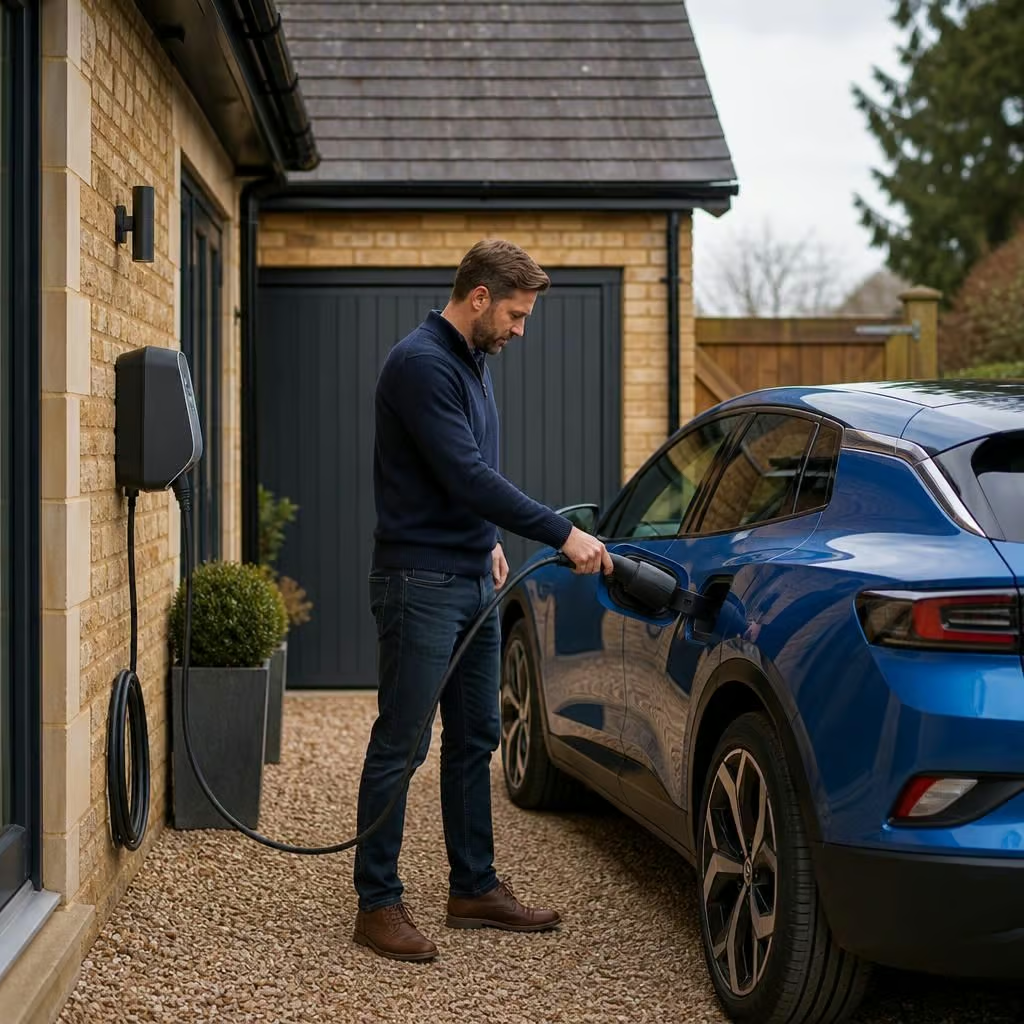
Your car’s charge socket can affect the best position as much as the house does. A charger beside the driver’s door may work well for one vehicle but leave the cable stretched across the bonnet or a walking route for another.
We look at how you normally park, where the socket sits on the car and which way the vehicle approaches the charger. That helps us choose a position where the cable reaches without passing beneath wheels, dragging around the vehicle or being left loose when charging finishes.