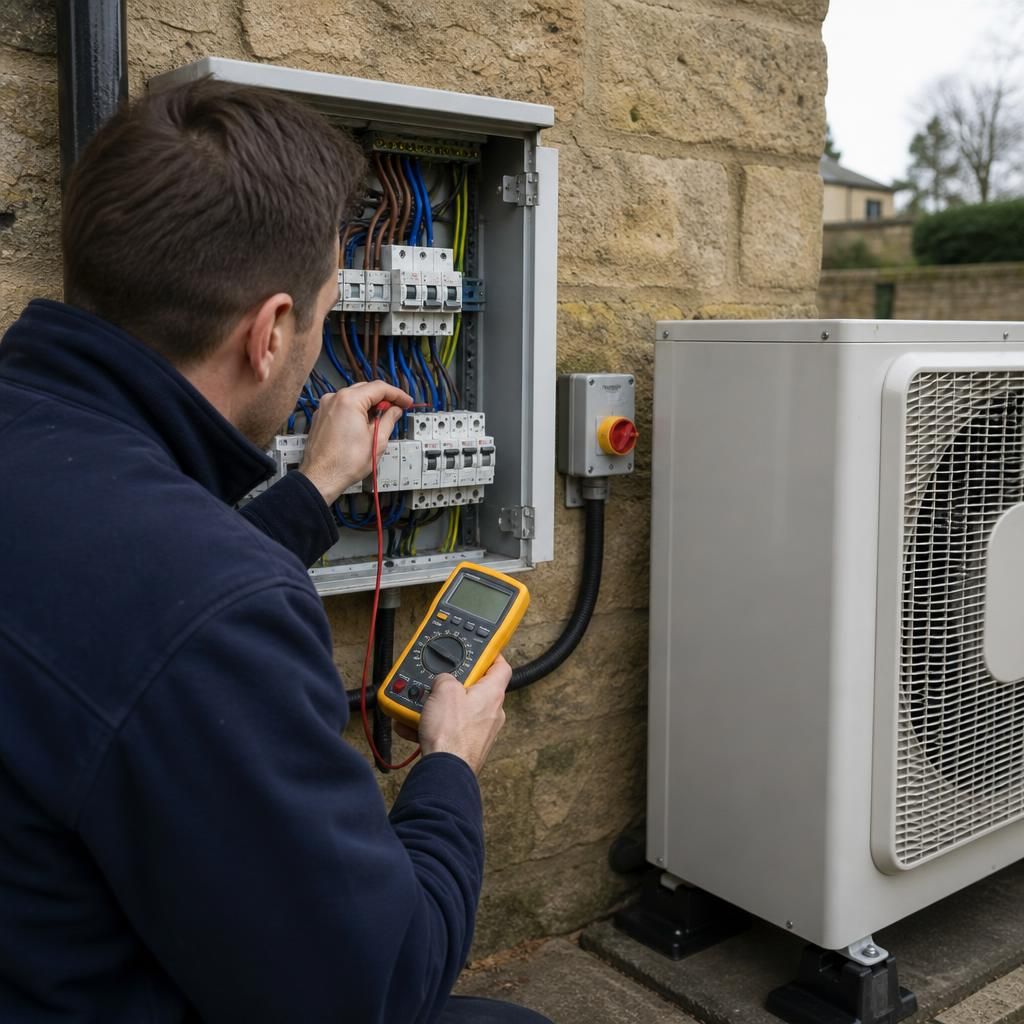
Will my electrical supply support an air source heat pump?
Usually, yes, but the answer depends on your heat pump’s electrical load and the capacity of the existing supply. We check the consumer unit, earthing, meter and incoming cable before installation, then identify any upgrade needed so the system can run safely.
The heat pump itself is only part of the calculation. We need to assess its designed electrical load alongside the other equipment in your home, then check whether the incoming supply and installation can carry that demand safely.
A heat pump normally needs its own electrical circuit. The circuit supplies the outdoor unit, controls and associated heating equipment. An immersion heater, electric backup heater, hot water cylinder or additional pumps may also add to the maximum demand. Your existing boiler may use very little electricity by comparison, so a home that has never needed a large electrical load can need a closer assessment.
We look at the proposed heat pump design rather than relying on a typical figure. The required electrical input varies with the heat loss of the property, the design flow temperature, the outdoor conditions and the selected operating strategy. A properly sized system may draw less power while running than its maximum rating, but the installation still needs to accommodate the relevant design load and protective requirements.
- The incoming service: We check the main fuse, service head, meter tails and the type of supply serving the property.
- The consumer unit: We assess its condition, spare capacity, earthing and the protection available for a new dedicated circuit.
- The existing demand: We consider electric cooking, showers, immersion heaters, EV charging, solar or battery equipment and other substantial loads.
- The cable route: We plan the cable size, isolation, protection and route between the consumer unit and the heat pump equipment.
- The earthing and bonding: These must be suitable for the proposed installation and brought up to the required standard where necessary.
The main fuse rating does not tell the whole story. We also consider how the equipment is expected to operate together. For example, a heat pump running at the same time as an immersion heater and an EV charger creates a different demand from a heat pump operating alone. We use the design information and a maximum-demand assessment to avoid treating every appliance as if it will run at full load continuously.
Some installations need only electrical work within the property. That might include a new circuit, upgraded meter tails, a suitable isolation point or changes to the consumer unit. If the incoming service does not provide enough capacity, the electricity distributor may need to assess or upgrade the supply. That is separate from changing the wiring inside your home, so we identify it before the heating installation is finalised.
A single-phase supply is not automatically unsuitable. Many domestic heat pump installations use one. A three-phase supply may be relevant where the planned equipment and the property’s other loads require it, but we decide that from the design rather than treating it as a default upgrade.
Older and rural properties deserve particular care because the electrical installation may have been extended over several decades. A barn conversion, listed building or solid-wall house may have a modern meter but older distribution equipment, long cable runs or circuits that were not designed for current levels of electric heating. We explain which part needs attention and why. We do not assume that the age of the building alone means the supply will fail the assessment.
Solar panels or a battery can change how electricity is used in the property, but they do not remove the need to size the heat pump circuit correctly. Generation and stored energy may reduce electricity bought from the grid at some times, while the incoming supply and protective devices must still be suitable for the installation’s possible operating conditions. If you are considering these systems together, we include their interaction in the electrical design.
The survey should leave you with one of three clear outcomes:
- The existing supply and consumer unit are suitable, subject to installing the correctly designed circuit.
- The incoming supply is suitable, but electrical work inside the property is needed before the heat pump can be connected.
- The distributor needs to review or upgrade the incoming service before the proposed system can proceed.
We set out any additional work separately in the quotation. That shows whether the cost relates to the heat pump installation, the property’s existing electrical installation or a distributor-led supply change. It also prevents an electrical upgrade being treated as an unexpected extra after the heating design has been agreed.
For a heat pump installation covered by the Boiler Upgrade Scheme, the electrical design remains part of making the complete system suitable for the property. Our MCS-certified renewable energy team can include the required electrical checks in the wider assessment, so the heat pump, controls, cylinder and supply are considered together rather than as separate jobs.
An electrical upgrade does not automatically mean rewiring the whole house. If the existing installation is suitable, we limit the work to what the heat pump needs, such as its dedicated circuit and protective equipment.
Where an older consumer unit or part of the installation cannot support the new load, we explain the specific change required before work begins. You’ll see the electrical work listed separately in the quotation, so you can understand its scope, cost and effect on the installation.