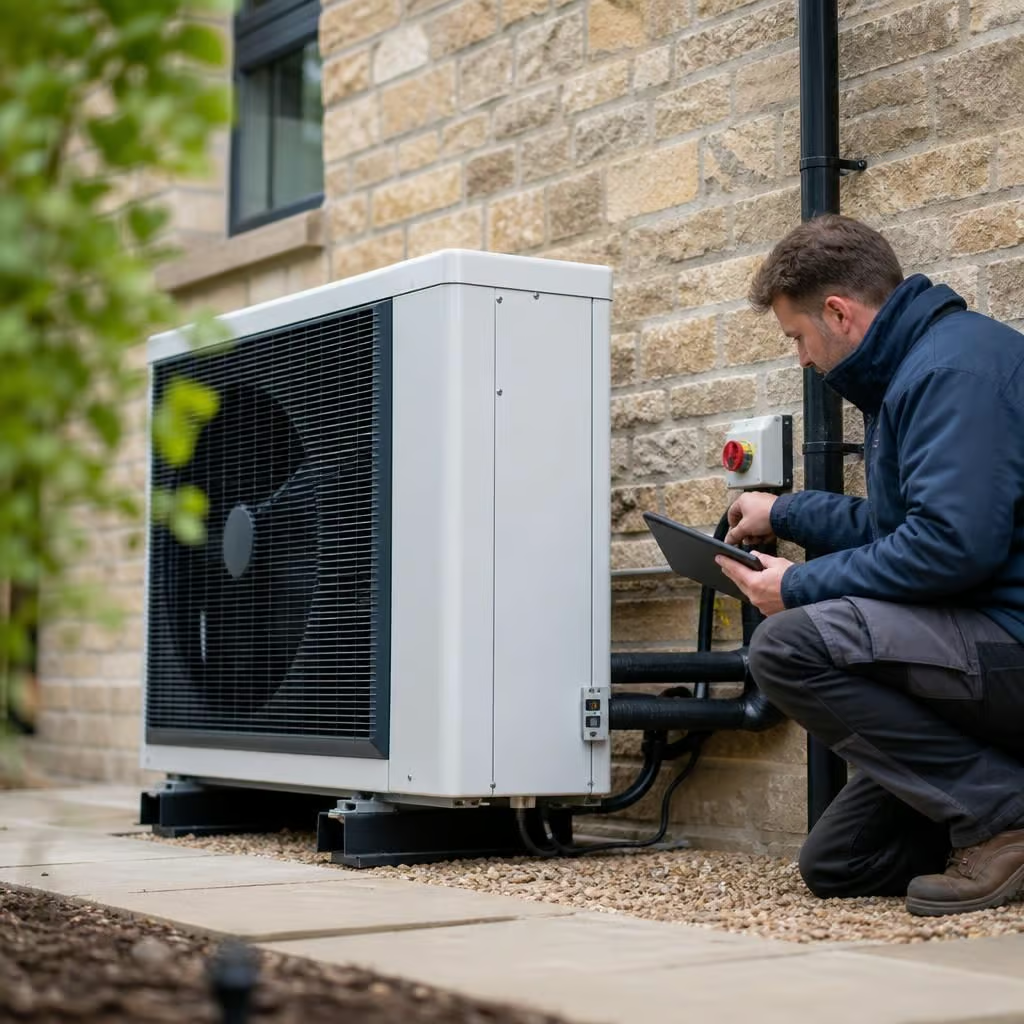
Is my home suitable for air source heat pump installation?
Many homes are suitable for an air source heat pump, including older and off-gas-grid properties, provided there is suitable outdoor space and the heating system can meet the home’s heat demand. We assess insulation, room-by-room heat loss, radiators, pipework, electrical supply and running costs before advising whether installation is practical.
Most homes can use an air source heat pump, but not every home is ready for one without changes. The important question is whether the property can stay warm with the heat pump working efficiently, and whether the equipment can be installed in suitable positions. A proper assessment should give you a clear answer rather than assume that every house is suitable.
An older house is not automatically ruled out. Solid-wall homes, barn conversions and listed properties can all be considered. They may need a more careful design because they often have higher heat demand, less wall insulation and unusual room layouts. We look at the building as it is, then identify improvements that would make the system work properly without recommending unnecessary alterations.
Some homes need modest preparation. Others need changes to the emitters, pipework, controls or hot-water arrangements before installation makes sense. If the required work would cost more than the likely benefit justifies, we explain that clearly. A heat pump is not the right answer for every property.
Your existing heating system gives us useful information. A wet central-heating system usually provides a practical starting point because the new system can use much of the existing distribution network. Oil- and LPG-heated homes can also be suitable, particularly where bringing in mains gas is not an option. The change is more involved if the property relies on direct electric heaters, storage heaters or a mixture of unrelated systems.
We check how heat currently reaches each room, not just whether the boiler appears powerful enough. Heat pumps normally work with cooler water than a traditional boiler, so the rooms must have enough emitter capacity and the pipework must distribute heat effectively. Where that is not the case, we set out the specific changes needed instead of treating the whole system as unsuitable.
Space inside and outside the property matters. The outdoor unit needs a position with good airflow and enough clearance around it. It should not be boxed into a tight enclosure or placed where discharged air could cause a problem. We also consider the route for pipework, condensate drainage and the distance to the indoor equipment.
Inside, the system may need a hot-water cylinder if the property currently has a combination boiler. That cylinder needs a suitable location, along with space for associated controls and pipework. We check whether an existing cylinder can be used and whether the electrical installation can support the proposed equipment. If changes are needed, we include them in the design rather than leaving another contractor to resolve them later.
Your electricity supply also forms part of the assessment. We check the available supply, the consumer unit and the proposed electrical load. A heat pump does not simply replace a boiler on a like-for-like basis. The electrical work, controls and protective devices must suit the complete installation.
Planning and building restrictions can affect where equipment goes. This is particularly relevant for listed buildings, properties in conservation areas and homes with limited external space. We consider the proposed position and any restrictions that may apply before recommending an installation. Where the property needs consent or additional design work, we explain that at the planning stage.
The most useful assessment is based on the whole house. We examine the construction of the property, windows, insulation, room sizes, existing emitters, pipework, hot-water arrangements and electrical supply. We also discuss how you use the rooms, because bedrooms, living areas and occasionally used spaces may have different requirements.
That information allows us to size the system for the property rather than select equipment from the boiler rating alone. Oversizing can add unnecessary cost and affect how the system operates. Undersizing can leave the house struggling in colder weather. The design needs to account for both everyday heating and the conditions the property must handle at its most demanding.
Running costs need to be considered alongside suitability. We compare the proposed system with the way you heat the home now, using the property’s condition, heating pattern and available electricity tariff. A heat pump may be technically possible but financially unattractive if the house needs extensive work or if the expected use does not support the investment. We work through those figures for your property rather than quoting a general saving.
Homes currently using oil or LPG need a particularly practical comparison. Removing fuel deliveries and storage may be attractive, but the new system still needs suitable electrical capacity, hot-water provision and a workable outdoor position. Keeping part of an existing system may sometimes be considered, although the right arrangement depends on the property and how you want to heat it.
There are three sensible outcomes from a survey.
- The house is ready for a heat pump with limited preparatory work.
- The house can work well after specific improvements, which we list and price before you decide.
- A heat pump is technically possible but not sensible for the property, in which case we tell you why and discuss the practical alternatives.
That last outcome matters. You should not be encouraged to proceed if the system would rely on unsuitable equipment positions, extensive unplanned alterations or running costs that do not fit your circumstances.
If you decide to proceed, our MCS-certified renewable energy installers can make a Boiler Upgrade Scheme grant application on your behalf where the installation meets the scheme requirements. MCS certification also means the system can qualify for the Smart Export Guarantee where eligible export arrangements are in place. Grant rules and tariff terms can change, so we check the current position during the design process.
The best preparation is to gather recent heating bills, details of the current boiler or heating system, and any information about planned building work. Tell us about rooms that are difficult to heat, restrictions on external equipment and any listed-building or planning concerns. Those details help us judge the practical fit before you commit to a major change.
If you’re used to turning the boiler on for short bursts, a heat pump may need a different heating routine. It works most efficiently by maintaining a steady temperature rather than rapidly raising a cold room.
We discuss when you heat each part of the home, how you use hot water and which rooms need priority. We then set the controls around that routine, so the system suits daily life rather than relying on generic settings. If your preferred heating pattern would make the installation uneconomical, we explain that before you commit.