
Can an air source heat pump work with my existing radiators?
Often, yes. We assess the heat loss of each room and the output of your existing radiators; some may be suitable, while others may need upgrading to heat your home effectively at a lower flow temperature.
Existing radiators do not automatically rule out an air source heat pump. The important question is whether each room receives enough heat when the system runs at a lower flow temperature than a traditional boiler.
A boiler can raise radiator temperatures quickly, while a heat pump usually works more steadily at a lower temperature. A radiator that feels hot with a boiler may therefore need more surface area to deliver the same heat from a heat pump. That does not mean every radiator needs replacing.
We assess the heat requirement of each room rather than judging the system by radiator size alone. The assessment considers room dimensions, windows, external walls, roof construction, insulation and the temperature you want to maintain. We then compare the result with the output of the existing radiator at the proposed heat pump flow temperature.
Several outcomes are possible:
- The existing radiator remains: its output is sufficient for the room, so it can stay in place.
- A larger radiator is needed: we replace only the units that cannot provide enough heat. A double-panel or longer radiator may provide the required output without changing the whole system.
- The room needs fabric improvements: draughts, limited loft insulation or uninsulated external walls can increase heat loss. Improving these areas may reduce the radiator upgrade required.
- The pipework needs attention: restricted or undersized pipework can limit flow to a larger radiator. We include any necessary pipework changes in the design rather than discovering the problem after installation.
Radiator upgrades are most common in rooms with high heat loss, such as those with several external walls, large windows or limited insulation. Bedrooms and internal rooms often need less change. The result depends on the building, so a whole-house rule such as replacing every radiator would not be a reliable approach.
Existing pipework can often be retained. We check its size, condition, route and ability to deliver the required flow. Older properties may have long runs, small-bore sections or systems that have never been properly balanced. In those cases, we may recommend alterations to improve circulation and give each room the heat it needs.
Controls also affect how well existing radiators work with a heat pump. The system needs to respond to outdoor conditions and maintain a steady indoor temperature, rather than repeatedly switching on and off like a conventional boiler system. We set up the controls and balance the radiators so heat is distributed correctly around the home.
You do not need underfloor heating for an air source heat pump. Underfloor heating can work well because it provides a large heated surface, but suitable radiators can do the same job. Keeping existing radiators may be the more practical choice where floors are finished, rooms are occupied or the property is an older house.
Older solid-wall homes, barn conversions and properties off the gas grid can be suitable, but they need a careful design. Stone walls, exposed floors, unusual room layouts and listed-building constraints can all affect the heat-loss calculation and the route for pipework. We take those practical details into account before recommending equipment or radiator changes.
If the system is designed around radiators that are too small, the heat pump may need to run at a higher flow temperature. That can increase running costs and reduce the benefit of changing from oil, LPG or gas heating. We therefore explain which parts of the existing system can stay, which parts need changing and why.
Our written quotation separates the heat pump installation from any radiator, valve or pipework alterations. You can see the proposed work before making a decision, rather than finding that additional changes are required once the installation has started.
Where a heat pump is suitable, our MCS-certified renewable energy installers can complete the design and installation. MCS certification also allows us to make a Boiler Upgrade Scheme grant application on your behalf when the property and installation meet the scheme rules. If the assessment shows that a heat pump is not the right choice, we explain the reason and the alternatives instead of forcing the existing heating system into an unsuitable design.
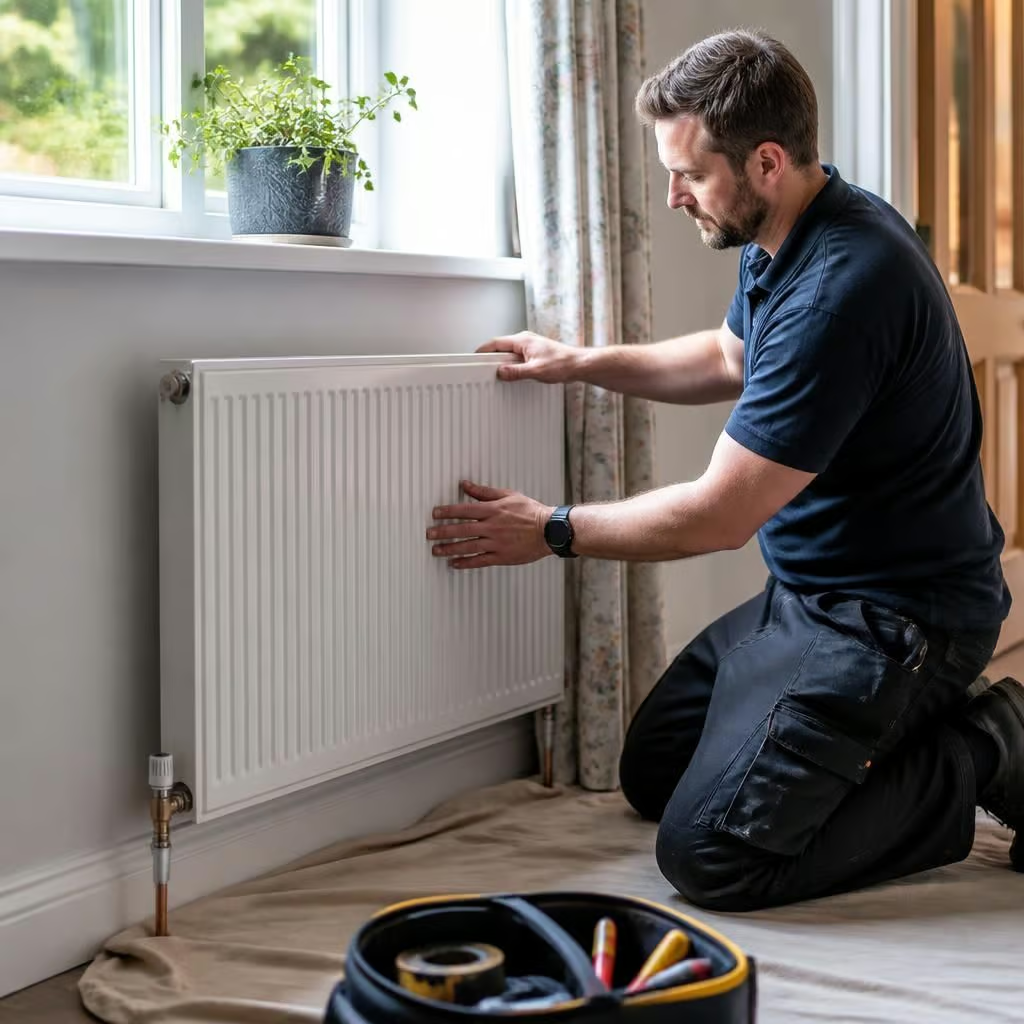
If a radiator needs replacing, the change does not always mean altering the room. We check the available wall space, pipe positions, valves, curtains and furniture before choosing its size and position.
A replacement may be longer, deeper or fitted in a different position to provide enough heat. We include those practical details in the design, so you know what will change before work begins.