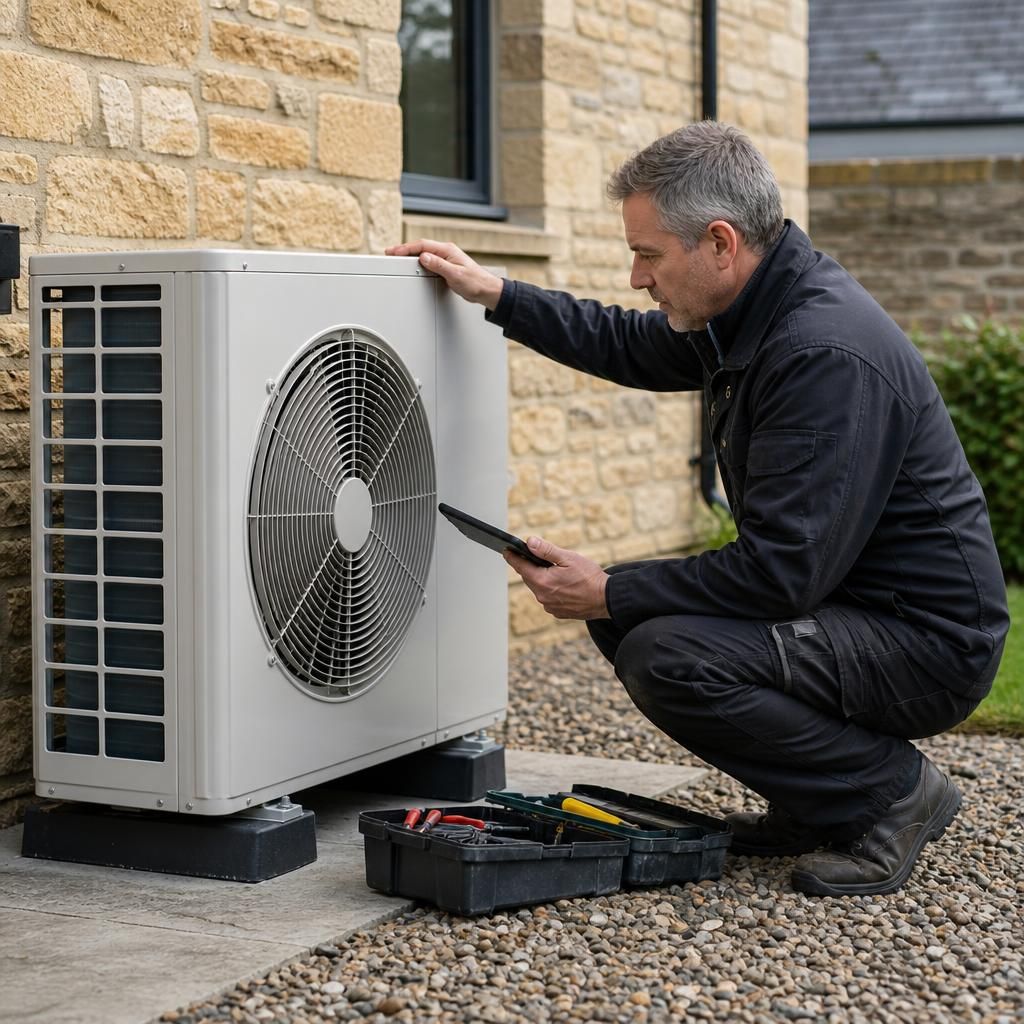
What maintenance does an air source heat pump need?
An air source heat pump needs regular checks rather than frequent maintenance: keep the outdoor unit clear, monitor the system and arrange a professional service each year. We inspect the heat pump, controls, water circuit and electrical connections, then identify problems before they affect heating performance or running costs.
The ongoing maintenance burden of an air source heat pump is modest. Most of it involves keeping the outdoor unit clear, leaving the controls correctly set and reporting changes before they become faults. A professional service keeps the refrigeration circuit, water system and safety controls working together.
Checks you can make yourself
- Leaves, grass, cobwebs and other debris can restrict the outdoor unit, so keep the area around it clear. Don’t use the unit as a shelf, cover it or block the airflow.
- In freezing weather, look at the condensate drain. Water must be able to run away freely. Don’t chip ice from the unit or pour boiling water over it; contact us if ice keeps building up or water backs up.
- Light frost on the outdoor coil is normal. The heat pump will periodically defrost itself, and you may see water or a cloud of vapour during that cycle.
- Keep furniture, curtains and drying clothes away from radiators or other heat emitters. Restricted airflow makes the system work harder and can leave rooms unevenly heated.
- Check the controller if the house feels colder than usual. A changed schedule, holiday setting or room sensor setting can look like a heating fault.
Don’t repeatedly switch the heat pump off and on to control the temperature. These systems usually work most efficiently when they maintain a steady background temperature, with modest adjustments to the schedule. If you’re unsure about weather compensation or setback settings, we can explain what the controls are doing rather than simply increasing the flow temperature.
What happens during a professional service
Your system may still produce heat while a component is beginning to deteriorate. We look for that early evidence during a service, including unusual fan or pump operation, restricted airflow, poor defrosting and changes in water circulation. We also check the refrigerant circuit where the system requires it, along with the condensate arrangement, expansion vessel and safety controls.
The heating side matters just as much as the outdoor unit. We review temperatures, circulation and system pressure, then check that the controls are communicating properly with the heat pump. If the system has a buffer vessel, hot-water cylinder or additional heating circuit, those parts need to work in the correct sequence too.
A service is also a useful time to check the installation against the way the house is now being used. A room may have been extended, a radiator moved or a control setting changed since the original installation. We can identify whether the problem is maintenance-related or whether the system needs a design adjustment.
Signs that the system needs attention
- The home takes noticeably longer to reach its usual temperature.
- The heat pump runs for long periods but the radiators or underfloor heating stay cooler than expected.
- The outdoor unit makes a new rattling, grinding or vibrating sound.
- The system shows a repeated fault code, trips a protective device or stops during a heating cycle.
- Water appears around the indoor equipment, cylinder or pipework.
- The heat pump defrosts repeatedly, or ice returns soon after a defrost cycle.
- Hot water becomes unreliable even though the heating appears to work.
Some noise, frost and changes in running time are normal as outdoor temperatures move around. A new pattern is more useful than a single unusual cycle, so note the fault code, weather conditions and what the system was doing when the issue appeared. Send that information to us before resetting the equipment repeatedly.
Maintenance in an older or rural home
Older properties can place different demands on a heat pump. Solid walls, exposed rooms and mixed radiator sizes may mean the system runs for longer, particularly in cold weather. That is not automatically a maintenance fault. We first separate normal operation from issues such as trapped air, poor circulation, incorrect balancing or a control setting that is too aggressive.
If rooms are persistently cold, turning up the temperature alone may increase electricity use without fixing the cause. We can assess the emitters, pipework and controls together. That is particularly useful where a heat pump shares space with an existing cylinder, a second heating circuit or other equipment.
Keeping service records
Keep the installation information, controller settings and service records together. Record any changes to the system and keep details of recurring fault codes. Some manufacturers set maintenance requirements for their equipment, so following the recommended schedule helps you understand what has been checked and what remains covered under the applicable terms.
There is no single maintenance price for every heat pump. Access, system size, the number of heating circuits and any associated hot-water equipment all affect the work involved. We explain what the service includes before starting and provide a written quotation if further repair or adjustment is needed.
Routine checks don’t require you to open the outdoor unit. Its electrical and refrigeration components should be left to a qualified engineer, even if the heat pump appears to be working normally.
If performance changes, note what you’ve noticed before switching the system off. We can then assess the cause safely, rather than treating a circulation problem, control fault or refrigeration issue as a simple cleaning job.