
Will an air source heat pump work in an older home?
Yes, an air source heat pump can work well in an older home, provided we design it around the building’s heat loss, insulation, radiators and pipework. Our survey identifies any changes needed and tells you honestly if the property is unlikely to perform well before you decide.
Older homes can be suitable for an air source heat pump. The age of the building matters less than its heat loss, the space available for the equipment and the temperature at which the heating system can keep each room comfortable.
A heat pump usually works most efficiently when it supplies heat at a lower, steadier temperature than a conventional boiler. That makes the building fabric important. Draughts, thin insulation and poorly sealed windows can increase heat loss, so the system may need to run harder and for longer.
That doesn’t mean an older property must be brought up to modern-build standards. Solid-wall houses, barn conversions and properties off the gas grid can all be suitable. We identify the changes that would make a meaningful difference, rather than recommending work simply because the house is old.
The survey needs to look beyond the boiler. We calculate heat loss room by room and consider:
- wall, roof, floor and window construction;
- draughts and areas where heat is escaping;
- the size and position of radiators;
- the pipework and available routes for new connections;
- space for the hot water cylinder and heating controls;
- the electrical supply and consumer unit;
- the best position for the outdoor unit, including airflow, access and noise;
- condensate drainage and protection from freezing.
This gives us a design temperature for each room. It also shows where a radiator, valve, pipe or control change may be needed. You receive the reasons for those recommendations before deciding whether to proceed.
Radiators are not automatically a barrier. Some existing radiators will provide enough heat at the planned flow temperature. Others may need replacing or increasing in size. We check them against the room heat loss instead of assuming that every radiator needs to change.
Pipework can be more complicated in an older house. Previous alterations may have left narrow pipes, awkward routes or sections hidden behind finished walls. We trace the practical route and explain where access is needed. In some rooms, that may mean lifting flooring or opening a small section of boxing. The work can then be planned rather than discovered halfway through installation.
Older properties also need a careful approach to insulation. Solid walls and listed construction do not respond to every modern insulation method in the same way. We take account of the building’s materials, ventilation and moisture risks. We won’t treat insulation as a blanket condition for installing a heat pump, but we will point out work that affects comfort or running costs.
Off-gas-grid homes often need a different comparison. If the existing heating uses oil or LPG, we look at the whole system rather than comparing one fuel bill with one electricity bill. The outcome depends on heat loss, the design temperature, electricity tariffs, hot water use, controls and how the system is operated. We can work through those factors using the property’s expected heat demand, so the decision is based on its circumstances.
The outdoor unit needs a suitable location. A narrow passage, a conservatory wall or a listed frontage may limit the options. We check clearances, airflow, access for maintenance and the effect of sound on the house and neighbouring properties. Planning or building requirements may also apply, particularly in conservation areas or on protected buildings. We explain any approval that needs checking before work starts.
The indoor equipment needs its own space. Many installations use a hot water cylinder, controls and associated pipework, so a small airing cupboard may not be enough. We look at cupboards, utility rooms, loft areas and other practical locations. The final arrangement must leave access for servicing and allow the cylinder to provide the hot water the household needs.
Your electrical supply may also need attention. A heat pump adds a significant electrical load, and an older consumer unit may not have the capacity or protection required. We check this as part of the design and identify any upgrade before the heating equipment arrives. That avoids treating an electrical issue as an unexpected extra during the installation.
For a property that is not suitable for a full changeover, there may be a smaller improvement to consider first, or the existing heating arrangement may need to remain while the building work is completed. We explain where the limits are. A heat pump is not the right answer for every house, and a clear decision not to proceed can be more useful than an installation that struggles to meet demand.
Grant eligibility is also property-specific. Where the installation meets the current scheme requirements, our MCS certification allows us to make a Boiler Upgrade Scheme application on your behalf. The installation must still satisfy the scheme rules, so we check the position rather than treating a grant as automatic.
The installation itself is planned around the survey findings. We agree equipment positions, pipe routes and any electrical or building work before starting. Once complete, we commission the system, set the controls and show you how to use the heating and hot water programmes. The aim is to leave you with a system that matches the building, not simply a replacement for the old boiler.
If you’re considering a heat pump for an older home, the useful first question is not whether the house is too old. It is whether the building, emitters, electrical supply and available space can support the design. A proper assessment gives you that answer, along with the work and cost involved before you commit.
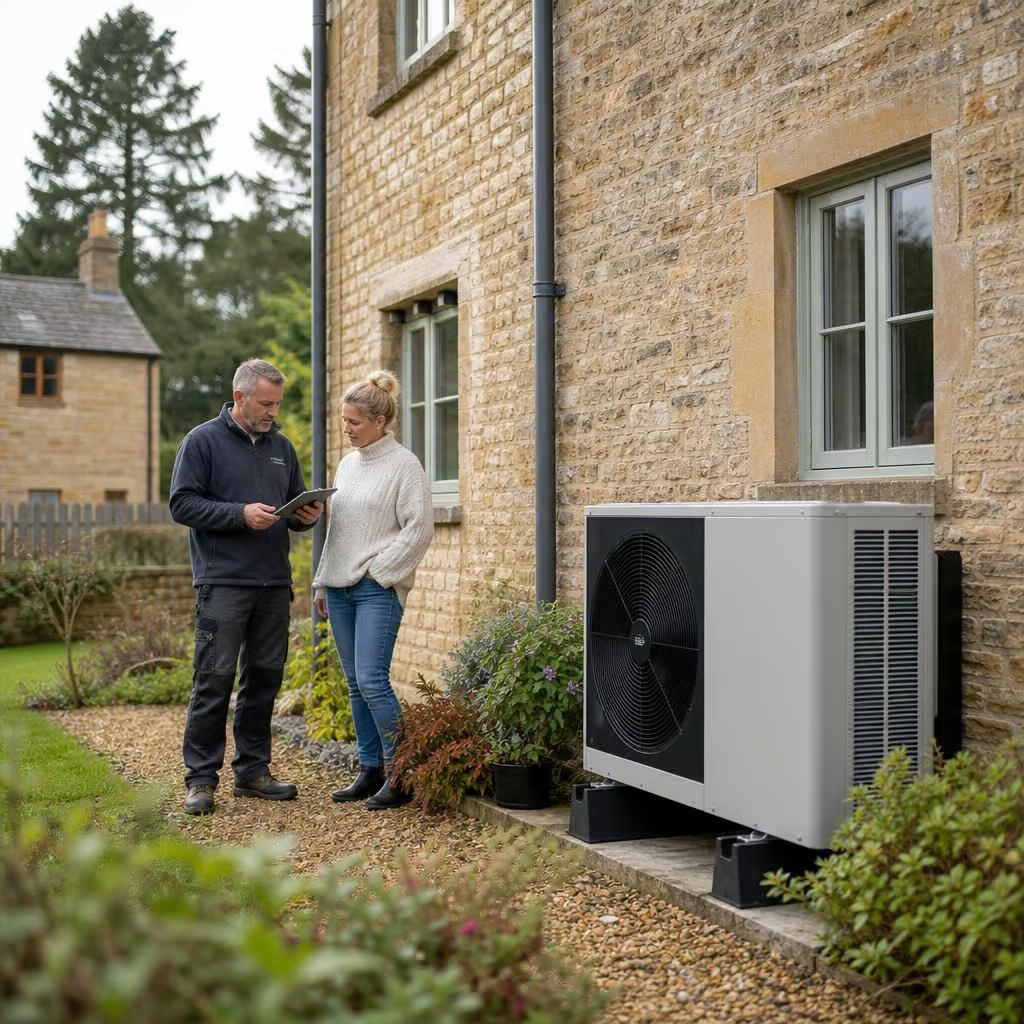
An older home may feel different with a heat pump because the system is designed to maintain a steady temperature, rather than heat rooms quickly from cold. The controls are set around the property’s heat loss and the household’s routine.
If rooms are allowed to cool fully, the system may need longer to bring them back up to temperature. We set the heating curve and room controls during commissioning, then show you how small adjustments affect comfort and electricity use. That gives you a system you can operate sensibly, without treating it like an oversized boiler.