
What qualifications should an air source heat pump installer have?
Look for an MCS-certified installer with trained heating, electrical and plumbing engineers who can design the system, check heat loss, size the radiators and complete the required electrical work. MCS certification also allows the installer to apply for a Boiler Upgrade Scheme grant on your behalf and makes the installation eligible for the Smart Export Guarantee.
The most important qualification is MCS certification for the installer and the installation they design. It shows that the work follows recognised standards for renewable heating, rather than being treated as a standard boiler replacement. It also means the installer can apply for a Boiler Upgrade Scheme grant on your behalf, where the property and system meet the scheme rules. MCS certification makes the installation eligible for the Smart Export Guarantee when surplus electricity is exported from a suitable renewable system.
Check that the certification covers air source heat pumps, not only solar PV or another renewable technology. An installer should be able to provide its current MCS details and explain which parts of the project that certification covers. The certificate should relate to the installing business, rather than relying only on a course completed by an individual who no longer works there.
Look for evidence of practical competence as well as certificates. A suitable installer should understand how a heat pump behaves differently from a gas or oil boiler. That includes lower flow temperatures, longer heating periods, weather compensation, hot-water control and the effect of insulation and draughts on the result. Ask how the proposed system will operate in your type of property, especially if it has solid walls, older pipework, mixed radiators or an oil or LPG system.
Your property may need more than the outdoor unit and cylinder. The installer should be competent to deal with the connected work, including heating pipework, hot-water controls, condensate drainage and the electrical supply. NICEIC registration is relevant where the work includes electrical installation or alterations. WaterSafe or CIPHE credentials are useful evidence that the plumbing and heating work is being carried out by appropriately trained people.
Electrical work should not be treated as an afterthought. The installer needs to establish whether the consumer unit, protective devices, earthing arrangements and supply can safely support the equipment. If changes are needed, ask who will carry them out and what certification you will receive. A qualified installer should explain any additional electrical work before you accept the quotation.
Building regulations knowledge matters too. The installer should know which parts of the project require notification or certification, including the heating system, electrical alterations and any changes to the building. They should explain who handles the paperwork and give you copies of the relevant certificates when the work is complete. For a listed building or property in a sensitive setting, ask how planning restrictions and the outdoor unit’s position will be considered.
A competent installer will also assess the practical risks of the site. The outdoor unit needs suitable clearance for airflow and access for maintenance. Its position can affect noise, appearance, pipe routes and the discharge of defrost water. The installer should discuss these points with you before fixing the design, rather than leaving them to the installation team on the day.
Ask what happens at handover. The system should be commissioned properly, with settings checked and controls explained in plain language. You should receive the design information, equipment details, electrical and building regulations certificates, MCS documentation and operating instructions. The paperwork should identify the system that was actually installed, not just provide a generic product leaflet.
Good commissioning also gives you a useful starting point if the system later needs attention. Ask whether the installer records the final settings and explains what to check if the home feels colder than expected, the hot water does not reach the required temperature or an alert appears on the controller. A heat pump is more dependent on correct settings and system balance than a conventional boiler, so handover is part of the installation rather than an optional extra.
Before choosing an installer, ask these practical questions:
- Is the business currently MCS-certified for air source heat pump installations?
- Can it show examples of work on properties similar to yours?
- Who will carry out the electrical, plumbing and heating work?
- Which building regulations, planning and grant documents will be completed?
- What design information and certificates will you receive at handover?
- What is included if the proposed system needs radiator, pipework or consumer unit changes?
At Alderminster Group, our MCS certification supports the grant and export paperwork where you qualify, while our NICEIC-registered electrical team handles the associated electrical work. Our WaterSafe and CIPHE credentials support the plumbing and heating side of the installation. You receive a written quotation before work starts, with the included work and any likely additional requirements set out clearly.
The right installer should make the qualification evidence, design decisions and completion paperwork easy to understand. If a quotation gives you a unit price but no clear explanation of the design, certification or handover documents, ask for those details before comparing it with another.
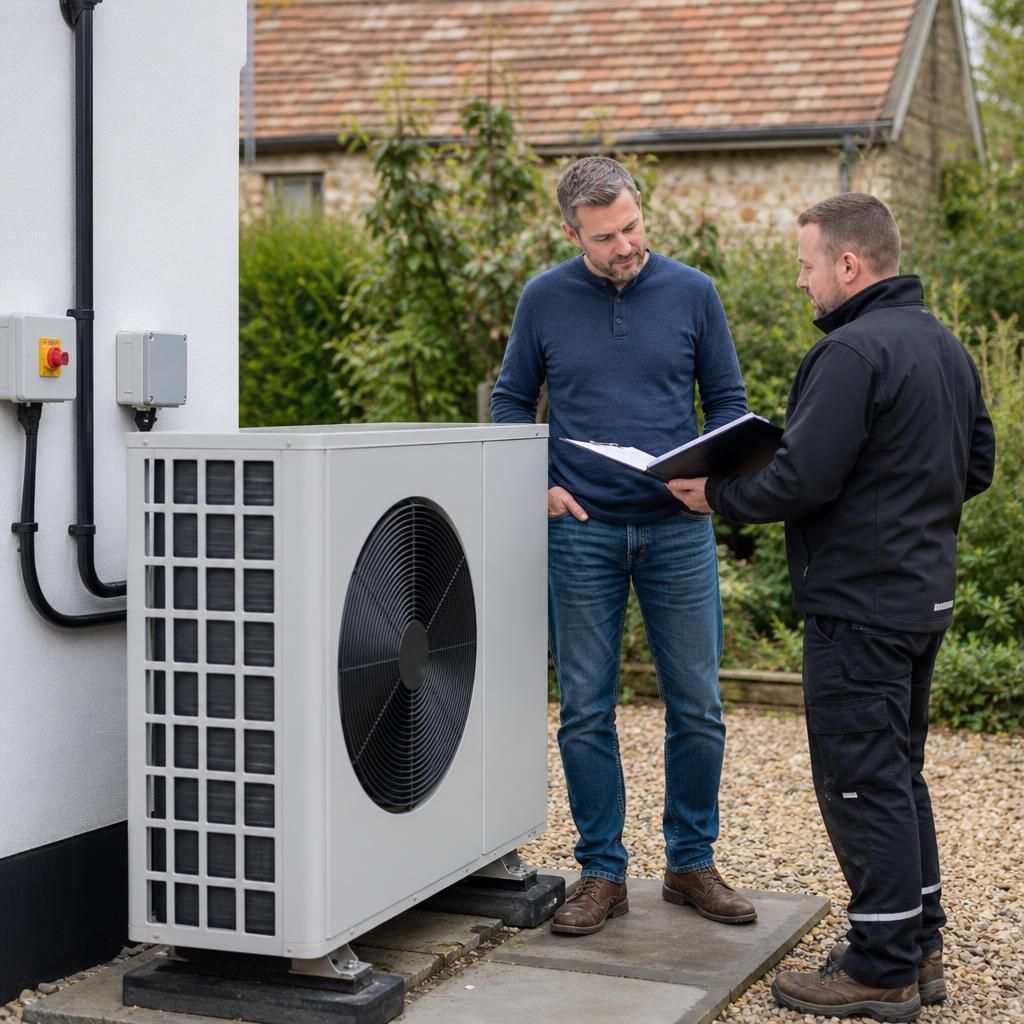
The type of heat pump affects the qualifications needed. A monobloc system keeps the refrigerant circuit sealed within the outdoor unit, while a split system has refrigerant pipework between the outdoor and indoor units.
If the design uses a split system, ask who is qualified to work on that refrigerant circuit. The installer should explain which parts of the work require refrigerant handling certification and identify the person carrying them out. That check helps you avoid a handover between trades where responsibility is unclear.
Ask for the proposed system type before comparing qualifications. You can then check that the installer’s training matches the equipment being fitted, rather than relying on a general claim that the business works with heat pumps.
Talk to us about your air source heat pump installation
If you’re comparing heat pump installers and want to test a proposed design against your home, contact us to discuss the survey, system layout and paperwork you should expect. We’ll explain what the installation would involve before you decide whether to proceed.