
How long does a ground source heat pump installation take?
There’s no reliable single timescale for a ground source heat pump installation: the overall project depends mainly on the ground works, pipe routes and heating changes. We assess these during the survey and provide a clear installation programme before work starts.
There is no fixed timetable for a ground source heat pump installation. The work on site usually takes several days, but the complete programme depends mainly on the ground loop, access for excavation equipment and the changes needed inside the property.
The main stages are:
- Survey and design: We assess the heat loss of each room, the available ground area, access routes and the position of the plant. Your existing radiators, pipework, hot water cylinder and electrical supply all affect the design.
- Ground loop planning: We establish whether horizontal trenches or boreholes are more suitable. The ground conditions, available space and any existing services can alter the excavation method and the time needed.
- Groundworks: We install the buried pipework and connect it to a manifold. Horizontal collectors need excavation across the available land, while boreholes require specialist drilling equipment and a suitable working area.
- Plant installation: We position the heat pump, cylinder, controls and associated equipment inside the property. We then connect the ground loop to the heat pump and the heat pump to the heating and hot water systems.
- Heating system changes: Older radiators or narrow pipework may need upgrading so the system can deliver enough heat at the lower flow temperatures used by a heat pump. We schedule this work alongside the main installation rather than treating it as an afterthought.
- Electrical work: The heat pump needs an appropriate electrical supply and protective equipment. If the existing consumer unit or cabling is not suitable, those changes become part of the programme.
- Commissioning: We fill and test the ground loop, balance the heating system, check the controls and run the heat pump through its operating settings. We explain the controls before leaving, so you know how to adjust heating and hot water.
Groundworks are usually the part that creates the greatest variation. A clear, accessible garden may allow the loop installation to follow a straightforward sequence. Restricted access, steep ground, existing paving, mature planting or unknown buried services can require more preparation. Wet weather and difficult ground can also affect excavation and reinstatement.
A borehole installation follows a different programme from a trench-based system. Drilling requires room for the equipment, and the drilling conditions determine how the work progresses. We assess those practical issues during the survey rather than relying on a standard timetable.
Your house may need work before the heat pump is connected. In an older solid-wall home, heat-loss improvements or larger radiators can influence the final design. Barn conversions and listed buildings may need careful routing for pipework and services. We identify these points before work starts, so the installation does not depend on assumptions about the existing system.
The indoor installation can often be planned around the groundworks, but the two parts still need to be coordinated. The heat pump cannot be commissioned until the buried circuit, indoor equipment, heating system and electrical supply have all been tested. A delay in one part can therefore move the final handover date.
Before we begin, we explain which work is included, what needs to happen first and which decisions could affect the programme. Our quotation sets out the agreed scope before work starts. If the survey finds unsuitable access, additional heating upgrades or another issue that changes the plan, we discuss it with you before carrying out extra work.
The final result is not simply a heat pump connected to the existing boiler system. The ground loop, heat emitters, controls, hot water equipment and electrical supply must work together. Allowing time for testing and adjustment helps us leave you with a system that has been set up for the actual property rather than a generic installation.
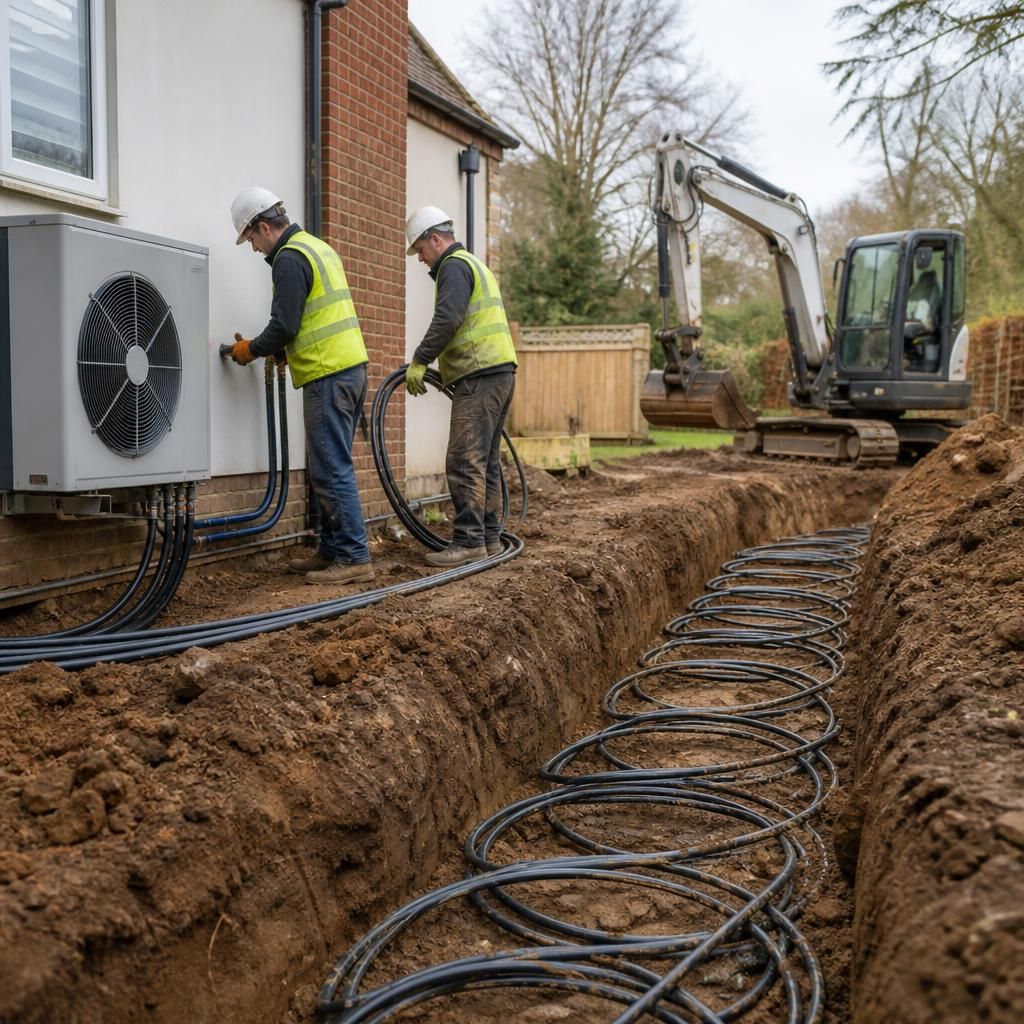
The installation date depends on having the main decisions settled beforehand. We need to agree the ground loop method, plant location and routes for the new pipework before excavation begins. That lets us arrange the right equipment and avoid changing the plan once work is under way.
If access passes through a gate, driveway or outbuilding, we discuss how machinery and materials will reach the work area. You’ll know which parts of the property need to be cleared and how the work will be sequenced before the first ground is opened.
Discuss your ground source heat pump installation timeline
Tell us about your property, heating system and available ground, and we can discuss the likely installation sequence. We’ll arrange a survey to confirm the ground loop method, equipment location and work needed before providing a written quotation.