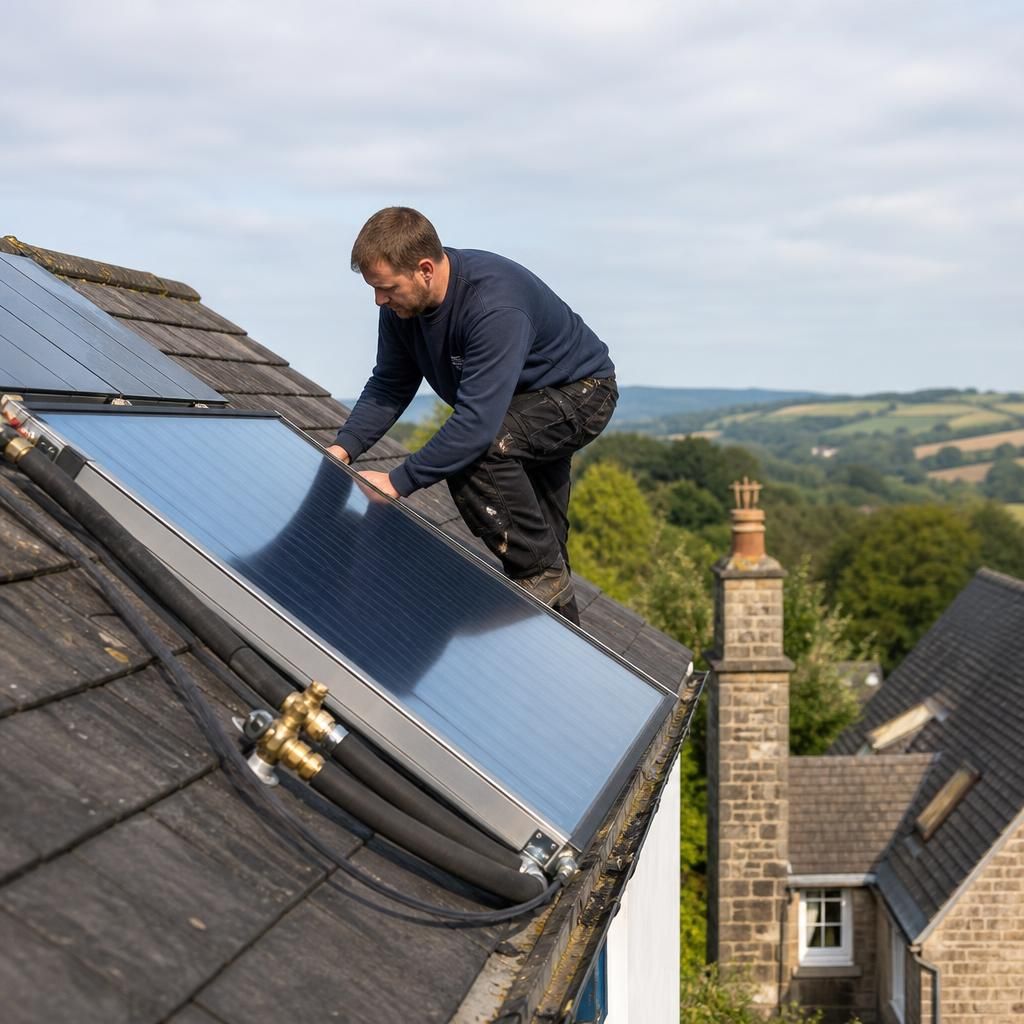
How much does solar water heating cost?
Solar water heating costs vary with the collector area, hot-water cylinder, roof access and plumbing changes your home needs. We assess those details first, then provide a written quotation so you can see the full installation cost before deciding.
There isn’t a dependable single price for solar water heating. The total depends on the collector area, the hot-water cylinder and the work needed to connect the system to your existing heating. A proper quotation should show each part separately, rather than present a headline figure that may not match your home.
The main costs are usually:
- Solar collectors, roof fixings and the frame or mounting system.
- A solar-compatible hot-water cylinder, if the existing cylinder cannot accept heat from the collectors.
- The pump station, controller, expansion vessel and associated safety components.
- Insulated pipework between the roof and cylinder, including any internal boxing or access work.
- Electrical connections for the pump and controls.
- Scaffolding, roof access and any necessary making good.
- Removal or alteration of existing equipment where it cannot remain in place.
Your existing cylinder can make a significant difference to the price. A standard cylinder may not have the additional coil needed for solar input, so we check its specification rather than assume it can be reused. Replacing it adds equipment, plumbing and labour, but may also be necessary for the system to work safely and effectively.
The roof affects the installation cost as well. A suitable south-facing roof is not essential, but orientation, pitch, shading and available area all affect the collector layout. A roof with straightforward access usually needs less preparation than one with limited access, several roof surfaces or difficult scaffolding requirements. We also check the roof covering and the proposed pipe route before pricing the work.
Older properties often need more careful planning. Solid-wall houses, barn conversions and listed buildings may have longer internal pipe routes, unusual roof construction or restrictions on visible equipment. If planning or conservation consent is relevant, we explain that before work is agreed. Solar water heating can also work alongside oil, LPG, gas or electric heating, so being off the gas grid does not rule it out.
Your quotation should explain what is included. We set out the collector arrangement, cylinder specification, controls, pipework, electrical work, access equipment and making good. It should also identify anything we have excluded, such as roof repairs or changes requested after the survey. We provide the written quotation before work starts, so the expected cost is clear before you make a decision.
Running costs are generally linked to the circulation pump and controls, along with periodic servicing and any replacement components. The conventional boiler, immersion heater or other backup still remains important because solar energy varies through the year. During brighter months, the collectors may provide a greater share of hot-water heating. In colder or duller periods, the backup system will need to contribute more.
That seasonal pattern means the financial case must be worked out for your household rather than copied from another installation. We look at hot-water demand, the fuel currently used, cylinder capacity, roof conditions and the likely backup arrangement. A home with high hot-water use and suitable roof space may have a different payback from a property with low demand or substantial shading.
Grant and other funding arrangements can change, and solar water heating does not automatically qualify for every renewable-energy scheme. We check the current position for the proposed system and explain any eligibility conditions before you rely on funding in your budget. Where certification is required, our MCS-certified renewable energy team can provide the relevant installation paperwork and explain what it means for the application.
The most useful comparison is therefore not simply the lowest installation price. Check whether each quotation includes the cylinder, access equipment, controls, electrical work, insulation, commissioning and paperwork. A lower figure may leave out an item that your property will need.
We assess the roof, cylinder, pipe routes and existing heating arrangement first. You then receive a written quotation based on the actual work, together with an explanation of how solar water heating would fit into the rest of your system.
Solar water heating is often confused with solar PV, but the systems do different jobs. Solar collectors heat water directly, while PV panels generate electricity. Their equipment, installation work and likely value to your home cannot be compared by headline price alone.
If your priority is reducing the energy used for hot water, we assess the current cylinder and heating arrangement. If you want electricity for appliances or battery storage, a different assessment may be more suitable. We explain what the quoted system is designed to do, so you can compare the right options for your home.