How much maintenance does solar water heating need?
Solar water heating needs little day-to-day attention, but periodic servicing helps keep the collectors, pump, controls and hot-water cylinder working efficiently. We check the system’s fluid, pressure, valves and insulation, then explain any maintenance costs before carrying out repairs or replacing worn parts.
Solar water heating needs very little attention between services. The main costs usually arise when heat-transfer fluid, pumps, sensors, valves or seals eventually need replacing rather than from routine cleaning.
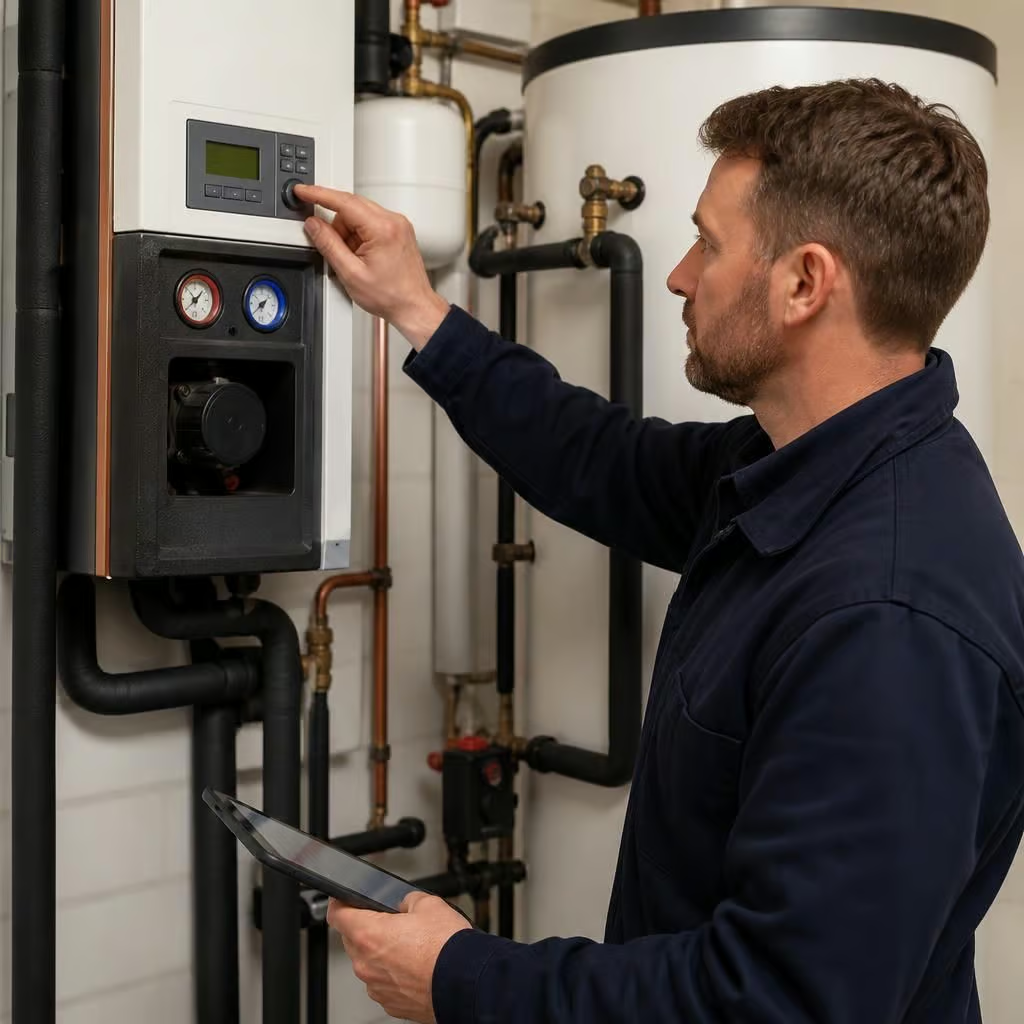
Most of the care happens during a planned service. We measure the system pressure and check the fluid’s concentration and condition. If the fluid has degraded, it can lose its frost protection and transfer heat less effectively. We also inspect the expansion vessel, safety valve, pipe insulation and visible joints for signs of leakage or deterioration.
A controller fault, unusual pump noise or a cylinder that stays cold can indicate a problem elsewhere in the system. We test the temperature sensors and controls rather than assuming the collectors are at fault. That helps avoid replacing working equipment when the issue is a failed sensor, valve or electrical connection.
There is little for you to do day to day. Keep an eye on the display and note any warning symbols or unusual readings. Look at accessible pipework and the area around the cylinder for damp patches. Do not adjust system pressure or open safety valves yourself. Solar circuits can become very hot, even when no hot water has been used.
Roof-mounted collectors are built to withstand normal weather, so they do not usually need frequent cleaning. Dust and rain generally have less effect than shading, a damaged panel or a circulation fault. If trees grow close to the roof or birds leave persistent debris, we can assess whether cleaning is safe and likely to make a worthwhile difference.
Winter maintenance matters on properties that can fall below freezing. The correct fluid concentration protects the collector circuit and external pipework from frost. Older or poorly insulated pipework can still be vulnerable, particularly around roof penetrations and exposed sections. We check those areas as part of the wider system assessment.
Long periods of low hot-water demand can also affect how the system operates. On bright days, the collectors may produce more heat than the cylinder can store. The system’s controls and heat-dissipation arrangements need to manage that heat safely. We check that the cylinder, backup heating and controls work together instead of treating the solar circuit in isolation.
Routine maintenance is normally less disruptive than a repair. We can usually carry out the checks at the cylinder and control equipment without entering every room. Work on roof-mounted collectors may need safe access equipment, which we discuss before arranging it. If a part needs replacing, the quotation should identify the component, the access required and any associated plumbing or electrical work.
The cost depends on the system’s age, its accessibility and what the inspection finds. A straightforward service is different from draining and refilling a circuit, replacing a pump or repairing a leak. We provide a written quotation before repair work starts, so you can decide whether to proceed without unexpected charges.
Different parts have different service lives. The collectors and cylinder may continue working for many years, while pumps, seals, sensors, valves and heat-transfer fluid are more likely to need attention sooner. Corrosion, poor installation, prolonged overheating and neglected fluid can shorten the life of the system. Finding those issues early gives you a clearer choice between repair and replacement.
When a solar water heating system reaches the point where several major components need replacing, we assess the cylinder, collectors, pipework and controls together. That shows whether a repair is sensible or whether renewal would be more practical. For older homes, we also consider how the system connects with the existing hot-water cylinder and backup heating.
We record the condition of the equipment and explain any work that can wait, any fault that needs attention and any safety issue that should not be postponed. That leaves you with a clear maintenance plan rather than a recommendation to replace equipment without knowing why.
The solar circuit can be healthy while the hot-water controls quietly limit its benefit. If the cylinder thermostat, timer or backup heating is set incorrectly, the boiler or immersion heater may run when the collectors could provide heat. We test the controls together and explain any adjustment needed, so the system uses solar heat as intended without leaving you short of hot water.