
Is solar water heating suitable for my home?
Solar water heating can suit your home if the roof receives enough sunlight and you have space for a compatible hot water cylinder. We assess the roof, hot water demand, cylinder and planning constraints before advising whether it’s practical for your property.
Solar water heating is most suitable when a household uses a meaningful amount of hot water and can support a dedicated cylinder system. It can work well alongside an existing boiler, oil or LPG heating system, but it does not replace the boiler or provide most of the home’s space heating.
Your hot-water habits matter. A home with several occupants, regular baths or consistent daily hot-water use is more likely to make good use of the heat collected. If the property is often empty or uses very little hot water, the system has less opportunity to offset another heat source. We look at the pattern of demand rather than assuming that a larger installation will be better.
The cylinder is central to the decision. Solar collectors heat water through a separate circuit, which normally feeds a cylinder with an additional coil. Some existing cylinders can be adapted, while others need replacing because they have the wrong coil arrangement, insufficient capacity or controls that cannot manage two heat sources. A combi boiler system usually has no stored hot water for the solar circuit to heat, so adding a cylinder may be a substantial part of the work.
Space inside the property matters as much as the equipment on the roof. We need to plan for the cylinder, pump station, expansion equipment and insulated pipework between the collectors and the hot-water store. On an older house, we check the route carefully so that new pipework does not damage original plaster, exposed beams or finished rooms.
Solar water heating works with a backup. The boiler, immersion heater or another approved heat source raises the cylinder temperature when the collectors have not supplied enough heat. This is particularly important in winter, during prolonged cloudy weather and when several people need hot water at once. The system is designed to reduce reliance on the backup source, not leave the household dependent on sunshine.
That seasonal pattern suits some homes better than others. Solar input is usually strongest when hot-water demand for showers and washing continues, but the system cannot be judged on summer performance alone. We consider how the backup heating is controlled and how the cylinder will reach the required temperature throughout the year.
Older and off-gas-grid properties are not automatically ruled out. Solar thermal can be connected to an oil-fired or LPG heating system if the cylinder and controls are suitable. This can be useful where replacing the main heating system is not part of the plan. The existing boiler remains responsible for space heating and for topping up hot water when solar input is insufficient.
Listed buildings, properties in conservation areas and houses with unusual roof construction may need additional checks. The collector position, fixings and pipe route must work with the building’s appearance and structure. We can identify when planning or listed-building consent needs to be considered before installation proceeds.
Solar water heating may not be the best renewable choice in every case. A home with no practical cylinder location, very low hot-water use or difficult internal pipe routes may gain little from the work. In some properties, solar photovoltaic panels with an immersion diverter or battery storage may fit the household’s electricity use better. We only suggest that comparison when it bears on the way the home produces hot water.
We assess the roof construction, collector location, cylinder, pipe routes, controls and existing heat source during the survey. We then explain which parts can stay, which need changing and how the system will operate alongside the heating already in the property. The quotation sets out the equipment and work before anything starts, so the decision is based on the actual house rather than a standard package.
Solar water heating is therefore most convincing when the property has steady hot-water demand, a suitable stored-water arrangement and a sensible route for connecting the roof equipment to the cylinder. If those conditions are not present, we will explain why another approach may make better practical and financial sense.
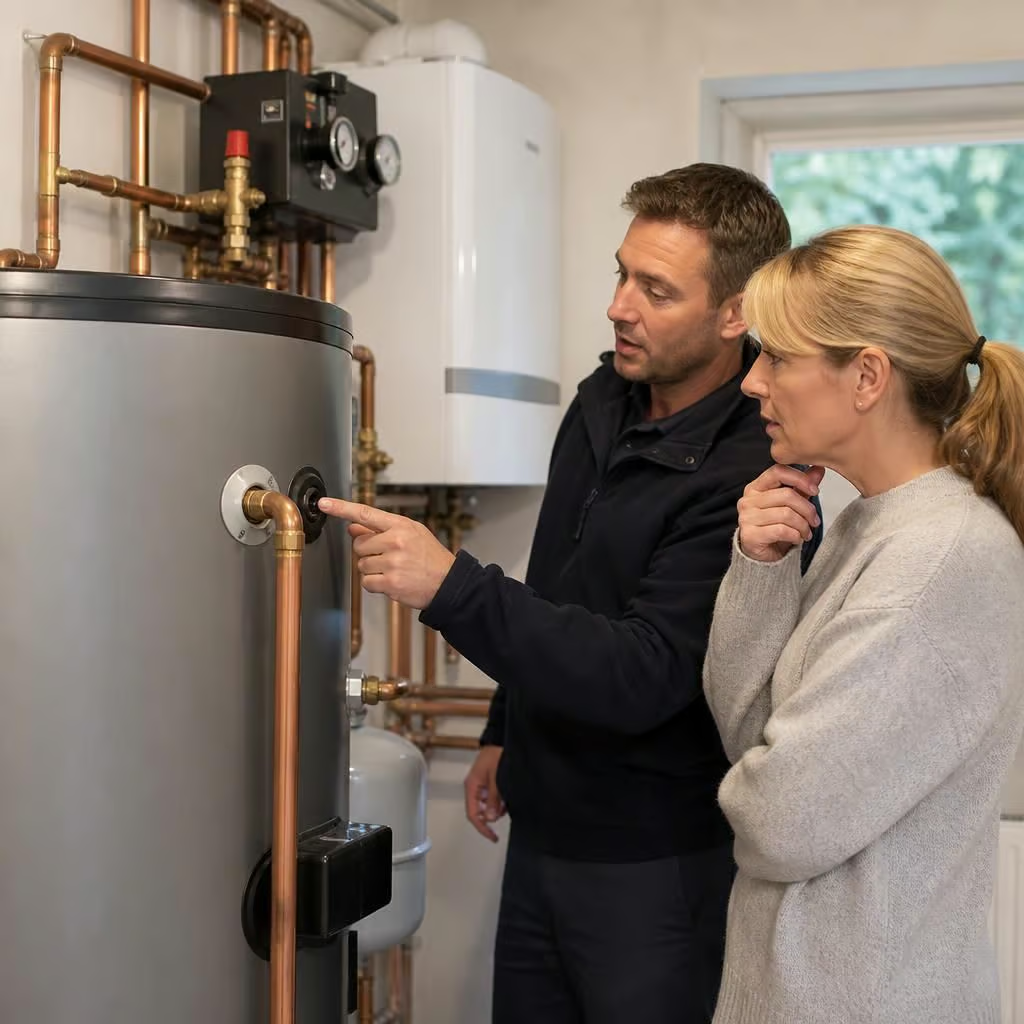
A solar thermal system is a good fit when your home can store the heat it collects. We match the collector size, cylinder capacity and controls to the way your household uses hot water, rather than treating the roof alone as the deciding factor. That leaves you with a system that works alongside the existing boiler or immersion heater and uses backup heat only when the stored water needs it.