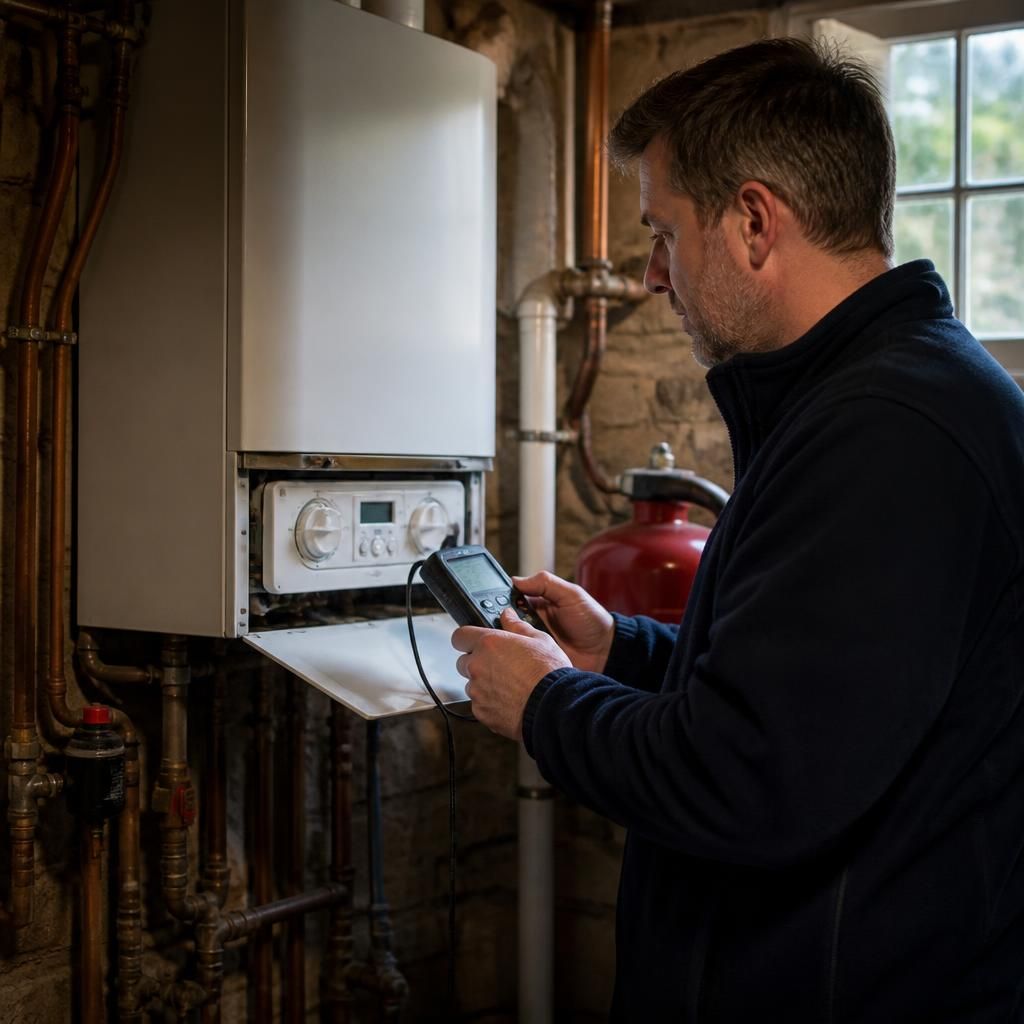
Is boiler maintenance suitable for an older heating system?
Yes. Boiler maintenance is particularly useful for an older heating system because it can identify wear, corrosion and unsafe operation before a minor fault becomes a breakdown, although we’ll tell you plainly if the boiler’s condition makes replacement more sensible than continued servicing.
Age alone does not make a heating system unsuitable for maintenance. An older boiler can remain a sensible option when it is safe, reliable enough for the property and supported by serviceable components. Maintenance helps you understand its present condition, but it cannot make an obsolete or failing boiler economical indefinitely.
The boiler is only one part of an older heating system. Pumps, motorised valves, expansion vessels, thermostats, radiators and pipework can all affect heating performance. A boiler may appear to be working while a sticking valve, restricted circulation or a leaking radiator is putting extra strain on it. We look at the connected system as well as the appliance, so the advice relates to the way the heating actually operates.
Older gas boilers need checks on combustion, operating pressure, the heat exchanger, burner, flue and safety controls. Gas Safe registration is the legal requirement for engineers working on gas boilers. For an oil-fired system, we inspect the burner, flue, oil supply and safety controls under the requirements that apply to oil heating. OFTEC registration matters here, particularly on homes that are not connected to the gas network.
If the boiler is a condensing model, we also consider the condensate pipe, trap and drainage route. Older heating systems may have been altered several times, so pipework and controls do not always match the boiler. We check for poor circulation, corrosion, sludge symptoms and controls that no longer respond properly. These findings can explain cold radiators, repeated pressure loss, unusual noises or rooms that take too long to heat.
Maintenance is often worthwhile when:
- the boiler passes its safety checks and has no serious combustion or flue defect;
- replacement parts remain available and repair costs are proportionate;
- the system heats the property adequately without repeated breakdowns;
- the radiators, pump and controls are still capable of working together properly; and
- you want to keep the existing system while planning a replacement carefully.
It may be time to consider replacement instead when the boiler has recurring faults, serious corrosion, an unsafe flue arrangement or a major component that is no longer available. Frequent repairs can also make continued use difficult to justify, even when each individual repair appears manageable. We explain what we find and separate an immediate safety issue from a later efficiency or reliability concern.
Maintenance cannot correct every weakness in an older installation. It will not turn undersized radiators into larger ones, remove all sludge from a restricted system or make an old boiler operate like a modern replacement. It can, however, identify these limitations before they cause a larger fault. If the system needs a power flush, control change, radiator replacement or pipework alteration, we set that out separately rather than treating it as part of a routine service.
The age and construction of the property also matter. Solid-wall houses, barn conversions and older rural homes can have unusual pipe routes, mixed radiator sizes or heating zones added at different times. Oil and LPG systems may have different access and fuel-supply arrangements from a standard gas installation. We take those details into account before recommending work, rather than judging the boiler by age alone.
During a visit, we record the boiler’s condition, test the relevant safety functions and discuss any symptoms you have noticed. You receive a clear explanation of what needs attention now, what can be monitored and what may justify replacement later. If continued maintenance is sensible, we can keep the existing system under review. If replacement is the better route, the information from the inspection helps define what the new heating system must deliver.
For an older heating system, the useful decision is not simply to keep it or replace it. It is to understand whether the appliance and the rest of the installation remain safe, supportable and suitable for the home. A proper assessment gives you that basis before you commit to either ongoing repairs or a full upgrade.
Intermittent faults can be difficult to assess during a single visit. Before we arrive, note any fault codes, pressure changes, unusual noises or rooms that stay cold. Tell us when each problem occurs, especially after the heating has been switched on or hot water has been used.
That information helps us distinguish a boiler fault from a problem elsewhere in the system. It also gives you a clearer answer about whether regular maintenance remains worthwhile, or whether repeated symptoms point towards planned replacement.