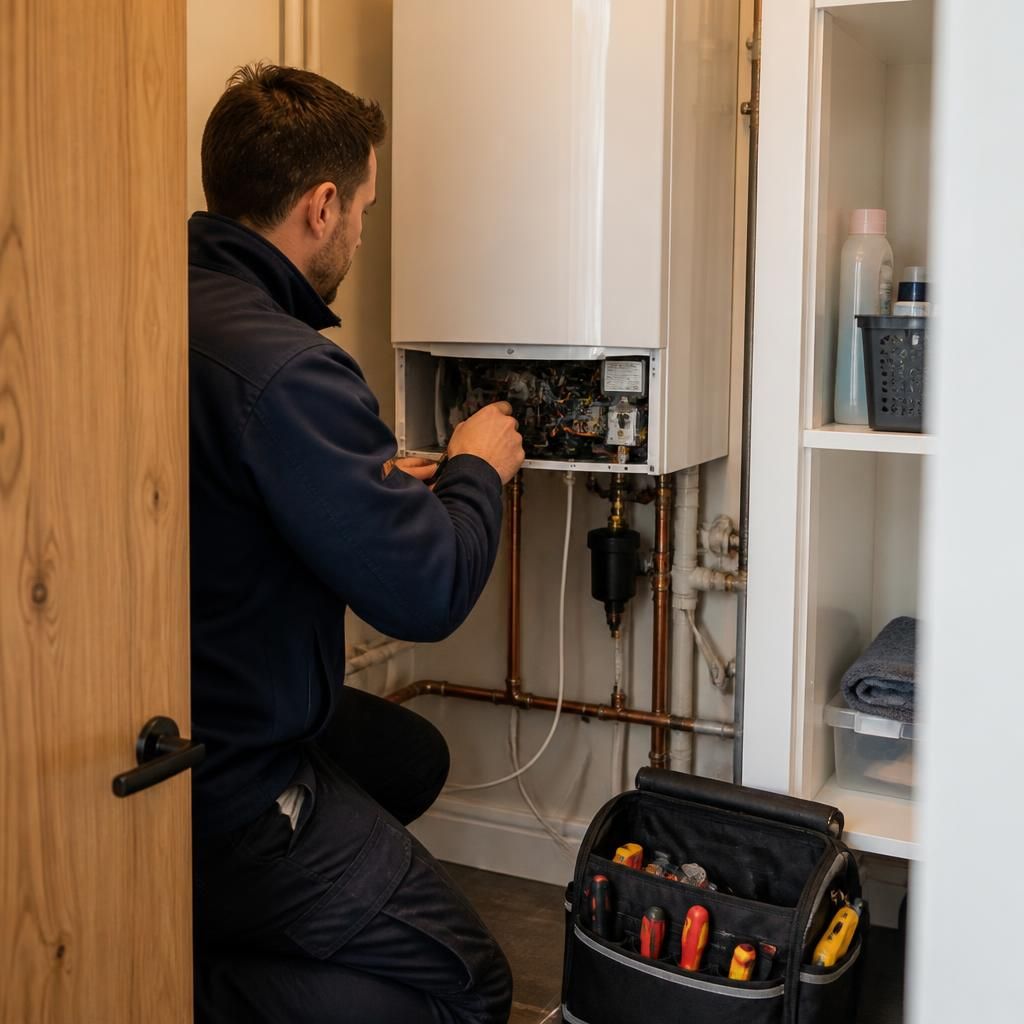
What access is needed for boiler maintenance?
We need clear access to the boiler, its controls, visible pipework and the flue, including any external termination point we must inspect. Move stored items away beforehand and tell us about locked rooms, loft access or restricted areas so we can service the system safely and efficiently.
For boiler maintenance, the engineer needs enough room to inspect the appliance, remove its service panels and test it safely. The boiler itself must be reachable without moving furniture or dismantling fixed cupboards.
If the boiler is inside a kitchen or airing cupboard, clear the shelves and make sure the doors open fully. Stored items can obstruct the casing, controls or pipework. The engineer may need to work directly in front of the appliance, so a narrow gap is not always sufficient.
Some boilers are installed in lofts, garages or utility rooms. The route to the appliance must be safe to walk and free from loose boards, stored materials and trip hazards. A loft installation also needs a secure loft hatch, suitable lighting and a safe working platform. Do not climb onto a roof or attempt to reach an external flue yourself.
We may need to see parts of the flue that are not beside the boiler. This can include the terminal outside, inspection points and sections passing through a cupboard or ceiling. If the flue is boxed in, tell us where it runs and let us know about any access panels. We will not open up walls or ceilings as part of a routine service without discussing it first.
The controls should be available so we can check the boiler’s operation and investigate any fault codes. If the thermostat, programmer or heating controls are in another room, make sure we can reach them. Access to the electrical isolation switch may also be needed if the boiler has to be safely powered down.
For a gas boiler, maintenance can include combustion checks and inspection of the gas connection. If the gas meter or emergency control valve is in a locked cupboard, arrange access before the visit. This matters if a safety concern means the gas supply needs to be isolated.
An oil-fired boiler needs similar working space around the appliance, with additional access to the burner, oil line and fire valve where these are part of the checks. If the boiler is in an outbuilding, make sure the route is usable and that any locked gates or doors can be opened.
- Clear the space directly in front of the boiler.
- Remove items from cupboards containing the appliance, flue access panels or controls.
- Make loft hatches, garages, boiler rooms and meter cupboards accessible.
- Tell us about concealed flues, unusual pipe routes or previous building work.
- Keep pets and children away from the working area while the inspection takes place.
If the boiler is difficult to reach, we will explain what prevents the maintenance from being completed and what access is needed. We will not carry out checks in an unsafe position. On older properties, careful planning is particularly useful because boilers may be hidden in tight cupboards, loft spaces or later extensions.
Routine maintenance normally focuses on the boiler and its associated safety components. If you have also reported cold radiators, pressure loss, unusual noises or control problems, we may need access to the relevant radiators, pipework or controls to investigate those faults properly.
Your boiler cupboard may look accessible but still restrict the clearances needed for safe servicing. Don’t remove doors, boxing or ventilation grilles before the visit. We’ll check whether the installation can be reached without affecting the boiler’s required airflow or service space.
If the cupboard is too tight or the flue cannot be inspected properly, we’ll explain the specific restriction and any practical change needed. That could mean clearing the enclosure, providing access to an inspection panel or arranging a separate alteration before maintenance can be completed.