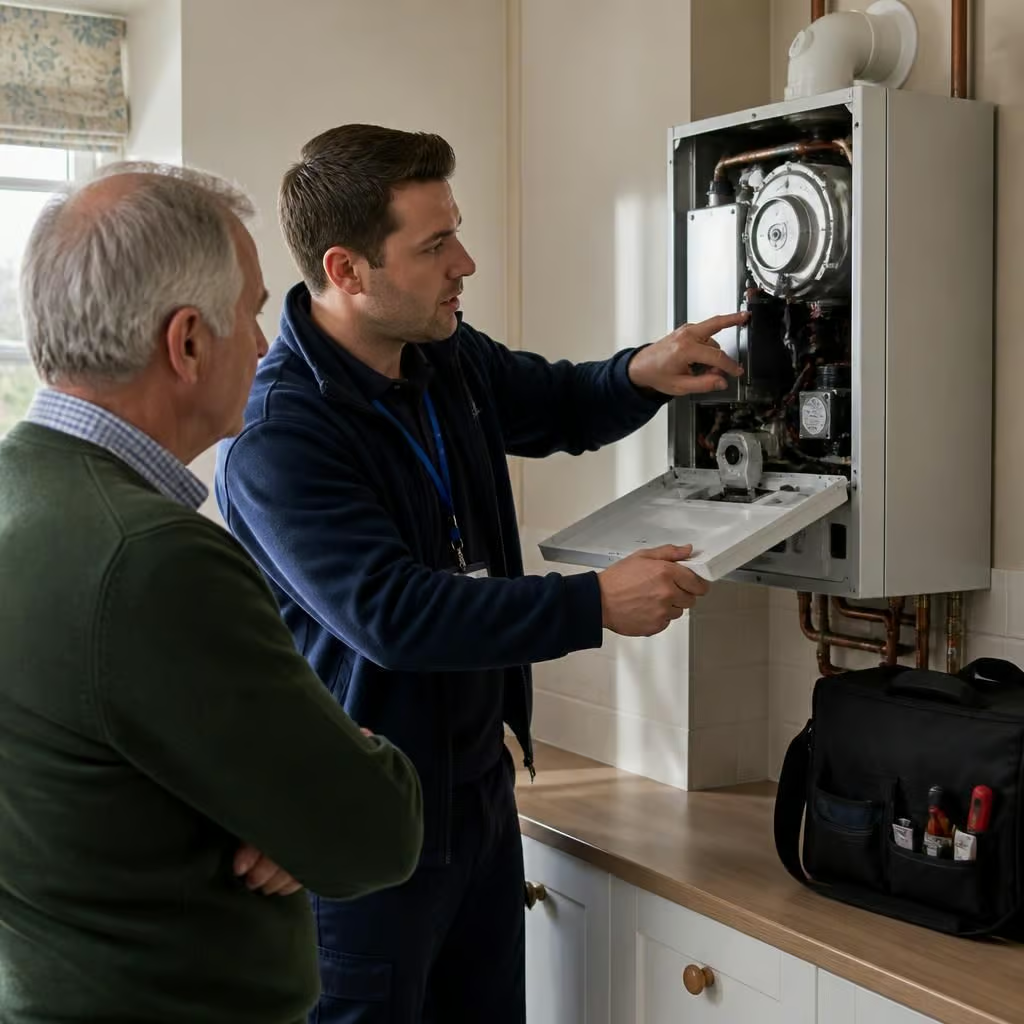
Is my boiler suitable for repair?
Your boiler is usually suitable for repair when the fault is identifiable, the appliance is safe and replacement parts are available. If it is repeatedly failing, badly corroded, unsafe or no longer economical to repair, replacing it may be the safer choice.
The deciding issue is not the boiler’s age alone. A repair is usually suitable when the fault is limited, the appliance remains safe to operate and the necessary parts can still be sourced. Replacement becomes more sensible when the boiler has several linked problems, has become difficult to support or needs costly work to keep an inefficient system running.
Start with the symptoms, not the diagnosis. A boiler that will not start may have a failed sensor, ignition component, pump, control board or thermostat. Low pressure may point to a leak, expansion vessel problem or pressure relief issue. A boiler that keeps shutting down may be responding to a genuine safety fault rather than needing a simple reset.
Repeated resets are not a repair. If the fault returns, the boiler needs a proper assessment before anyone replaces parts. Continuing to run it can worsen the damage or leave a safety device unable to do its job.
- Minor component failure: a sensor, thermostat, valve, pump or ignition part may be repairable without replacing the appliance.
- Water or pressure problems: a small, identifiable leak or failed expansion vessel may be repairable, but hidden leaks and corrosion need closer investigation.
- Electrical faults: a boiler that trips the consumer unit or shows damaged wiring should stay switched off until an engineer checks it.
- Condensate problems: a frozen or blocked condensate pipe can stop a modern boiler, while a damaged or badly routed pipe may need more involved work.
- Control faults: a failed programmer, thermostat or wiring connection may be separate from the boiler itself and could cost less to correct than replacing the appliance.
Some signs mean the boiler should not be used. Turn it off and arrange qualified advice if you notice a gas smell, soot, scorching, unusual fumes, a damaged flue, persistent water leaking near electrical parts or a carbon monoxide alarm. Do not remove the case or try to repair the appliance yourself. Gas work must be carried out by a Gas Safe registered engineer. For an oil-fired boiler, an OFTEC registered engineer is the appropriate choice.
The flue matters as much as the boiler casing. A cracked, disconnected or poorly supported flue can allow combustion gases into the property. We check the flue, combustion, ventilation and safety controls before deciding that a repair is appropriate.
A boiler’s age helps with the decision, but it does not decide it. An older appliance may still be worth repairing if the fault is straightforward and the rest of the system is in reasonable condition. Replacement deserves more consideration when the boiler has needed several repairs, parts are discontinued or the heat exchanger, main control board or other high-value component has failed.
Efficiency also affects the decision. A repair may restore heating without addressing high fuel use, uneven room temperatures or poor controls. If the boiler is already struggling to heat the property, we look at the radiators, controls, pipework and hot-water requirements as well as the appliance. That shows whether repair solves the underlying problem or only restores a system that is no longer serving the home well.
The likely cost should be compared with the remaining service life. We explain which part has failed, whether other components show wear and what could reasonably fail next. We then set out the repair cost before work starts. If replacement is the safer or more practical route, we explain why rather than treating every fault as a reason to install a new boiler.
For an off-gas-grid home, the fuel type changes the assessment. Oil and LPG appliances have different components, servicing requirements and flue arrangements from gas boilers. A repair also needs to fit the existing tank, pipework, controls and heating demand. That is particularly important in older homes, barn conversions and properties with several heating zones.
During an assessment, we check:
- the fault codes, operating sequence and recent symptoms;
- combustion and safety controls;
- the flue, ventilation and condensate arrangements;
- water pressure, leaks, pump operation and expansion provision;
- the condition and availability of replacement parts;
- the boiler’s service history and previous repairs; and
- whether the boiler is suitable for the way the home now uses heating and hot water.
You do not need to decide on replacement before we inspect the fault. We can tell you what the repair involves, what risks remain and whether the boiler is a sensible candidate to keep. You receive the information needed to choose between repairing the existing appliance and planning a replacement, with the price set out before work begins.
A repair can restore heat without making the boiler a sensible long-term choice. If the appliance is difficult to support or another major component is showing wear, we’ll explain that clearly before work goes ahead.
That gives you a practical choice: repair the present fault and continue using the boiler, or plan a replacement before another failure causes disruption. We’ll separate what needs doing now from what can wait, so the decision is based on the boiler’s condition rather than the fault code alone.