Can I transfer my boiler warranty when I move house?
Often, but not automatically. The manufacturer usually needs the new homeowner’s details, and the warranty must still meet its registration, servicing and installation conditions.
In most cases, the warranty follows the boiler rather than the person who bought it. The transfer is not automatic, though. The manufacturer’s terms decide whether the remaining cover passes to the new owner and what information they need.
Check the warranty terms before completion. Some manufacturers allow a change of ownership with no charge. Others require the new owner to register the boiler within a set period, or limit the warranty after the property changes hands. The cover may also depend on the boiler having been installed correctly, serviced at the required intervals and kept within the manufacturer’s conditions.
The warranty normally covers faults in specified boiler parts or manufacturing defects. It does not usually cover every heating problem in the property. Radiators, controls, pumps, pipework and system water quality may fall outside the boiler warranty. Labour, call-out costs and replacement parts can also be treated differently, so read the exclusions rather than relying on the length of the warranty alone.
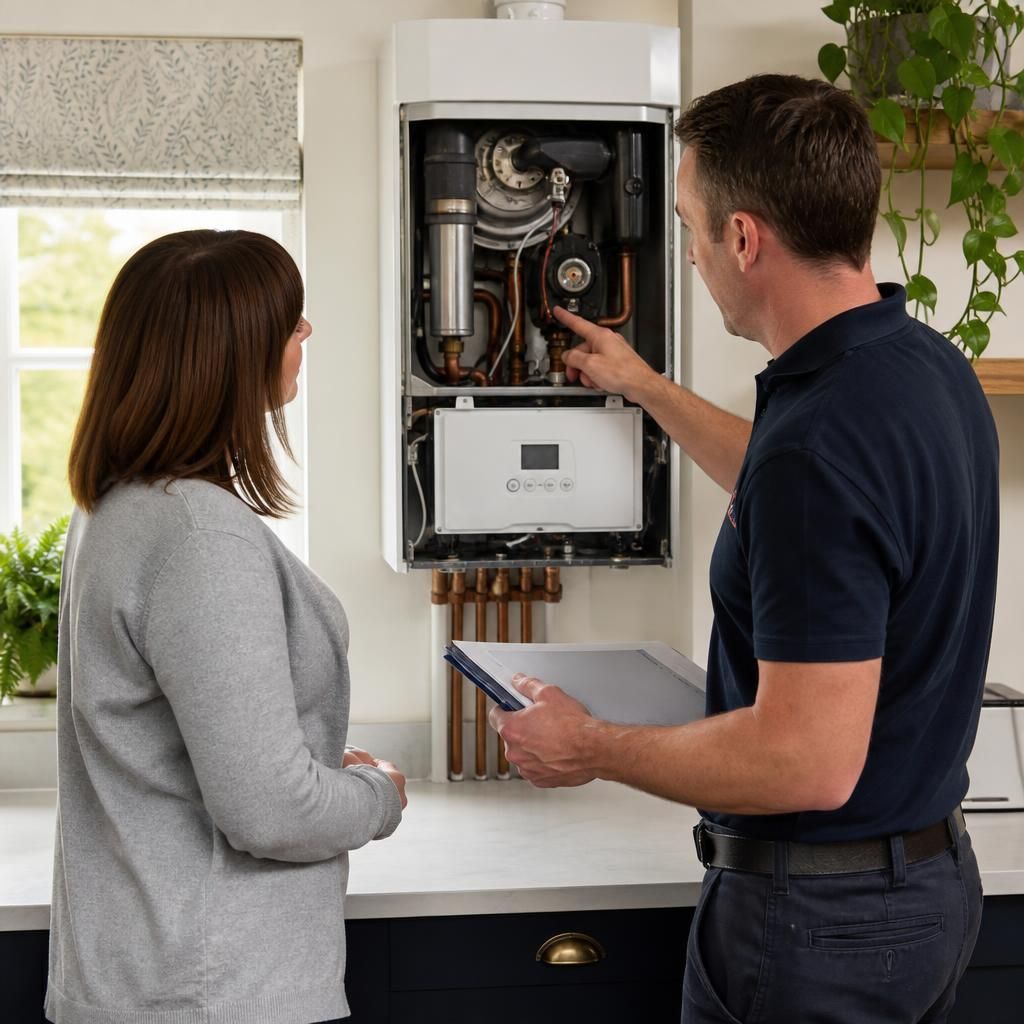
Ask the seller for the documents that identify the boiler. You should receive the installation certificate, warranty confirmation, service records and any correspondence about previous repairs. Take a clear photograph of the boiler’s model and serial numbers as well. The manufacturer will usually use these details to find the original registration and confirm how much cover remains.
After moving in, contact the manufacturer or its warranty administrator with the new address, owner’s name and boiler details. They may ask for proof that the property changed hands. Keep confirmation of the update with the other house documents. If the manufacturer says the warranty cannot transfer, ask whether the boiler can be registered again or whether a new cover product is available.
A missed service can affect the remaining cover. This does not always cancel a warranty automatically, but the manufacturer may reject a claim if its required maintenance was not carried out or cannot be evidenced. Arrange the next service according to the manufacturer’s schedule, and keep the invoice and service record. If the boiler has an existing fault, report it before assuming that a change of ownership makes it covered.
Buying a home with an older boiler needs a little more checking. A warranty may have expired even if the boiler still works, and a long warranty may include conditions that are easy to overlook. Ask when the cover ends, what parts and labour it includes, whether previous servicing is recorded and whether any claim is already in progress.
We can check the boiler’s condition and service history as part of a heating visit, but the manufacturer decides whether its warranty has transferred and whether a claim is valid. If a fault develops, contact the warranty provider first where the terms require an approved route. Using an engineer outside that route can leave you responsible for the repair, even when the boiler is still within its stated warranty period.
- Find the manufacturer’s warranty terms and transfer procedure.
- Obtain the boiler model, serial number, installation certificate and service history.
- Register the change of ownership and address, keeping written confirmation.
- Check the next service requirement and record all future maintenance.
- Confirm who should handle a fault before instructing an independent repairer.
The seller’s paperwork can show what cover was intended, but only the manufacturer can confirm whether it remains valid for you. Treat that confirmation as part of the moving process, alongside changing the council tax and utility accounts.
A manufacturer’s warranty is not the same as a boiler service plan. It usually deals with defects in specified components, rather than routine maintenance or every heating fault in the property. Moving house does not create a new maintenance agreement for the buyer.
Before relying on the warranty, check exactly what remains covered after the ownership change. If the terms are unclear, ask the manufacturer to confirm the position in writing. That leaves you knowing whether you have transferable warranty cover, separate homecare, or neither when you take responsibility for the boiler.