
Does a boiler warranty cover the full cost of a repair?
Not always. A boiler warranty may cover eligible parts and labour for a manufacturing fault, but you may still pay for exclusions, call-out charges, excesses, poor maintenance, installation problems or repairs outside the warranty terms.
The key distinction is between a fault in the boiler and everything needed to restore your heating system. A warranty normally applies to the appliance covered by the agreement. It does not automatically cover controls, radiators, pipework, the flue installation or problems elsewhere in the system.
That means a repair can involve both covered and chargeable work. For example, the boiler’s main heat exchanger might qualify under the warranty, while a leaking valve, damaged programmer or blocked system filter does not. The warranty provider may pay for the approved boiler repair, but you may still need to pay for unrelated work.
Check what the warranty actually covers
- The boiler itself: This commonly includes named internal components, subject to the manufacturer’s terms.
- Controls: Thermostats, programmers, zone valves and smart controls may have separate cover or may be excluded.
- The heating system: Radiators, pumps, expansion vessels, pipework and filters are often treated separately from the boiler.
- The flue and installation: Cover depends on the agreement and who installed the system. An installation fault may sit under an installer’s workmanship warranty rather than the boiler manufacturer’s warranty.
- Call-out and diagnosis: Some policies include these costs only when the engineer confirms a covered fault. Others apply an excess or separate charge.
The wording matters more than the name of the warranty. Look for sections headed “what is covered”, “what is not covered”, “claim conditions” and “maintenance requirements”. The length of the warranty does not, by itself, tell you what every repair will cost.
Maintenance conditions can affect a claim
Many boiler warranties require servicing at the intervals stated by the manufacturer. The terms may also require records, proof of servicing and evidence that the system has been installed correctly. If those conditions have not been met, the provider may reject the claim or limit what it will pay for.
A missed service does not automatically prove that every fault is excluded. The provider should still apply its own terms to the particular claim. Ask for the reason in writing if a claim is refused, and check whether the decision relates to the missed service, the cause of the fault or another exclusion.
Problems caused by dirty system water, sludge, limescale, corrosion, freezing, power surges or incorrect use may be treated differently from a failed boiler component. The exact position depends on the warranty document and the engineer’s diagnosis.
Manufacturer cover and installation cover are different
A manufacturer’s warranty generally concerns the boiler and its listed components. An installer’s warranty concerns the quality of the installation. If a condensate pipe has been routed incorrectly, a flue has not been fitted properly or the system has not been commissioned correctly, the issue may be an installation matter rather than a product failure.
Those two types of cover can overlap, but they are not interchangeable. Keep the installation certificate, commissioning record, service history and original invoice with the warranty documents. They can help establish which party should deal with the problem.
You also retain legal rights against the business that sold or installed the boiler. A manufacturer’s warranty is an additional promise and does not remove those rights. The appropriate route depends on the age of the boiler, the contract and the nature of the defect.
Ask before chargeable work begins
When a boiler stops working, ask the engineer to separate the diagnosis into three parts:
- What has failed?
- Is that part covered by the warranty?
- What other work, if any, is needed to complete the repair?
Ask who has authorised the warranty work and whether the provider will pay the engineer directly. Do not assume that every item mentioned during the visit forms part of the claim. If the boiler needs a system flush, replacement controls or a repair to the pipework, ask for those items to be priced separately.
We can review the warranty information with you, identify whether the fault appears to concern the boiler or the wider heating system, and explain the next step before chargeable work starts. If the warranty does not cover the full repair, we provide a written quotation so you can decide what to do without unexpected additions to the bill.
Gas boiler repairs must be carried out by a Gas Safe registered engineer. If the boiler is oil-fired, the relevant registration is OFTEC. That matters when the warranty requires work by a suitably registered engineer or when the repair affects combustion, safety or commissioning.
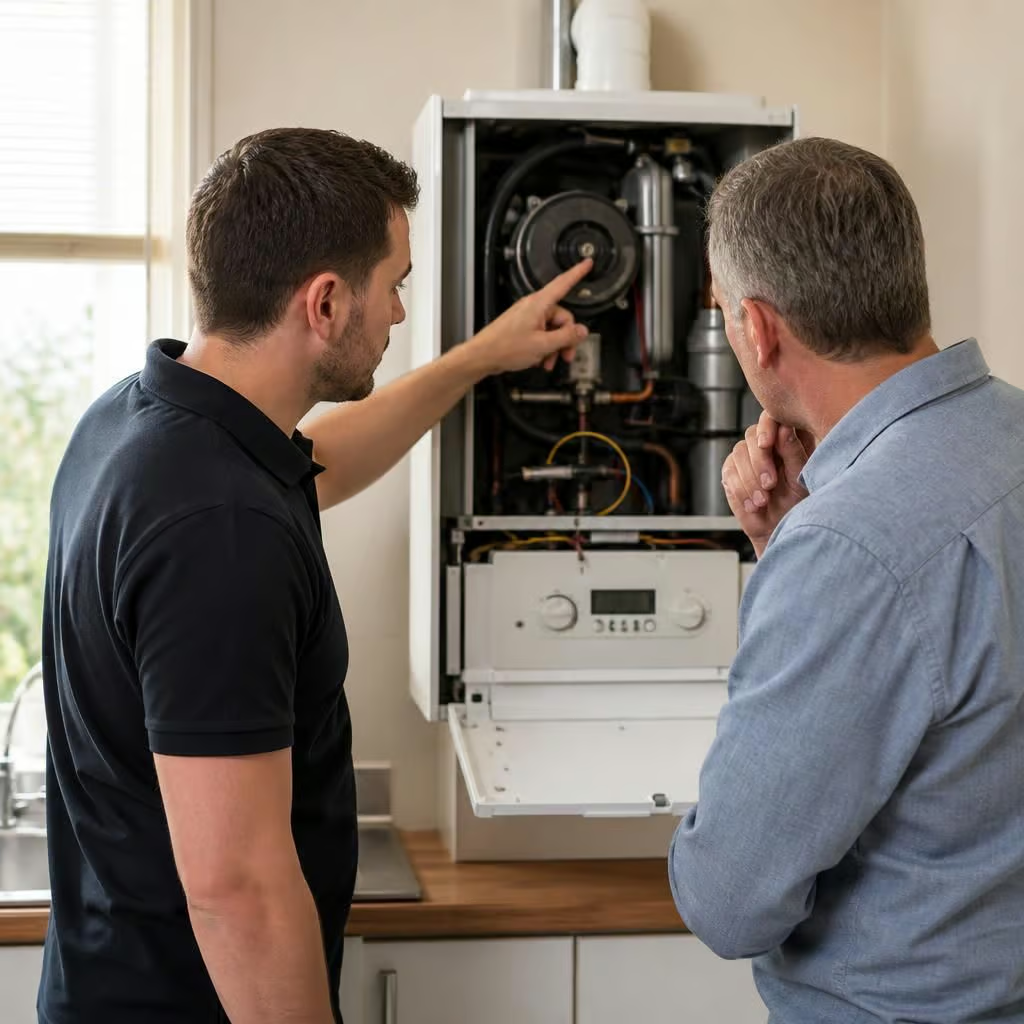
A warranty decision usually covers the failed component, not every task needed to restore the heating. A boiler may need a replacement part, but the engineer might also find a faulty control, restricted pipework or a system fault outside the warranty terms.
Ask for these items to be shown separately on the paperwork. You can then see which costs the warranty provider has accepted and which costs remain yours. If the provider declines the claim, ask for its reason in writing before agreeing to extra work. We can explain the diagnosis and give you a written quotation for any chargeable repairs, so you can make an informed decision about the next step.