
How much does an emergency boiler repair cost?
Emergency boiler repair cost depends on the fault, replacement parts and how much access the repair needs. We’ll diagnose the problem, explain the options and provide a written quotation before work starts, with no surprise charges.
There is no standard emergency boiler repair price. The final cost depends on the fault, the parts needed, the boiler type and how accessible the system is. A straightforward repair may involve diagnosis and one replacement part, while a safety-critical fault can require further testing or more extensive work.
Your first cost is usually the engineer’s time to inspect the boiler and identify the fault. That diagnosis matters because the symptom does not always identify the failed component. A boiler that will not fire could have an issue with its ignition, controls, pump, sensors, wiring, gas supply or condensate route. Replacing the wrong part increases the bill without fixing the problem.
Once the fault is clear, we explain what has failed, what the repair involves and what it is expected to cost. We provide a written quotation before work starts, so you can make the decision with the likely bill in front of you.
The main factors affecting emergency boiler repair cost are:
- The fault itself. A failed sensor, valve, pump or control component can require different amounts of labour and different parts.
- Parts availability. Common parts may be easier to source than components for an older or less widely supported boiler. If a part is unavailable, we explain the alternatives rather than fitting an unsuitable substitute.
- Boiler type. Gas, oil and LPG boilers have different components, testing requirements and repair procedures.
- Access to the boiler and system. A boiler in a cramped cupboard, loft space or outbuilding can take longer to inspect and work on. Pipework, flues and controls may also need to be traced.
- Safety checks. A fault involving combustion, the flue, gas pressure, oil supply or electrical controls needs careful testing before the boiler can be used again.
- The condition of the wider system. Sludge, poor circulation, leaking radiators or damaged controls can contribute to a boiler fault and may need attention to prevent the same problem returning.
A repair bill should make clear what work has been carried out. We explain the diagnosed fault, the parts used and any further work that we recommend. If the boiler needs monitoring or a follow-up visit, we explain that before the repair goes ahead.
A low repair price is not always the lowest overall cost. A temporary adjustment may get an old boiler running but leave the underlying fault unresolved. We look at the boiler’s age, condition and parts availability before recommending repair or replacement. That helps you avoid paying for repeated visits when a repair is unlikely to be practical.
Older boilers can still be repairable, including systems in rural homes and properties heated by oil or LPG. An older boiler may need a less common part, however, and the condition of the heat exchanger, flue and controls can affect whether repair remains sensible. Our OFTEC-registered engineers can assess oil-fired systems, while Gas Safe registration covers work on gas boilers.
If the engineer finds an unsafe gas appliance or flue, we will explain the risk and the action needed before the boiler is used again. We do not treat a boiler as repaired simply because it starts running. The appliance and its relevant controls must operate safely after the work.
For an electrical fault affecting the boiler, the cause may sit outside the appliance. A damaged cable, consumer unit issue, isolator or control circuit can stop an otherwise serviceable boiler from working. Our electrical and heating team can trace the fault and explain whether the repair is to the boiler, its power supply or the controls connecting the system.
Before contacting us, note the boiler make and model, any fault code, what the boiler is doing and whether the problem affects heating, hot water or both. A photograph of the display can also help us understand the reported fault. Do not remove the boiler casing or attempt to reset it repeatedly if you smell gas, see signs of overheating or suspect a flue problem.
We will use the information you provide to prepare for the visit, then confirm the diagnosis on site. If a repair is suitable, you receive the written cost before work starts. If replacement is the more sensible route, we explain why and set out the next step rather than adding unexpected work to the bill.
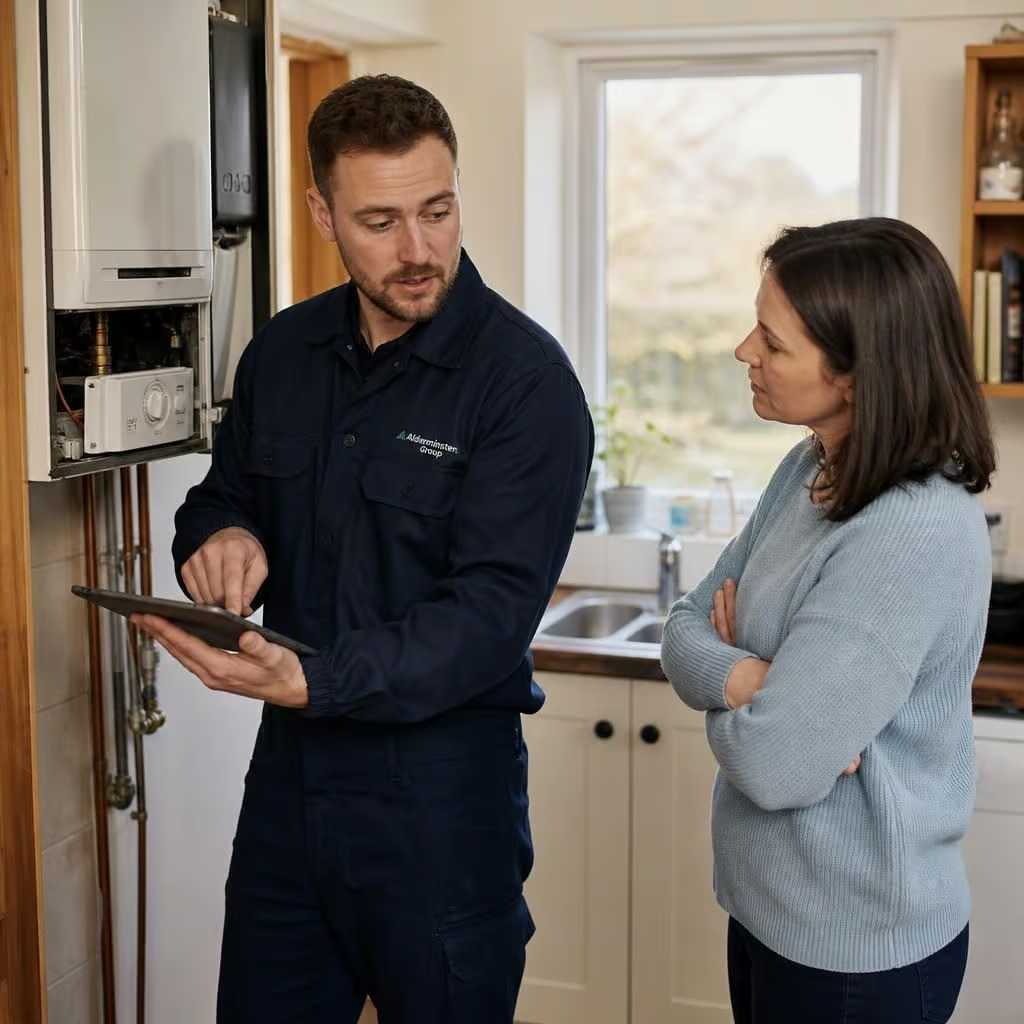
An emergency can make any repair feel urgent, but you still need a clear choice. We separate work needed to make the boiler safe and operational from recommendations that can wait. That shows which part of the bill addresses the breakdown and which part relates to improving the wider system.
If the boiler has a recurring fault or several ageing components, we explain that before work begins. You can then compare the immediate repair cost with replacement, rather than committing to more work without understanding the likely outcome.