
What qualifications should an oil or LPG boiler installer have?
An oil boiler installer should be OFTEC-registered, while an LPG installer must be Gas Safe-registered and qualified for LPG work. We also check the appliance, flue, fuel system and safety controls so the installation is suitable for your property.
The right installer needs qualifications that match the fuel, appliance and work being carried out. A general plumbing qualification alone is not enough. You should also check that the engineer can legally carry out the relevant work and will leave the records needed for the installation.
For an oil boiler, look for oil-specific competence. Oil heating has different combustion, servicing and safety requirements from gas heating. The installer should be trained to work on oil-fired boilers and registered with the relevant oil-heating scheme. Their registration needs to cover the type of work involved, such as installing, commissioning and servicing domestic oil appliances.
This matters particularly on an older or off-gas-grid property. The boiler may connect to an existing oil tank, flue, pump, controls and heating circuit that have been altered over several years. A qualified installer can identify which parts can safely remain and which need replacing before the new boiler is commissioned.
For an LPG boiler, check both registration and LPG scope. LPG is covered by gas safety law, but not every gas engineer is qualified for every LPG appliance or installation. The installer should be registered for LPG work and competent for the specific appliance being fitted. This includes understanding the fuel supply, cylinder or bulk tank arrangement, pipework, ventilation, flue and combustion settings.
Ask to see the engineer’s registration details before work starts. The important point is not simply that a company is registered. The engineer’s permitted work should match the fuel and appliance in your home. A registration covering natural gas does not automatically demonstrate competence with LPG.
Some parts of the job need additional competence. A boiler replacement can involve more than disconnecting one appliance and connecting another. Depending on the property, the installer may need to assess:
- the existing heating circuit, pumps, valves and controls;
- the flue route, terminal position and clearances;
- combustion air and ventilation;
- the oil tank, LPG storage and fuel pipework;
- condensate drainage and frost protection;
- the electrical supply, isolation and boiler controls;
- the condition and capacity of radiators and pipework.
These checks do not all belong to one generic qualification. A safe installation depends on the person carrying out each part having the right competence. Electrical work may need an appropriately qualified electrician, while changes to the heating circuit require someone competent in plumbing and heating as well as the boiler installation itself.
Experience with older properties is useful, but it should support formal competence rather than replace it. Solid-wall homes, barn conversions and listed buildings can have unusual flue routes, limited service space, older radiators and heating pipework that is difficult to access. An installer should explain the practical consequences before you accept the quotation, including any necessary alterations and where the work will take place.
For an oil system, ask whether the installer has dealt with the tank and fuel line as part of the proposed work. For LPG, ask whether the quotation covers the cylinder or bulk-tank connection and any required changes to the gas installation. If those items are excluded, you need to know who is responsible for them before the installation begins.
A qualified installer should commission the boiler, not just fit it. Commissioning involves setting the appliance correctly, checking its operation and recording the relevant readings. The engineer should explain the controls, confirm that the system is operating safely and identify anything that needs attention before leaving the job.
The handover should include the installation and commissioning records, the relevant compliance certificate and instructions for operating the boiler and controls. Keep these documents with the appliance information. They may be needed for future servicing, a property sale, an insurance query or a warranty claim.
Before choosing an installer, ask these practical questions:
- Are you registered and qualified for this fuel and appliance type?
- Does the registration cover installation as well as servicing?
- Who will carry out any electrical, tank or pipework alterations?
- What checks are included in the survey?
- Which certificates and commissioning records will I receive?
- Are all required alterations included in the written quotation?
Be cautious if an installer cannot explain the scope of their registration, wants to start without assessing the existing system or gives a price without setting out the associated work. A low quotation can change once unsuitable flues, tanks, controls or pipework are discovered.
We set out the required work in a written quotation before installation starts. That gives you a clear record of what is included, which qualifications apply to the job and what paperwork you will receive when the system is commissioned.
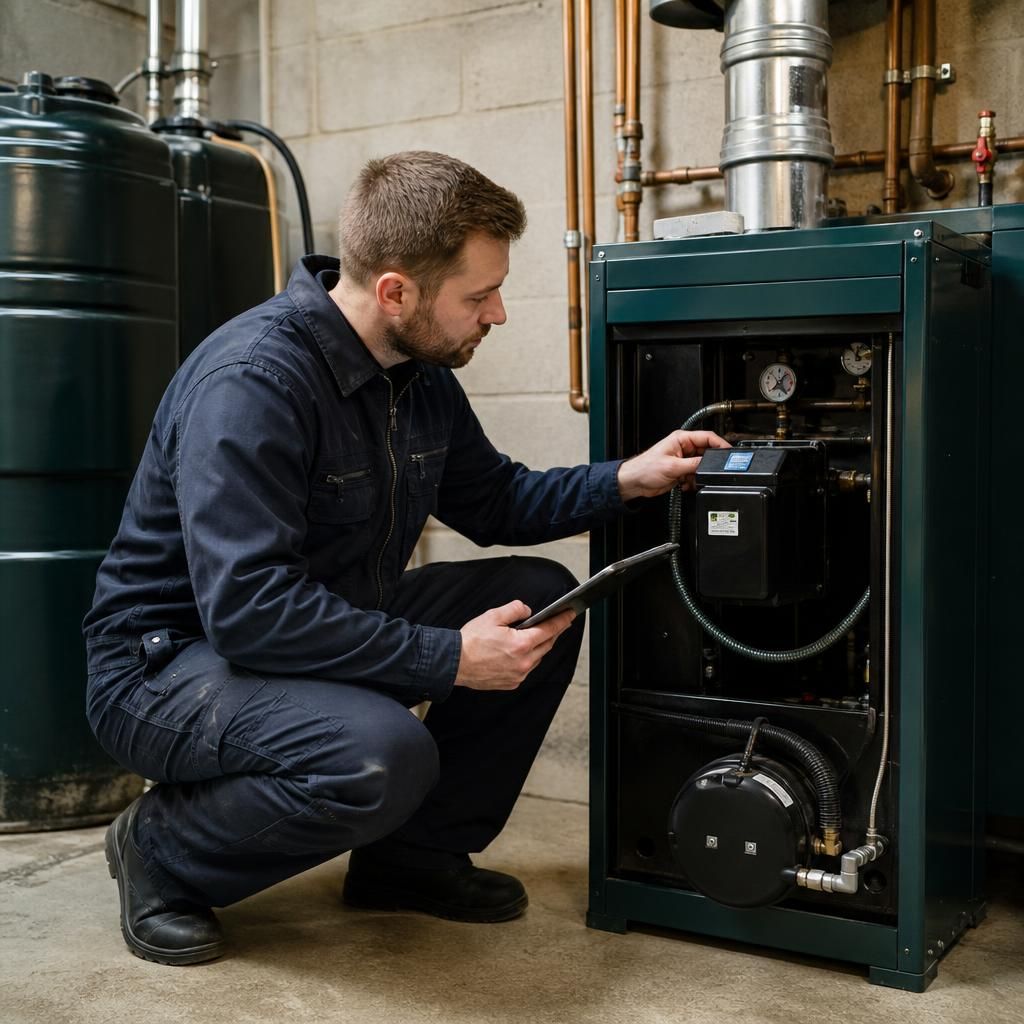
The boiler is only one part of an oil or LPG heating system. Fuel storage and the supply line must also be suitable for the appliance and the property. An installer who understands the complete system can spot problems that a boiler-only check would miss.
That matters on older installations, where tanks, valves and pipework may have been changed over time. We assess the condition and arrangement of these components before confirming the work, so the quotation reflects any necessary safety improvements rather than leaving them until installation day.