Can smart controls improve an older central heating system?
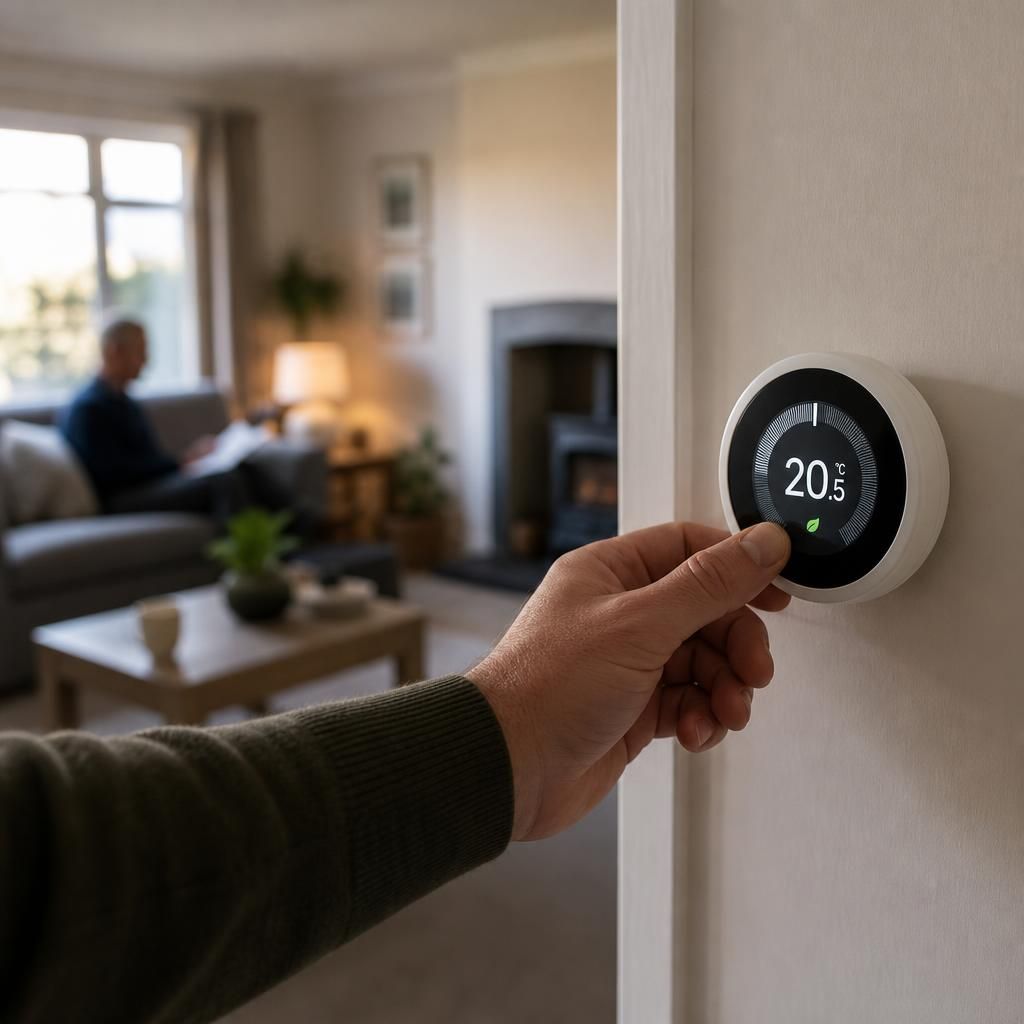
Yes. Smart thermostats, heating controls and zoning can improve comfort and reduce wasted heating in an older central heating system, provided the controls suit the boiler, wiring and radiators already in place.
The main benefit comes from giving the heating clearer instructions. Instead of running to one fixed temperature and schedule, a well-set system can heat different rooms at different times and stop when the home has reached the temperature you chose.
That can make an older system feel more controlled without replacing the boiler. It won’t, however, make an inefficient boiler efficient or correct a poorly balanced system. We first look at the condition and arrangement of the heating before recommending new controls.
Your existing thermostat may be in a hallway that warms quickly, while bedrooms and sitting rooms remain cold. We check where it is fitted, how it is wired and whether it represents the rest of the house. A modern thermostat may improve this, but moving it can be more effective than simply changing the control.
Older systems often have a single heating zone. In that arrangement, every radiator receives heat whenever the heating is on. Thermostatic radiator valves then limit individual rooms, but they don’t provide the same control as separate timed zones. We can assess whether zoning is practical and whether the existing pipework and wiring support it.
- Room-by-room control: thermostatic radiator valves can reduce heat in rooms that are rarely used, while allowing living areas to remain comfortable.
- Separate schedules: zoning can allow living spaces, bedrooms and hot water to follow different routines.
- Better temperature control: a suitable thermostat can reduce the repeated warming and cooling that comes from a poorly positioned or inaccurate control.
- Boiler interlock: the controls should tell the boiler to stop firing when there is no demand, rather than leaving the pump or boiler running unnecessarily.
- Remote adjustment: some smart controls allow you to change the programme from a phone. This is useful if your routine changes, but it isn’t essential to good heating control.
Compatibility matters more than the word “smart”. We check whether the boiler can communicate with the proposed control or whether it will operate only as a basic on-and-off switch. Some boilers can adjust their output when the control provides the right information. Others need a compatible receiver, wiring arrangement or additional sensor.
Your system may also include a hot-water cylinder, an older programmer, a motorised valve or a separate pump. These components affect what the controls can do. A control that works well with a combi boiler may need a different arrangement on a system or regular boiler.
Older wiring can make installation less straightforward. We trace the existing connections, check the backplate and inspect the programmer, thermostat and motorised valves. If the wiring is unsafe or unsuitable, we explain what needs changing before we fit anything.
The radiator valves need attention too. A room thermostat and a thermostatic radiator valve should not compete with each other. If both controls are trying to regulate the same room, the system may behave unpredictably. We set the controls so the main thermostat has a clear reference room and the radiator valve does not restrict heat unnecessarily.
Smart controls still need sensible settings. A schedule with frequent changes may cause more cycling than a steady programme, particularly in a draughty house or a property with heavy walls. We take account of the building, insulation, occupancy and how quickly the rooms respond. Solid-wall homes and barn conversions can take longer to warm and cool than modern houses, so the best programme may not be the most obvious one.
Weather compensation can help some systems respond to outdoor conditions by adjusting the heating flow temperature. It is not suitable or worthwhile in every installation. We consider the boiler, radiators, controls and existing pipework together rather than adding a feature that the rest of the system cannot use properly.
Controls cannot compensate for trapped air, sludge, poor circulation, an incorrectly sized radiator or a boiler that is losing pressure. If one room stays cold, we investigate the cause first. We may check radiator temperatures, valves, pump operation, system pressure and the balance between radiators before suggesting control changes.
Installation is usually less disruptive than replacing the heating system, but the work varies. Replacing a compatible programmer may involve the existing wiring only. Adding zoning or relocating a thermostat can involve new cable routes, access beneath floors or work in the airing cupboard. We explain the likely disruption before work starts and provide a written quotation.
A smart thermostat may use an internet connection for app control and remote access. The heating should still have a dependable local control method if the broadband connection or app is unavailable. We explain what remains usable manually and how to operate the system without relying on a phone.
On an older or listed property, the practical route matters. We look for ways to avoid unnecessary chasing of walls and disruption to original finishes. A control upgrade may be suitable even when major alterations to pipework are not, but we’ll say if the existing arrangement limits the improvement.
After installation, we test the heating and hot-water functions, check the switching sequence and show you how to use the controls. We also explain which settings affect comfort, which affect timing and which should be left alone. If the system needs wider repair or maintenance, we separate that work from the control upgrade so you can make an informed decision.
If the boiler may need replacing soon, choose the controls with that change in mind. A control that works well with the current boiler may offer limited benefits after an upgrade, leaving you to pay for compatible equipment twice.
We consider the boiler’s condition, the heating layout and any planned work before recommending an upgrade. That helps you improve comfort now without making the next heating decision more complicated.