
Can you repair a central heating system with a leaking pipe?
Yes. We can locate the leak, isolate the affected section and repair or replace the damaged pipe, then check the system pressure and operation before leaving.
A leaking central-heating pipe usually needs a local repair, not a new boiler or a complete system replacement. The right repair depends on where the water is coming from, how badly the pipe or joint has deteriorated, and whether the leak has reached floors, walls or electrical equipment.
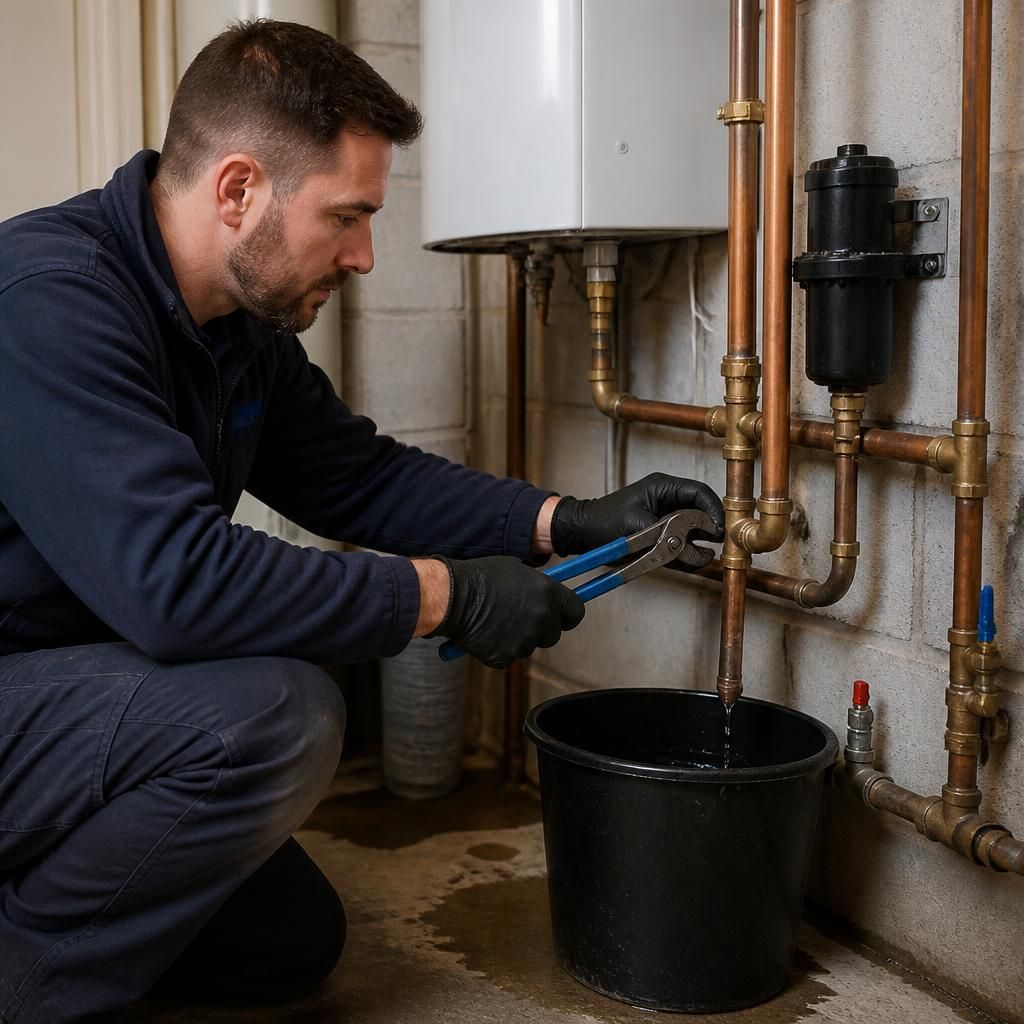
Switch the heating off first. If the leak is visible, place a container beneath it and close the nearest service valve if there is one. A sealed system may lose pressure as water escapes, while an open-vented system may continue drawing water from its feed and expansion tank. Don’t remove the boiler casing or try to work on gas components. If water is near electrical equipment, isolate the electricity only if you can do so safely.
Common causes include a failed compression fitting, a loose radiator valve, corrosion around an older steel pipe, damage from freezing, and movement where pipework passes through floors or walls. Plastic and copper pipe can also leak at a joint without showing obvious damage along the rest of the run. Water may travel some distance before it appears, so the visible drip is not always the source.
The system needs checking before anyone starts cutting pipe. We look at the boiler pressure, radiator valves, pump connections, airing cupboard pipework and accessible runs beneath floors or in loft spaces. Traces of staining, corrosion or damp insulation can show where the leak has travelled. On a larger or intermittent leak, we may need to run the heating and inspect the system as it warms up.
For a straightforward exposed leak, we can usually replace the failed fitting or a section of pipe. That may involve draining part or all of the heating circuit, depending on the position of the damaged section. We then refill the system, remove trapped air and check that the radiators heat properly. A sealed system also needs its pressure checked once it has cooled.
Older systems need a little more care. Repeated draining and refilling can reduce the system’s corrosion protection, so we check the condition of the water and add inhibitor where appropriate. If sludge or magnetite is already present, that can point to a wider circulation problem rather than a single failed joint. A new leak in one section can also reveal pipework that is generally corroded, particularly in older properties with steel heating pipes.
Hidden pipework doesn’t always mean major disruption. We first consider whether the pipe can be reached from a cupboard, floor void or adjacent room. If lifting flooring or opening a wall is unavoidable, we explain the access required before proceeding. The repair may be limited to a small section, but the final making-good of flooring, plaster or decoration may need to be arranged separately.
A drop in boiler pressure is one sign of a leak, but it is not proof on its own. Pressure can also change because of trapped air, an expansion vessel problem or a faulty pressure relief valve. If the pressure keeps falling after the pipe has been repaired, we investigate the rest of the heating system rather than repeatedly topping it up.
Where a radiator valve, pump seal or other component is leaking, replacing that component may be more reliable than tightening it repeatedly. If the pipework is accessible but badly pitted, replacing the affected run can prevent another repair at the same point. We explain the difference between a temporary measure and a lasting repair so you can decide how far to go.
Work on a gas boiler and its connected heating system needs the right competence. Our Gas Safe-registered engineers can assess the heating side safely, while plumbing and heating work is carried out by appropriately qualified staff. You receive a written quotation before chargeable work starts, with the repair, access and any recommended follow-up clearly set out.
Afterwards, we check the system under operating conditions and look for further signs of leakage. You should keep an eye on the boiler pressure and any previously damp areas for the next few days. If water returns, the pressure falls again or the boiler stops operating, switch the heating off and contact us rather than continuing to refill the system.
If water has reached a fused spur, pump wiring or heating controls, the pipe repair is only part of the job. We check the affected electrical equipment before restoring the heating, so a damp component isn’t put back into service.
That check can also explain why a boiler or pump has stopped working after a leak. We separate the original pipe fault from any damage caused by water, then tell you which parts need attention and which do not.