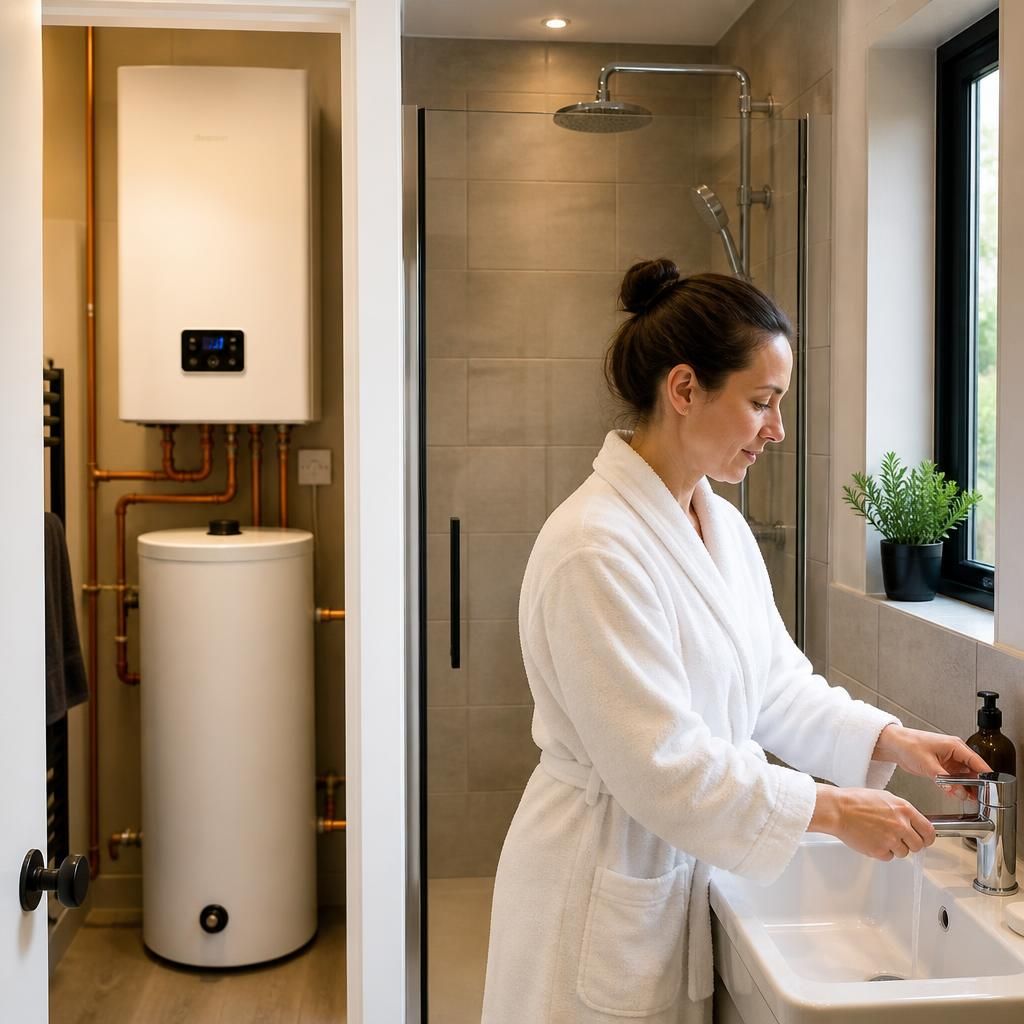
Can an electric boiler provide hot water?
Yes. An electric boiler can provide hot water by heating a cylinder or, in some systems, directly as water passes through the boiler. The suitable arrangement depends on your hot-water demand, available space and the home’s electrical supply.
Yes, an electric boiler can provide hot water as well as heating your radiators. The way it does so depends on the system design: some units heat mains water as you use it, while others heat water stored in a cylinder.
An electric combi boiler heats cold mains water as it passes through the appliance. There is no separate hot-water cylinder, so it can suit a property where cupboard space is limited. Hot water is available without waiting for a cylinder to heat, but the flow rate depends on the electrical output of the boiler and the incoming mains pressure. Running a shower and a tap together may reduce the temperature or flow available at each outlet.
The electrical demand can also be substantial. A combi arrangement needs enough available power to heat water while it is flowing. We check the incoming supply, consumer unit and cable route before recommending this type of system. If the supply cannot support the required load, the installation may need electrical work or a different hot-water arrangement.
An electric boiler working with a cylinder heats water held in a hot-water cylinder. The stored water can supply several taps or showers, depending on the cylinder size and the pressure available at the property. This arrangement is often more suitable for a home with higher hot-water demand, but it needs space for the cylinder and usually a suitable location for associated pipework and controls.
A stored system does not provide unlimited hot water. Once the cylinder has been used, it needs time to heat again. We size the cylinder around the number of occupants, bathrooms and likely usage rather than simply replacing an existing tank with the same model. Good insulation matters too, because it reduces heat lost while the water is stored.
An electric boiler should not be confused with an immersion heater. An immersion heater warms water directly inside the cylinder. An electric boiler normally heats water for the central-heating circuit and can heat a cylinder through a coil. Some homes use both, with the immersion heater providing a backup or additional heating method.
Running costs depend on how much heat your home and hot water need. Electric boilers use electricity to create heat, so the cost is linked to your electricity tariff, hot-water demand, cylinder losses and the insulation of the property. A well-insulated home with modest water use will cost less to heat than a draughty property with a large demand, regardless of the boiler’s rating.
Electric boilers do not produce combustion gases, so they do not need a flue, fuel tank or oil delivery. That can simplify installation in some homes, particularly where connecting to the gas network is not practical. They still need correctly sized electrical protection, suitable controls and safe discharge arrangements for the hot-water system.
Older homes need a careful assessment before an electric boiler is chosen. Solid walls, high ceilings, older windows and limited insulation can increase the heat required to keep rooms comfortable. If the boiler is too small, the home may struggle to reach the desired temperature. If it is oversized, the installation may cost more than necessary and place a heavier load on the electrical supply.
We calculate the heat requirement for each room and check the existing radiators, pipework and controls. Your radiators may be large enough for an electric boiler, but that cannot be assumed from the boiler currently installed. We also look at the location of the cylinder, the route for new cables and whether the consumer unit needs upgrading.
An electric boiler can work well where the property has a suitable electrical supply, reasonable insulation and a manageable hot-water requirement. It may be less suitable where the home has high heat loss, several bathrooms used at the same time or limited electrical capacity. In those cases, we explain the practical alternatives rather than treating the boiler as a direct replacement.
For a planned installation, we first establish how the property is heated now, how hot water is used and what space is available. The quotation then reflects the boiler, cylinder or controls required, along with any radiator, pipework or electrical changes. You receive the proposed system and costs before work starts, so you can compare the likely running requirements with other heating options.
Electric heating can also be considered alongside solar panels or battery storage, but the generation and storage profile needs checking against your heating and hot-water demand. We work out how the systems would operate together for your property instead of assuming that stored electricity will cover every heating period.
The boiler rating alone doesn’t tell you how well an electric system will provide hot water. The cylinder, pipework and controls determine how much hot water is available and how quickly it can be replenished. If your household uses several bathrooms, takes frequent baths or needs hot water at set times, we size the cylinder and recovery schedule around those routines. That gives you a system matched to how the home is used, rather than simply connecting an electric boiler to the existing tank.