
How long does hot water heater replacement take?
A straightforward hot water heater replacement is normally completed in one visit. If the cylinder, pipework, controls or access need changing, the work can take longer while we test the system and confirm the hot water is operating safely.
A standard hot water cylinder replacement normally takes several hours. More involved work can extend into a second day, particularly when pipework, controls, access or the cylinder type changes.
The final timescale depends on what is already in place. A like-for-like replacement is more predictable than changing from a vented cylinder to an unvented model, moving the cylinder or altering the heating system at the same time.
Before the installation
Your existing cylinder, pipework and access route need checking before we confirm the work. We look at the cylinder capacity, connections, valves, immersion heater, insulation and the condition of nearby pipework. We also check how the cylinder connects to the boiler and hot water controls.
If the cylinder is in a tight airing cupboard, loft or difficult-to-reach position, removal can take longer than expected. The old unit may need to be drained before it can be disconnected, and we need enough space to remove it without damaging doors, floors or surrounding fittings.
Where we find corroded valves, poor supports, leaking connections or pipework that no longer suits the replacement cylinder, we explain this before starting. The written quotation sets out any additional work and the likely timescale, so the job does not grow without your agreement.
What happens on the day
- Isolation and draining: We isolate the water and heating system, switch off the electrical supply to the immersion heater where required, and drain the cylinder safely.
- Removal: We disconnect the old cylinder and remove it from the property. If access is restricted, this part can take a significant proportion of the installation time.
- Preparation: We check the base, connections and pipe routes. We replace unsuitable valves, fittings or short sections of pipework where the agreed work includes them.
- Installation: We position the new cylinder, connect the hot and cold water pipework, and reconnect the boiler, immersion heater and controls as applicable.
- Filling and testing: We refill the system gradually, check joints for leaks, test hot water delivery and confirm that the safety controls operate correctly.
- Completion: We explain the controls, remove the old equipment and leave the working area tidy. Any relevant paperwork is completed after the installation has been checked.
You will normally have no stored hot water while the cylinder is drained and disconnected. We do not treat the job as finished simply because the new cylinder is in place; the system needs filling, heating and testing before it is ready for normal use.
When the cylinder type changes
A vented cylinder uses a cold-water storage tank, usually in the loft. An unvented cylinder works directly from the mains and needs specific safety components, discharge pipework and pressure controls. Changing between these arrangements may involve more pipework and testing than replacing the cylinder with the same type.
An unvented cylinder also needs suitable mains pressure and flow. If the supply cannot support the proposed system, we explain the limitation rather than fitting equipment that will not perform properly. The position of the discharge route and the available space for expansion components can affect the programme too.
Changes beyond the cylinder
Your ageing cylinder may not be the only reason hot water is unreliable. Poorly set controls, a faulty immersion heater, restricted pipework or a boiler problem can create similar symptoms. We identify these related faults during the assessment, but we separate them from the cylinder replacement so you can decide what work to approve.
If the new cylinder needs different controls or electrical connections, an additional visit or a longer installation may be appropriate. We explain that before the work starts. A boiler replacement, major pipework alteration or heating-system upgrade is a larger project than a straightforward cylinder change and should be timed accordingly.
How to avoid unnecessary delay
- Make sure the engineer can reach the cylinder, boiler, controls and relevant isolation valves.
- Point out any previous leaks, pressure problems or areas where access has been difficult.
- Keep the route to the cylinder clear before the installation begins.
- Tell us if the property has unusual plumbing, an older heating system or more than one hot water circuit.
WaterSafe and CIPHE experience matters when the work involves stored hot water, pressure, discharge pipework and domestic plumbing connections. We use the survey to give you a realistic installation plan, including any work needed to make the replacement safe and compatible with the rest of the system.
If the cylinder is accessible and the surrounding system is in sound condition, the work is usually straightforward. If the installation requires relocation, extensive pipework changes or wider heating repairs, we set out the extra time before you commit.
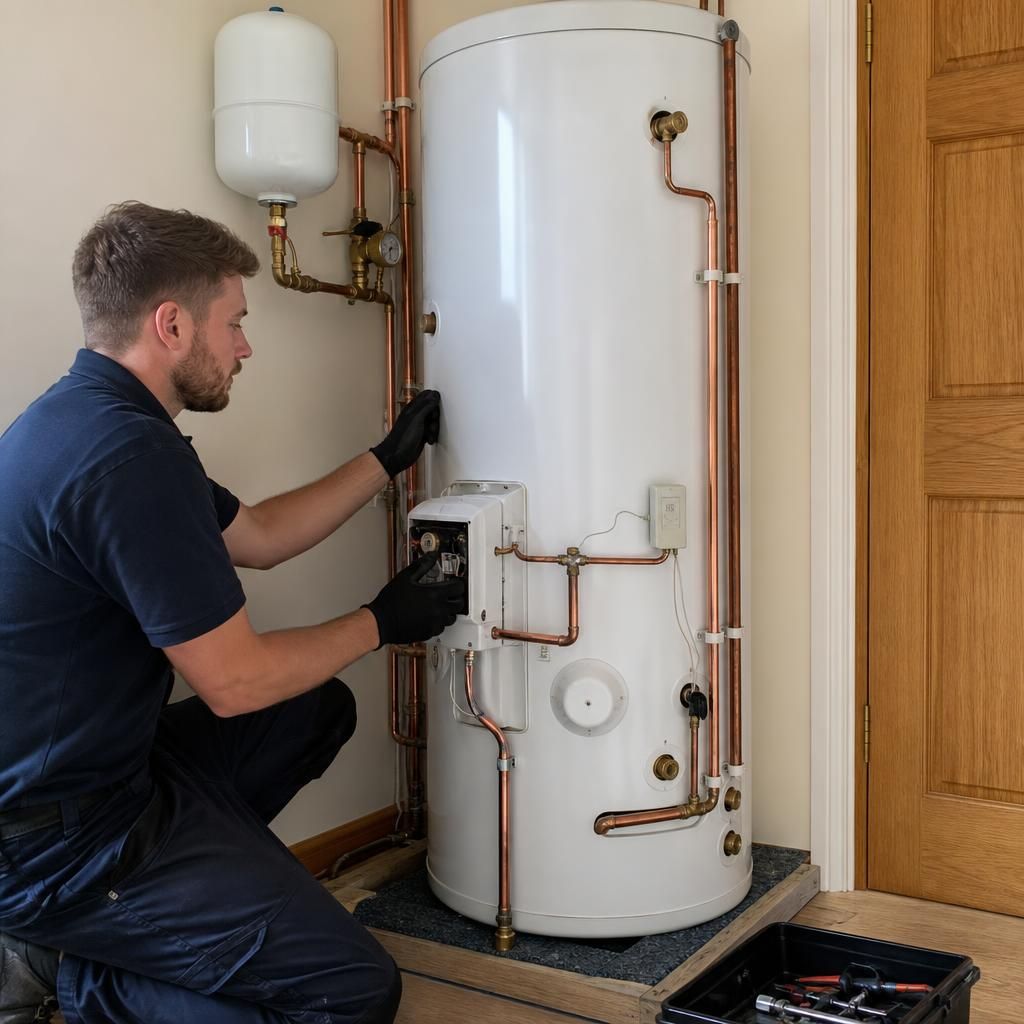
The installation itself and the return of hot water are slightly different points in the process. Once the new cylinder is connected, it must fill fully and reach the correct operating temperature before normal use. The time depends on the cylinder size, heat source and control settings, so we’ll explain when you can expect hot water during the handover.
If the replacement is being planned rather than carried out after a failure, choosing the same cylinder type usually keeps the programme simpler. A change in capacity or system arrangement may affect both the installation time and how the cylinder works with the boiler, immersion heater and controls.