
How much does hot water heater replacement cost?
There is no single hot water heater replacement cost: the price depends on the cylinder type and capacity, access, and any changes needed to pipework or controls. We assess the existing installation and provide a written quotation before work starts.
There isn’t one standard hot water heater replacement cost. The final price depends mainly on the cylinder type, its capacity, the heat source, and how much of the surrounding installation needs updating. A like-for-like replacement usually costs less than changing from a vented cylinder to an unvented system or relocating the cylinder.
Most domestic replacements involve a hot water cylinder rather than the boiler itself. The cylinder stores heated water for baths, showers and taps. We first establish what is installed and how it operates, because the replacement must match the incoming water pressure, heating system and household demand.
The main cost factors are:
- Cylinder type: A vented cylinder uses a cold-water storage tank, while an unvented cylinder connects directly to the mains. An unvented system may need additional safety controls, discharge pipework and expansion equipment.
- Capacity: A small household may need a different cylinder size from a property with several bathrooms, a large bath or frequent simultaneous use. Choosing a larger cylinder than necessary adds cost without automatically improving performance.
- Heat source: The cylinder may be heated by a boiler, immersion heater, solar thermal system or another heat source. We check that the replacement works properly with the existing arrangement.
- Pipework condition: Old, corroded or poorly sized pipes can restrict flow and cause leaks. Replacing them during the same work may cost more, but it can prevent the new cylinder from being let down by the existing installation.
- Controls: Faulty thermostats, motorised valves, programmers and immersion controls may need attention. Keeping unreliable controls can leave the new cylinder unable to heat water correctly.
- Location and access: A cylinder in an airing cupboard may be straightforward to remove. A unit in a loft, tight cupboard or upper-floor room can take longer to move safely, especially if doors, shelving or sections of pipework restrict access.
- Ancillary equipment: Unvented systems include components such as safety valves, an expansion vessel and a discharge route. These need checking and may need replacing rather than being connected to the new cylinder without inspection.
- Removal and making good: The old cylinder must be drained, disconnected and removed. If the replacement has different dimensions, pipe positions or connections, the surrounding area may need minor alterations.
A cylinder replacement can sometimes be completed without changing the central heating system. That depends on whether the existing boiler or other heat source can heat the new cylinder and whether the controls and pipework are compatible. If the heat source is also ageing or under-sized, replacing only the cylinder may not resolve slow heating or poor hot water availability.
Electric hot water heaters and immersion-only cylinders need a slightly different assessment. The electrical supply must support the heater, and the immersion thermostat and safety cut-out must work correctly. Where the consumer unit or circuit is older, electrical checks may identify additional work before the new heater can be used safely.
Older rural properties can have unusual layouts, long pipe runs or oil and LPG heating systems. An oil-fired boiler may need an installation that suits its existing controls and hot water coil. We use OFTEC-registered engineers for oil-fired systems, so the replacement is assessed as part of the complete heating arrangement rather than as an isolated tank.
The lowest initial price is not always the lowest overall cost. A quote that excludes new valves, altered pipework, safety components or disposal may increase once the old cylinder has been disconnected. Ask for the price to make clear which cylinder is included, what capacity it has, whether controls are covered, and how any remedial work will be handled.
We explain any difference between a straightforward replacement and a system change before work begins. That gives you a clear choice between retaining a sound existing installation and paying for upgrades that address a genuine problem.
After replacement, the system should be filled, vented and checked for leaks. We test the controls, confirm that the cylinder reaches temperature, and check that safety arrangements operate correctly. The result should be reliable hot water from an installation suited to the property, not simply a new tank connected to old faults.
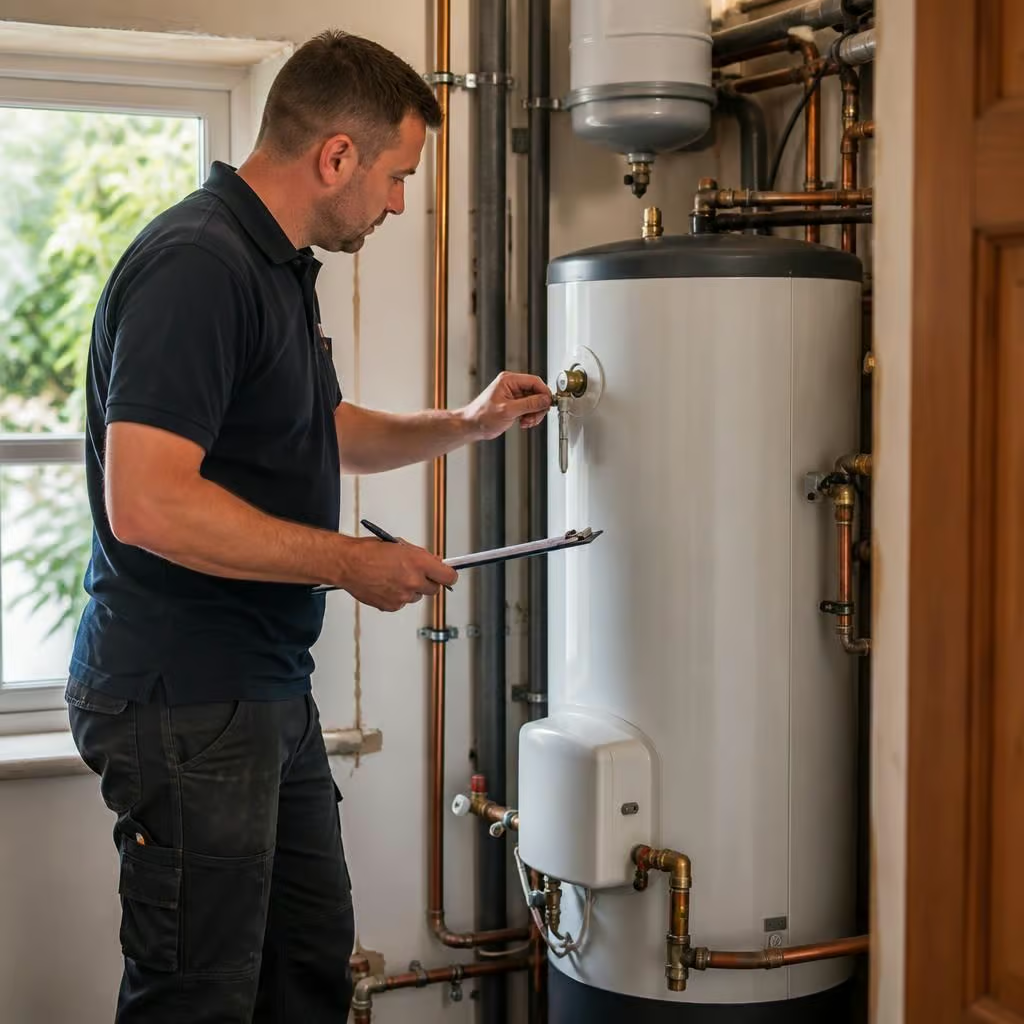
The price of a hot water heater replacement is easier to compare when the quotation separates the cylinder from the work around it. That includes draining the existing system, connecting the new unit, commissioning it and disposing of the old one. If those items are missing, two apparently similar prices may cover very different jobs.
We inspect the installation before recommending the replacement. If the cylinder sits behind fixed shelving, in a loft or alongside ageing valves, we can allow for the practical work rather than discovering it after removal. You then have a clear cost for the job your home needs, with any optional improvements identified separately.