
Can an oil or LPG boiler heat an older rural home?
Yes. An oil or LPG boiler can heat an older rural home effectively, including properties without mains gas, provided the boiler, radiators, pipework, flue and fuel storage are correctly sized and installed.
We assess the home’s heat loss and existing heating system first, then explain whether repairing, replacing or changing the heating system makes the most practical sense.
An oil or LPG boiler can heat an older rural home effectively, but the right choice depends on the building, the fuel available and the condition of the existing heating system. A sound installation should leave you with reliable heating, usable hot water and fuel storage that fits the property safely.
Older houses often lose heat in ways that are not obvious from their floor area. Solid walls, exposed positions, high ceilings, draughty floors and later extensions can all affect the calculation. A boiler sized from the number of rooms alone may cycle inefficiently or struggle during cold weather.
We assess the construction of the house, insulation, windows, room sizes and heat-loss points before recommending boiler output. That helps prevent an oversized boiler, while allowing for the higher demand that some older properties genuinely have.
Your existing radiators may still work with a replacement boiler, but their condition and size matter. A radiator that was adequate with a previous system may not heat a larger room evenly, particularly after changes to the layout or insulation. We check the radiators, pipework, valves and circulation before deciding what can stay.
Older heating systems may also contain sludge or have restricted pipework. If that dirt remains in the system, it can reduce heat transfer and affect the new boiler. We can identify problems such as cold patches, noisy circulation and uneven heating before they become part of the replacement job.
Oil is often practical where there is already an established oil system. You will need a suitable tank, a dependable delivery arrangement and enough space for the tank to meet the relevant siting and safety requirements. The tank condition matters as much as the boiler. Corrosion, damaged bunding or an unsuitable location can make replacement more urgent than the boiler itself.
Oil-fired systems are common in rural properties that are not connected to mains gas. We work on oil heating as OFTEC-registered engineers, so the boiler, fuel supply and associated controls can be considered as one system. That is particularly important where the heating equipment is in an outbuilding or the pipe run crosses exposed ground.
LPG can suit a home where oil storage is impractical or where an LPG system is already in place. LPG may be stored in cylinders or in a larger tank, depending on the property and its heating demand. The tank or cylinder position, access for deliveries and the route to the boiler all need to be considered before installation.
Changing from oil to LPG is not simply a matter of swapping the fuel. The boiler, burner, storage arrangement, pipework and controls must all be suitable for LPG. We also check whether the proposed equipment can provide enough heat and hot water for the household without relying on assumptions about the old system.
The flue needs careful attention in an older house. A boiler may be located in a kitchen, utility room, plant room or detached outbuilding, and the shortest route is not always the correct one. We check the terminal position, clearances, condensate route and access for future servicing. Listed buildings and properties with unusual elevations may need extra thought before the flue position is agreed.
Condensing boilers produce condensate as they operate efficiently. That water needs a suitable drain route that will not freeze or discharge where it can cause damage. In a rural property, the boiler may be far from an internal waste pipe, so we plan the route rather than leaving an exposed pipe vulnerable to cold weather.
Controls can make a noticeable difference to how an older home feels. Separate room control, heating schedules and weather compensation can help the system respond to the building instead of running at full output unnecessarily. We explain the controls in plain terms and set them around how you use the house.
If you have an open fire, solid-fuel appliance or another boiler, we also consider how the proposed equipment will operate alongside it. Flue arrangements, ventilation and control settings must not create unsafe conditions. Work on a gas boiler is carried out by Gas Safe-registered engineers, as the law requires.
The fuel choice affects more than the boiler. You should consider:
- the space available for an oil tank, LPG tank or cylinders;
- how fuel deliveries reach the property in all seasons;
- the condition and location of existing fuel pipework;
- the boiler position and flue route;
- the level of hot water demand, including baths, showers and stored hot water;
- the likely cost of fuel for the property’s actual heat loss and heating habits; and
- future plans for insulation, extensions or a different heating technology.
Running costs cannot be judged from the boiler label alone. A smaller, well-insulated house with suitable controls may cost less to heat than a larger property with poor insulation, even when both use the same fuel. We look at the whole installation and explain the assumptions behind our recommendation, rather than presenting a generic saving.
A replacement does not always require every radiator or pipe to be removed. If the existing system is sound and correctly sized, we can often retain suitable parts. If the survey identifies corroded radiators, poor circulation, inadequate pipework or an unsuitable cylinder, dealing with those items at the same time can prevent a new boiler from being held back by the old system.
The work itself varies with the property. A straightforward boiler change may involve the boiler, controls, flue and immediate connections. A rural installation may also involve fuel storage, longer pipe runs, an outbuilding, new radiators or changes to the hot water arrangement. We set out the required work and the price in writing before it starts, so you can separate essential improvements from optional upgrades.
An oil or LPG boiler remains a sensible option when the fuel storage is suitable, the system is maintained and the house needs the higher flow temperatures that many older radiator systems were designed around. It may be less suitable where storage cannot be located safely, deliveries are difficult or you are planning a substantial move towards a different heating system.
For an older rural home, the useful question is not simply whether oil or LPG can produce enough heat. It is whether the boiler, radiators, pipework, flue, controls and fuel storage work together. A site assessment gives you that answer before you commit to the replacement.
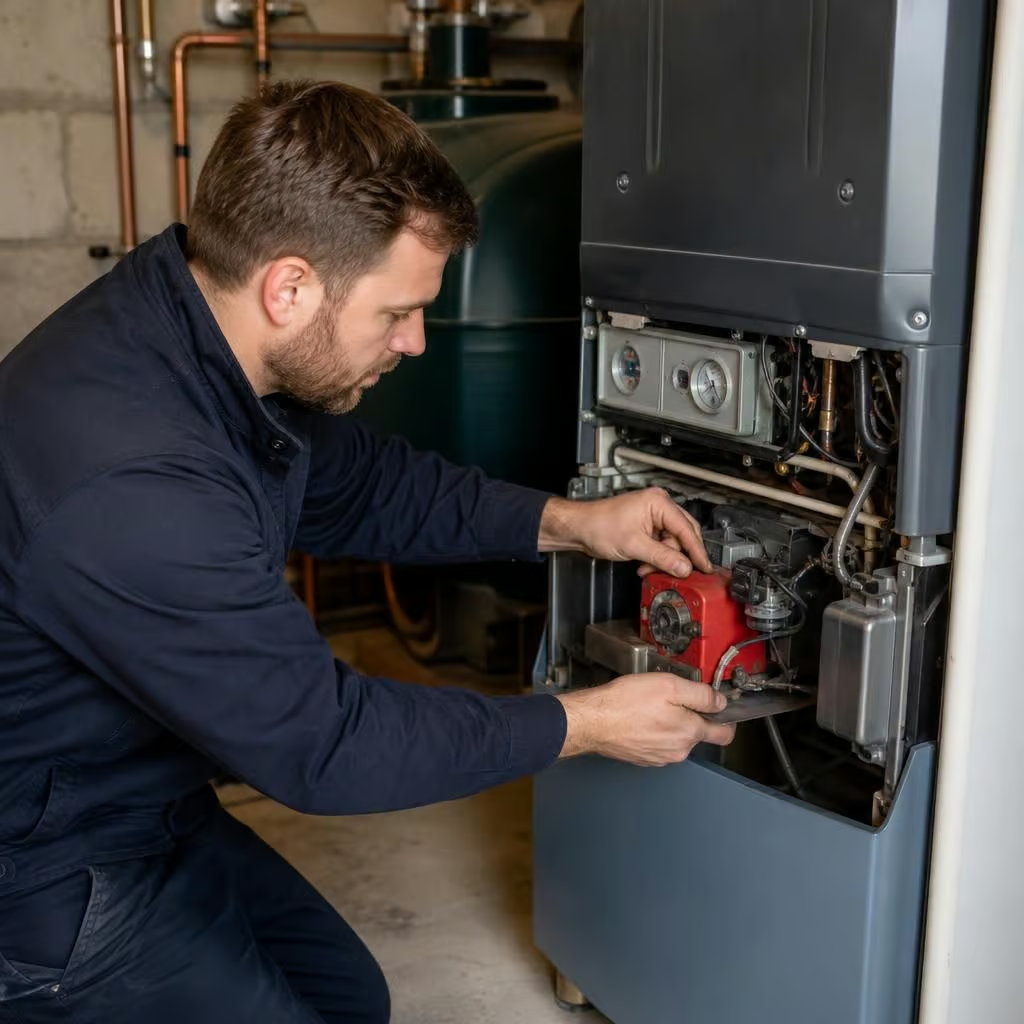
Fuel-based heating works well only when the combustion equipment is clean and correctly adjusted. An older rural home may have a boiler with enough capacity, but a dirty burner, restricted injector or faulty thermostat can leave rooms cold.
During a service, we inspect combustion, safety controls, the flue and fuel connections. That helps show whether the boiler needs replacing or whether proper maintenance can restore reliable heating and hot water.