Can I replace an oil boiler with an LPG boiler?
Yes, an oil boiler can usually be replaced with an LPG boiler, but it isn’t a like-for-like change. We check the home’s heat demand, flue route, pipework and LPG tank position before confirming whether the change is practical and what needs altering.
Replacing an oil boiler with an LPG boiler can work well when a property already has a wet central-heating system, but the fuel storage and supply arrangements need the most careful planning. The radiators and much of the pipework may remain in place, while the boiler, fuel system, flue arrangements and controls are changed or adapted.
An oil boiler cannot simply be connected to an LPG supply. LPG needs an appliance designed and commissioned for that fuel. In practice, the change usually involves removing the oil boiler, installing an LPG-compatible condensing boiler and adapting the heating system to suit its output and controls.
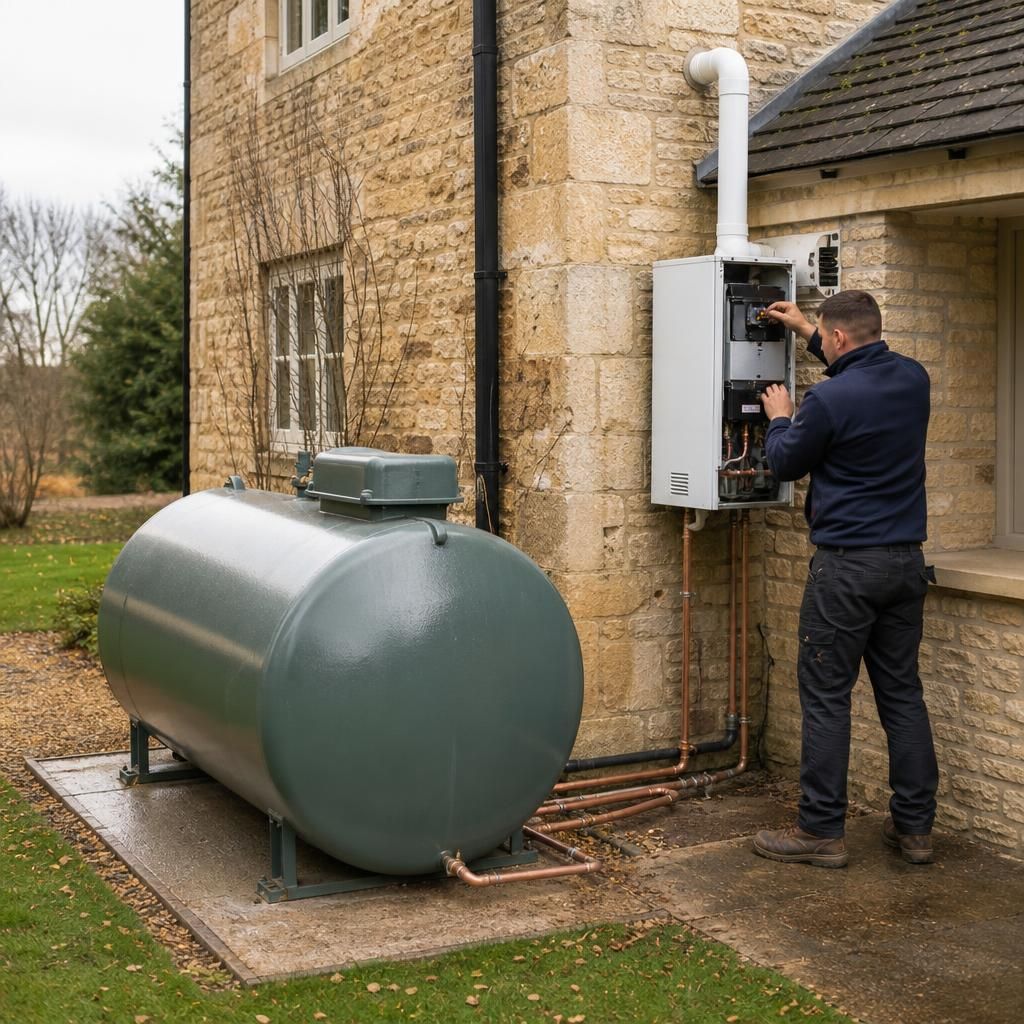
The main differences are outside the boiler. Oil is stored in an oil tank, while LPG is normally supplied from an above-ground or underground bulk tank. The tank needs a suitable position, a safe delivery route and enough space around it. Planning requirements can depend on the property, the tank arrangement and its position, particularly in a conservation area or near a listed building.
If the property would use LPG cylinders rather than a bulk tank, the supply needs a separate assessment. Cylinders may suit cooking or smaller demands, but they may not be practical for heating a whole house throughout the year. We check the expected demand, storage capacity and delivery arrangements before recommending that approach.
Your existing oil tank may need to be drained, disconnected and removed. The ground around an older tank also deserves attention if there has been a leak or staining. We can identify these issues during the site assessment so they do not appear unexpectedly during the boiler installation.
Much of the indoor heating system may be reusable. If the radiators heat evenly, the pipework is in good condition and the system has suitable circulation, there may be no reason to replace it all. We inspect the radiators, valves, pump, expansion vessel, cylinder and controls rather than assuming that every component needs changing.
A boiler that is too large can cycle unnecessarily and waste fuel. One that is too small may struggle to heat the property and replenish a hot-water cylinder. Your home’s heat loss, insulation, room sizes and hot-water requirements help us select the appropriate output. Older stone houses, solid-wall homes and barn conversions need particular care because their heat loss may differ substantially from a modern property of the same size.
The flue and condensate route can affect the work inside and outside the property. The new boiler may need a different flue position from the oil appliance. Condensing boilers also produce acidic condensate that needs a suitable drain connection. Where a gravity drain is not practical, we look at an appropriate pumped arrangement or another compliant route.
Gas Safe registration covers work on gas appliances, including LPG boilers. We use a Gas Safe-registered engineer to install, test and commission the boiler, and the completed work is documented for the property records. The existing oil installation falls under different requirements, so we also consider the safe isolation and removal of the oil equipment. Our OFTEC registration is relevant when assessing and decommissioning the oil-fired side of the system.
Running costs cannot be decided from boiler efficiency alone. LPG and heating oil prices change, and the result depends on the tariff, tank arrangement, delivery charges, hot-water use, insulation and the temperature at which the home is heated. A new LPG boiler may improve control and reduce losses compared with an old appliance, but that does not automatically make LPG cheaper to run than oil.
We can compare the likely fuel and installation costs for the property rather than quoting a general saving. The comparison should include:
- the LPG boiler and flue installation;
- the bulk tank or cylinder arrangement;
- removal of the old boiler, tank and associated oil equipment;
- any changes to pipework, radiators, controls or hot-water storage;
- tank rental, fuel delivery terms and ongoing servicing;
- groundworks, flue alterations and making good where required.
Installation is usually less disruptive when the new boiler stays near the existing one and the radiators and main pipe runs are suitable. Moving the boiler, replacing a tank, altering the flue or changing the hot-water arrangement adds work. We explain these choices in a written quotation before work starts, including any work needed to make the installation compliant.
LPG can be a sensible replacement where the home already has wet central heating, a suitable tank location and no mains gas connection. It may also suit a property where the owner wants to keep conventional boiler heating without changing radiators or installing a different heat source.
It is worth comparing LPG with an air source heat pump before making a final decision. A heat pump may require larger radiators, pipework changes and improvements to the building fabric, while LPG retains the familiar boiler-and-radiator arrangement. A heat pump installation has different grant and certification requirements, so we assess that option separately rather than presenting LPG as the only route away from oil.
We start by checking the existing heating system, oil storage, proposed LPG tank position, flue route and heat demand. That gives you a clear view of what can stay, what must change and whether LPG is practical for the property.
The LPG tank is only part of the design. The new boiler also needs a flue route and condensate connection that work with the building. On an older or listed property, an apparently simple external alteration may need careful positioning to avoid affecting the character of the house.
We review the proposed boiler position, flue termination and condensate route together before work begins. That lets you understand the visible changes in advance, rather than discovering them after the old oil appliance has been removed.