How often should an oil or LPG boiler be serviced?
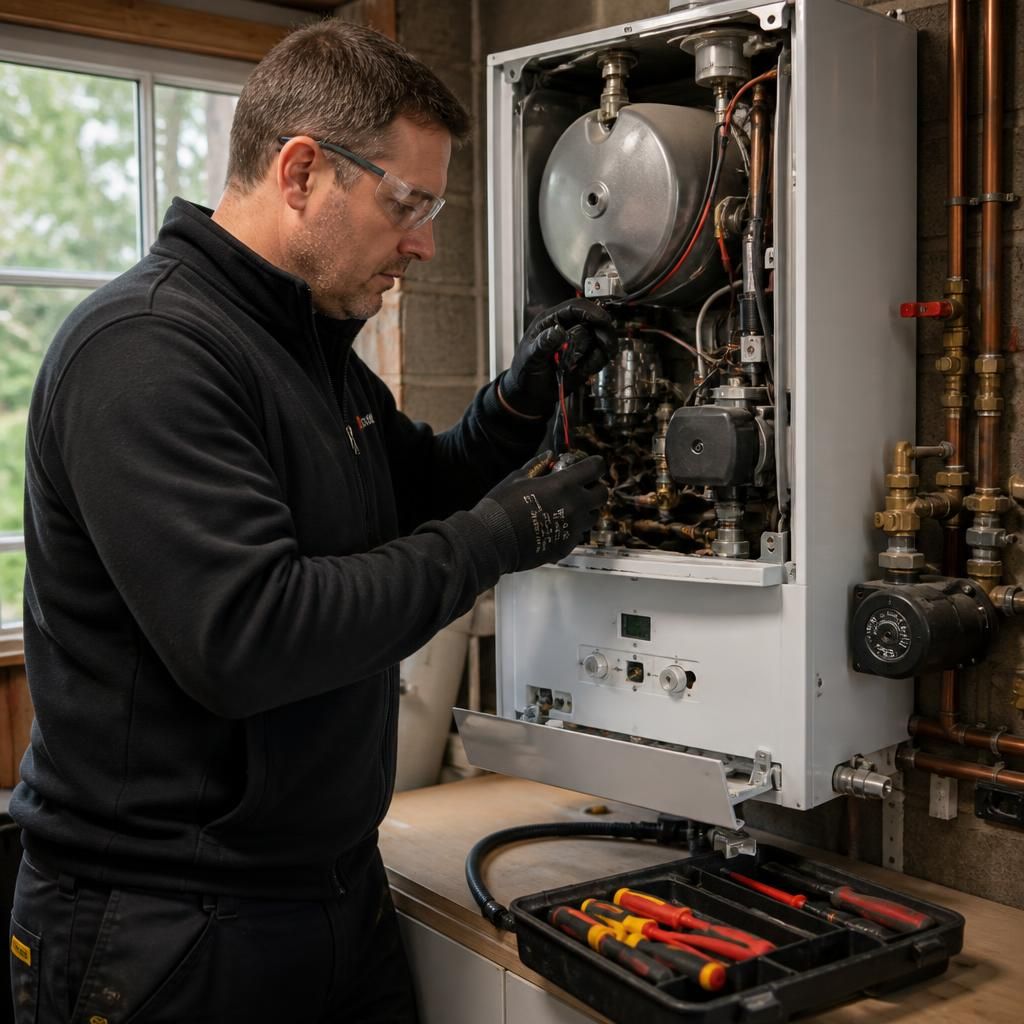
Arrange an oil or LPG boiler service at least once a year, or follow the manufacturer’s instructions if they specify a shorter interval. We check the burner, flue, combustion, controls and fuel connections, then explain any work your system needs.
For most homes, the next service should be booked around the anniversary of the previous one. The boiler manufacturer’s instructions take priority, and some appliances or warranty terms require a different interval.
Keeping to that schedule matters because oil and LPG appliances depend on correct combustion. A boiler can continue to provide heat while its burner, flue or safety controls are becoming dirty or unreliable. Servicing gives us the opportunity to find that deterioration before it develops into a larger repair.
For an oil boiler, we normally inspect and clean the burner, heat exchanger, baffles and combustion chamber. We check the oil nozzle, pump, flexible oil line, filters and isolation controls. If the tank or supply pipe feeds the boiler, we also look for signs of contamination, leaks or restricted flow.
For an LPG boiler, we examine the burner, heat exchanger, appliance connections, flue and combustion controls. We check the gas pressure and look for signs of damage or leakage around the appliance and pipework. The regulator, cylinder arrangement and ventilation also need attention where they form part of the installation.
In both cases, we analyse the combustion and flue gases rather than relying only on a visual inspection. We check that the appliance is burning correctly, that the flue is removing products of combustion safely and that safety devices respond as they should. We also inspect the condensate route on boilers that produce condensate, because a blocked or frozen pipe can stop the appliance working.
- The appliance and surrounding installation are checked for damage, corrosion and unsafe alterations.
- The burner and heat-transfer surfaces are cleaned where deposits are affecting performance.
- The flue, terminals and ventilation openings are assessed for safe operation.
- Controls, thermostats and safety cut-outs are tested.
- Oil filters, nozzles and seals are replaced when their condition or the manufacturer’s instructions require it.
- We record the service findings and explain any repair or improvement needed.
A service is not the same as a landlord’s safety certificate. If you rent out a property with an LPG appliance, the legal gas safety inspection and record have their own requirements. A boiler service can be carried out at the same visit, but it should be requested and documented separately where necessary.
Homeowners should also arrange a service after a major repair, a change to the fuel supply, or a period in which the boiler has been shut down for a long time. A recurring lockout, unusual noise, soot, staining, an unusual smell or a rise in fuel use warrants investigation rather than waiting for the next planned date. If you smell gas or LPG, do not operate electrical switches or use a naked flame. Leave the property and contact the relevant emergency service or fuel supplier.
Older boilers and off-gas-grid systems can need more than a quick appliance check. Oil quality, tank condition, pipework, ventilation and the position of the flue all affect reliable operation. We work on oil-fired systems under OFTEC registration, which covers the competence needed for this type of installation. For LPG appliances, a Gas Safe registered engineer must carry out work on the gas side.
After the visit, you should have a clear record of what we tested, any parts changed and any defects that need further attention. If the boiler is safe to continue using but approaching the end of its serviceable life, we can explain the repair options and the practical implications of replacement without treating the service as a sales appointment.
Keeping the record with the appliance documents helps when you sell, let or insure the property. It also gives the next engineer a useful history of recurring faults, replacement parts and previous combustion readings.
If the boiler’s service date has been missed, don’t wait until the next anniversary. Arrange a service now and use that visit as the new reference date for future servicing.
That is particularly sensible if the boiler has been running through another winter without inspection. We can record its condition, note any developing faults and explain what needs attention before the appliance is relied on again.