
Can a warm air heater run on LPG?
Yes, some warm air heaters can run on LPG, but only if the model is designed for LPG or has an approved conversion. We check the heater, flue, ventilation and LPG supply before confirming whether conversion is safe or replacement is the better option.
LPG can be a practical fuel for a warm air heating system, particularly where a property has no mains gas connection. The important point is that the heater, flue and LPG supply must work together as one approved installation.
A warm air heater designed for LPG will have the correct burner arrangement and operating instructions for that fuel. Some appliances can be converted using an approved kit, while others must remain on their original fuel. The appliance data plate and manufacturer’s instructions determine what is permitted. A conversion is not simply a matter of changing the gas bottle or adjusting the controls.
Your fuel arrangement will usually be one of two types:
- LPG cylinders: suitable for some smaller properties, although the cylinders need safe external storage and regular replacement.
- A bulk LPG tank: better suited to higher fuel demand, with deliveries arranged when the tank needs refilling.
The regulator, pipework and appliance inlet pressure must match the heater’s requirements. If the supply pressure is wrong, the heater may fail to start, burn poorly or operate unsafely. We assess the proposed cylinder or tank position, the pipe route and the regulator before deciding whether the existing installation can support the appliance.
LPG storage needs careful planning. Cylinders and tanks must sit outside in a suitable, accessible position, away from potential sources of ignition and protected from damage. A rural property may have space for a tank, but a listed building, barn conversion or property in a sensitive landscape may need additional consideration. Planning requirements and property restrictions can affect the position of both the tank and the heater’s flue.
The flue arrangement matters as much as the fuel. A replacement heater may need a different flue terminal, route or clearances from windows, doors and boundaries. An open-flued appliance also needs a reliable supply of combustion air. We inspect the room, flue route and ventilation before recommending an installation. We do not assume that an existing flue is suitable simply because the replacement heater has a similar output.
LPG is heavier than air. If it escapes, it can collect in low-level areas such as cupboards, pits or floor voids. That makes sound pipework, correct ventilation and safe appliance positioning especially important. We also check for signs of corrosion, damaged joints and unsuitable modifications. A carbon monoxide alarm should be installed where appropriate for the appliance and room arrangement.
Running costs depend on the amount of heat your home needs, the heater’s efficiency, the LPG supplier’s pricing and the way fuel is delivered. Cylinder rental, tank rental, delivery charges and minimum order requirements can also affect the overall cost. LPG is not automatically cheaper than oil, electricity or another available fuel. We can compare the likely running arrangement with the condition and use of your existing system, rather than relying on a headline fuel price.
Your existing warm air ductwork may still be usable if the replacement heater has compatible airflow, output and connection sizes. However, the duct system does not make an appliance LPG-compatible. We check the heater itself, the return-air arrangement, registers and controls before including reuse in the quotation.
Replacing the heater may be more sensible than converting it when the appliance is old, parts are difficult to obtain or the flue and ventilation need major changes. A new LPG model can also provide a clearer maintenance route and better control. We explain the difference between conversion and replacement, including the work needed around the flue, gas supply and controls, before you choose.
Gas Safe registration covers work on gas appliances, including LPG appliances. Our engineers use the manufacturer’s instructions and test the installation after work is complete. That testing includes checking combustion, operating pressure, safety controls and the flue. We provide the relevant paperwork so you have a clear record of what was installed and tested.
An LPG warm air heater also needs regular servicing. A service checks the burner, heat exchanger, fan, filters, controls, flue and combustion readings. It can identify a developing fault before the heater stops working or begins operating inefficiently. If your heater has been converted, the engineer should also confirm that the conversion remains correctly identified and adjusted for LPG.
We start with the appliance model, the fuel storage arrangement and the property’s flue and ventilation. That gives you a clear answer on whether your existing heater can use LPG, whether an approved conversion is available, or whether replacement is the safer route.
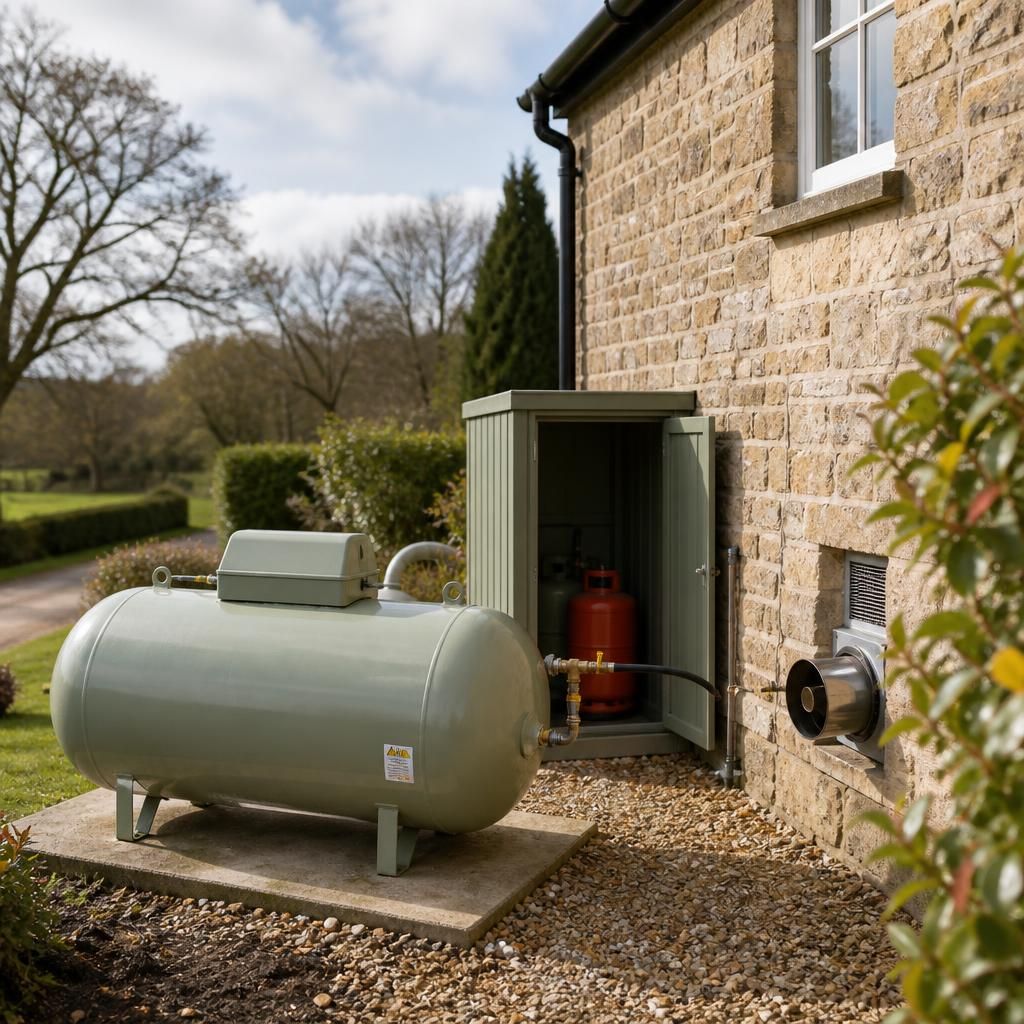
If LPG is being considered for a warm air heater, the storage arrangement needs to work in daily use, not just fit on paper. A tank or cylinder position must allow fuel deliveries, provide access for inspection and keep the supply route protected. We assess those practical details alongside the heater’s demand, so you can see which arrangement is suitable for the property.
The installation should also leave a clear way to isolate the LPG supply if the heater develops a fault. We identify the relevant isolation points and explain their purpose, giving you a clear record of how the system is arranged.