
How often should a gas or LPG warm air heater be serviced?
A gas or LPG warm air heater should normally be serviced once a year, following the manufacturer’s instructions. Regular servicing lets us check combustion, the flue, safety controls and heat exchanger before faults affect your home.
The manufacturer’s service interval takes priority, and some heaters need attention sooner than the usual annual cycle. Age, usage, dusty conditions and the type of fuel all affect how often the appliance should be checked.
A warm air heater does more than burn gas or LPG. It heats air, moves it through a fan and distributes it around the property through ductwork. A fault in any part of that process can reduce comfort, increase fuel use or create a safety risk.
Why regular servicing matters
Your heater may still produce warm air while developing a fault. A dirty burner, damaged seal, restricted flue or failing fan is not always obvious from the room controls. We inspect the appliance and test its operation so small problems can be identified before they become a breakdown.
Combustion checks are especially important. The heater must receive the right amount of gas or LPG and discharge combustion products safely. We check the burner, gas pressures, combustion performance and flue arrangements against the manufacturer’s requirements. We also examine the heat exchanger and relevant seals for signs of damage or deterioration.
A warm air system can also suffer from problems outside the main heater. Filters become blocked, fans collect dust and ductwork can be damaged or poorly sealed. These faults make the fan work harder and can leave some rooms colder than others. We check the accessible air-moving and distribution components as part of the service and explain any restrictions or defects that need further work.
When the interval may need shortening
- An older appliance: Seals, fans, controls and heat exchangers experience more wear as the heater ages. The service record and manufacturer’s instructions are useful when deciding if a shorter interval is sensible.
- Heavy use: A heater working for long periods through the colder months can accumulate more wear and deposits than one used occasionally.
- Dusty or dirty conditions: Workshops, farm buildings, renovation work and properties with airborne dust can restrict filters and affect the fan and burner.
- LPG supply changes: A change to the cylinder arrangement, regulator or fuel supply should prompt a check that the heater is operating at the correct pressure.
- Repeated faults: Strange smells, delayed ignition, unusual fan noise, cycling, weak airflow or rooms failing to heat evenly indicate that the heater should be examined rather than simply reset.
Never ignore soot, scorching, staining around the appliance or a carbon monoxide alarm. Turn the appliance off and seek qualified help if you notice these signs. A carbon monoxide alarm is valuable protection, but it does not replace servicing or a proper flue and combustion check.
What happens during a service
We begin by discussing any changes you have noticed, such as higher fuel use, unusual noises or poor airflow. We then identify the appliance, review available service information and inspect the heater, controls and accessible flue components.
Testing normally includes the gas or LPG supply, burner operation, ignition, combustion and safety controls. We check that the flue is discharging correctly and that the appliance has suitable ventilation where required. The fan, filters, heat exchanger and accessible duct connections are also considered because they affect both safety and performance.
If the heater needs cleaning, adjustment or a replacement part, we explain the reason before carrying out additional work. A service is not the same as replacing worn components or repairing a defective flue. Those jobs may need a separate quotation, particularly where access is difficult or parts are no longer available.
Service records and rented properties
Keep the service report with the heater’s manuals and previous records. It shows what was inspected, identifies recommendations and helps the next engineer understand the appliance’s history. For a rented property, landlords should keep the relevant gas safety documentation and arrange any legally required checks separately from routine servicing.
Our Gas Safe-registered heating engineers work on gas appliances, including gas-fired warm air heaters. For LPG equipment, the engineer must also be competent for the appliance and fuel arrangement in question. That matters because LPG operates differently from mains gas, and the cylinders, regulator, pipework and appliance settings all need to be considered together.
If your heater is approaching its next service or has begun showing any of these warning signs, give us the appliance details and its fuel type. We can establish what the manufacturer requires, inspect the complete accessible system and tell you clearly if it needs servicing, repair or replacement.
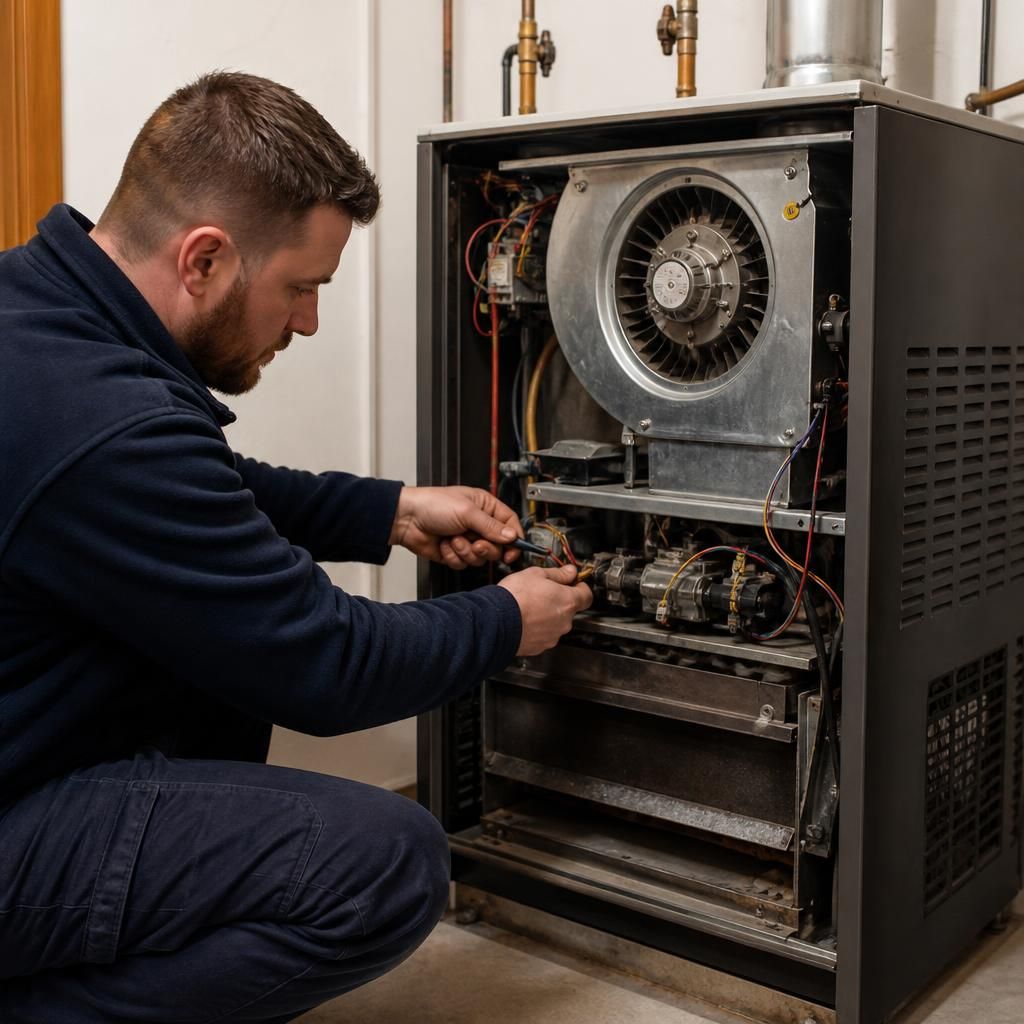
If you’re unsure when the next service is due, find the heater’s model details and previous service report before booking. We use them to check the manufacturer’s interval and identify any fuel conversion or installation changes.
This is particularly important for LPG appliances. The cylinder arrangement, regulator and heater settings must match, so we check the complete fuel setup rather than treating the appliance as a standard gas heater.