What ongoing maintenance will my new heating system need?
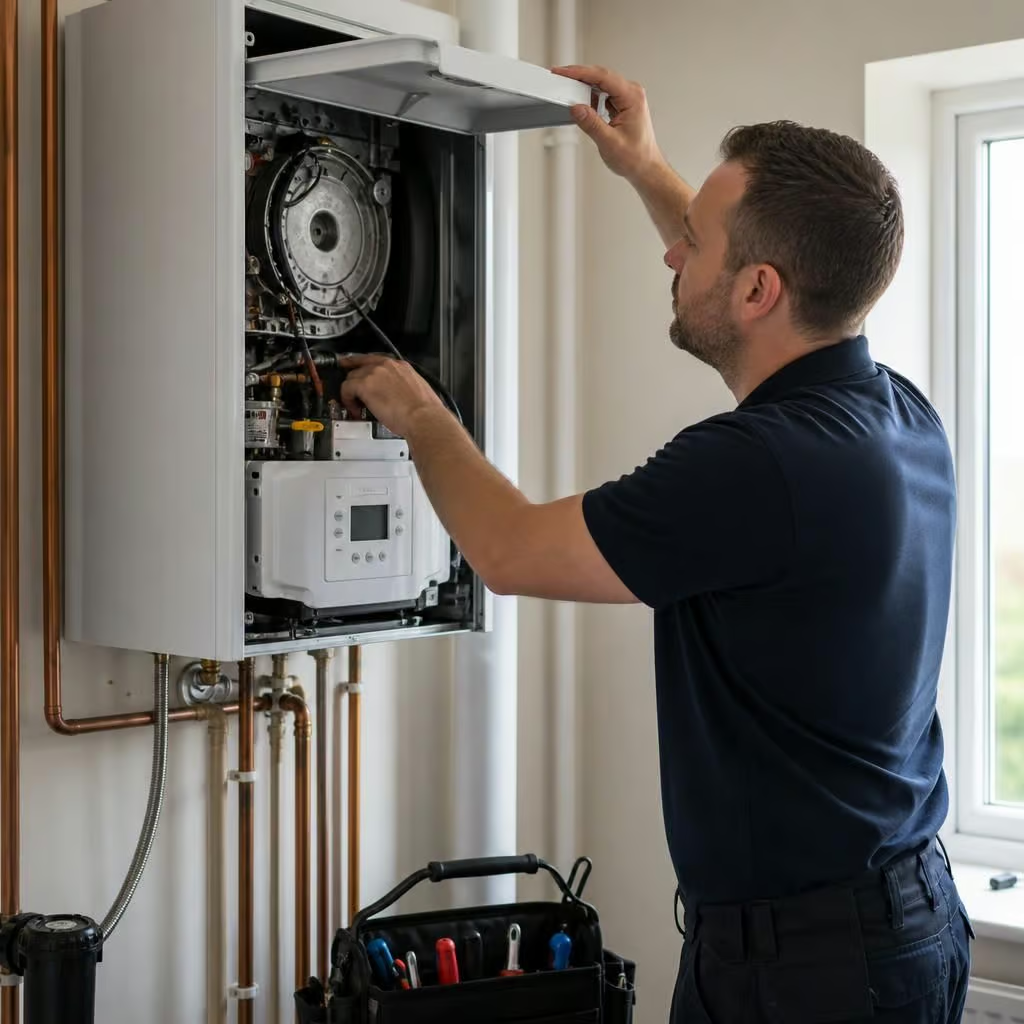
Most new heating systems need a planned service, with checks on safety, controls, water pressure, filters and performance. The exact interval depends on whether you have a gas or oil boiler, heat pump or electric system, and we’ll explain the maintenance your equipment needs.
The right maintenance routine depends on the heat source, the controls and the way the system is used. Boilers and other combustion appliances normally need a service each year. Heat pumps need planned checks on the indoor and outdoor equipment. Electric systems have fewer moving parts, but still need their connections, controls and heat emitters checked.
The manufacturer’s instructions set the final schedule. We explain this during handover and record the equipment details, so future servicing is based on the system actually fitted rather than a generic checklist.
Gas, oil and LPG boilers
A boiler service checks safe combustion, the flue, ventilation, seals, condensate arrangements and the condition of key components. We also look for signs that the appliance is working harder than it should, such as restricted circulation, poor temperature control or repeated pressure loss.
Gas work must be carried out by a Gas Safe registered engineer. This is a legal requirement, not simply a preference. An oil-fired appliance needs an engineer with the appropriate OFTEC registration, which matters particularly in homes that are not connected to the gas network.
Keep the service record with the boiler documents. It helps identify developing faults and may be needed if the manufacturer asks for evidence of servicing. A landlord must also arrange the required gas safety checks for a rented property; a boiler service and a landlord gas safety record are related but different checks.
Air source heat pumps
A heat pump does not burn fuel, so its maintenance is different from a boiler service. We inspect the outdoor unit, fan, coils, electrical connections, sensors and controls. We check that air can move freely through the unit and that leaves, mud or other debris have not reduced its performance.
The heating circuit also needs attention. We check circulation, water quality, expansion arrangements, valves and the condition of filters or magnetic dirt separators where fitted. If the property has been altered since installation, we can also check that the controls still match the way the home is being heated.
Keep the area around the outdoor unit clear, but do not dismantle the casing or try to clean internal parts. A blocked or damaged unit can affect performance, and an engineer should investigate unusual noise, ice that does not clear during normal operation, repeated fault codes or rooms that no longer reach their usual temperature.
Electric heating and controls
Panel heaters, storage heaters and electric boilers do not have a combustion chamber or flue, so their routine maintenance is usually lighter. We check the electrical connections, thermostats, programmers, isolators and the condition of the heaters themselves. Loose connections can create heat at the terminals, so a heater that smells hot, trips a circuit or shows discolouration needs attention.
Controls often cause more day-to-day difficulty than the heating equipment. If rooms are overheating, failing to warm up or following the wrong schedule, we check the programmer, thermostats, sensor positions and settings before recommending replacement parts. A system may need adjustment rather than a new appliance.
Radiators, underfloor heating and pipework
Your heat source can be working correctly while poor circulation prevents the rooms from heating properly. We check for trapped air, cold patches, sticking valves, leaks and uneven flow between radiators. On a wet underfloor system, we check the manifold, actuators, pumps and individual zone controls.
Small changes in performance are worth reporting before they become a breakdown. A radiator that remains cold at the bottom, a pump that becomes noisy or a pressure gauge that keeps falling can point to sludge, air, a leak or a circulation fault. We investigate the cause instead of repeatedly topping up the system.
What you can check yourself
- Keep the boiler, cylinder, heat pump and electrical equipment accessible.
- Check that outdoor heat pump air paths and boiler flues are not obstructed.
- Test carbon monoxide alarms where a combustion appliance is installed, following the alarm manufacturer’s instructions.
- Look for visible leaks around valves, cylinders, radiators and exposed pipework.
- Note unusual smells, sounds, fault codes, pressure changes or rooms that are colder than usual.
- Keep service records, appliance manuals and control instructions together.
Do not remove boiler casings, alter gas or oil settings, open sealed electrical equipment or interfere with safety controls. These checks need the right registration, testing equipment and knowledge of the appliance.
When maintenance becomes a repair
A service can identify wear, but it does not prevent every fault. Contact us if the boiler repeatedly locks out, the system loses pressure, an oil burner becomes difficult to start, a heat pump displays a recurring code or an electrical heater trips its circuit. Continuing to reset equipment can hide the cause and may make the eventual repair more disruptive.
We explain what has failed, what can safely continue to run and what needs replacing. If parts or corrective work are needed, we provide the cost before starting so you can decide how to proceed.
Keeping the system efficient over time
Maintenance is also an opportunity to review how the system is being used. A change to room use, insulation, occupancy or hot water demand can make the original control settings less suitable. We can check the settings and explain practical adjustments without assuming that new equipment is required.
For a new heating system, the most useful plan is simple: follow the specified service schedule, keep access clear, pay attention to small changes and use a suitably qualified engineer for safety-critical work. We can carry out the relevant ongoing checks on systems we install and keep the advice specific to the equipment and property.
Once a new system has been running for a while, small changes can be easier to spot against its original commissioning settings. At a planned visit, we compare temperatures, controls and operating behaviour with the records from installation.
That gives you a clearer answer when performance changes. We can distinguish normal adjustment from developing wear, poor circulation or a control problem, then explain whether monitoring, servicing or corrective work is appropriate.