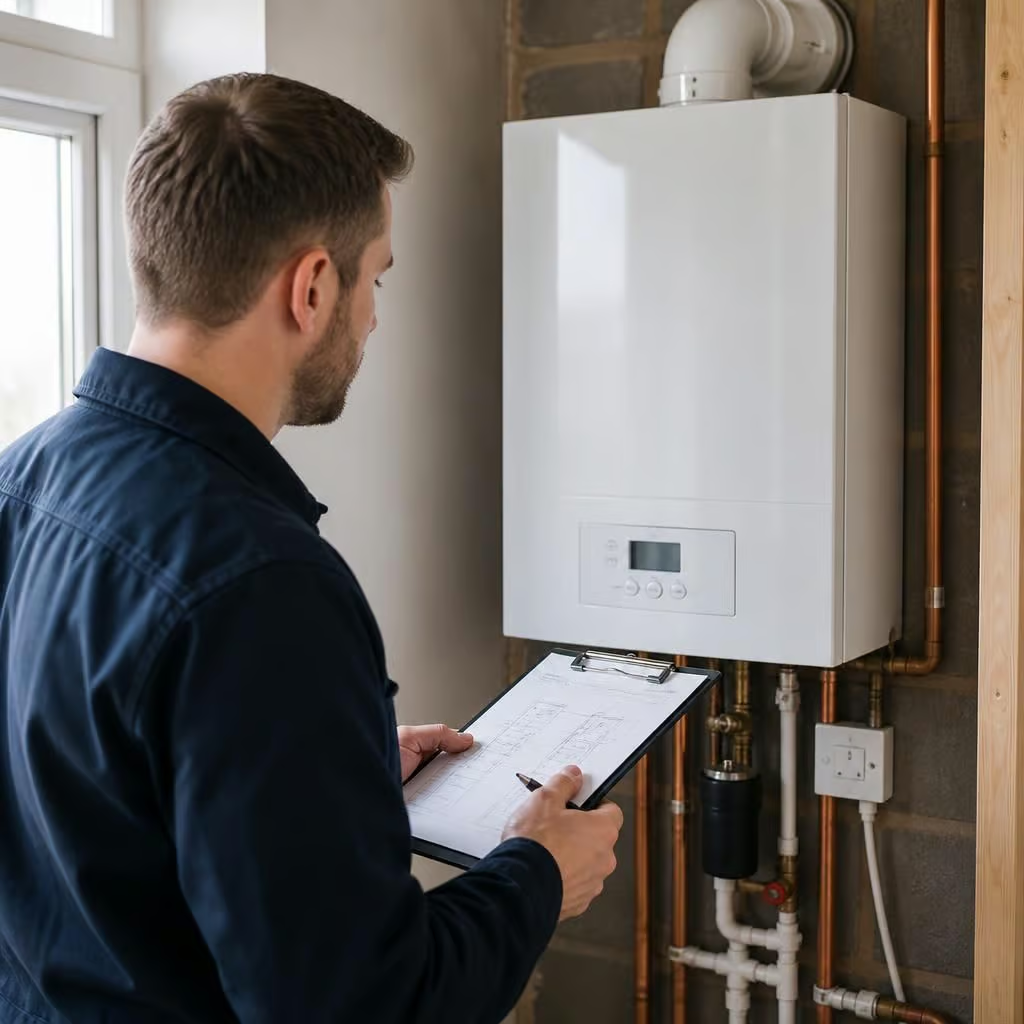
How does a gas engineer assess whether a boiler installation is suitable?
A gas engineer assesses whether the home’s heating demand, gas supply, boiler location, ventilation, flue route and condensate drainage can support the proposed installation. We also check the existing system and safety requirements, then explain any changes needed before giving a written quotation.
A boiler installation is suitable only when the appliance can heat the property properly, receive the fuel it needs and operate safely within the building. We assess the whole heating system rather than choosing a boiler from the old appliance’s output alone. If the proposed installation needs alterations, we explain those before you decide.
We start with the way the home is used. The number of bedrooms, bathrooms, occupants and hot-water outlets affects the choice between a combi boiler, a system boiler with a cylinder, or a regular boiler with a separate tank. A combi may suit a smaller home with straightforward hot-water use. A property with several bathrooms or simultaneous demand may need stored hot water instead.
The existing boiler type gives us useful information, but it does not decide the replacement. We look at the cylinder, cold-water storage, heating controls and distribution pipework. If the current system has poor flow, corroded radiators or unsuitable controls, replacing the boiler alone may leave you with the same underlying problem.
Your heat requirement is checked room by room. We consider the construction, glazing, insulation, exposed walls and size of each room. Older solid-wall homes, barn conversions and properties with high ceilings can lose heat differently from modern houses. This assessment helps us avoid fitting an appliance that is too small to heat the home or unnecessarily large for the actual demand.
Radiators form part of that assessment. If they are too small for the required water temperature, the boiler may not deliver the expected performance. We identify where radiator changes, balancing or pipework improvements would help. We then separate essential work from improvements that can be planned later.
The gas supply must support the proposed appliance. We inspect the meter position, gas pipe size, route and condition. A larger boiler may require an upgraded supply pipe rather than a direct connection to the existing arrangement. We also consider whether the meter and incoming supply are suitable for the appliance and any other gas equipment in the property.
The boiler location has practical and safety implications. We check access for installation and future servicing, clearances around the appliance, the position of isolation points and the route for heating, hot-water and gas connections. In a kitchen, utility room, cupboard or loft space, the available room must still meet the manufacturer’s installation requirements.
Ventilation is assessed in relation to the room and appliance. A modern room-sealed boiler does not normally draw combustion air from the room in the same way as an older open-flued appliance. That does not remove the need to examine the existing arrangement. We check whether other appliances, cupboards or building alterations affect safe operation, and we identify any remedial work needed.
The flue is assessed as a complete route, not just at the point where it leaves the boiler. We look at its length, direction, terminals, access for inspection and clearances from windows, doors, boundaries and air vents. A proposed position may need a different route or terminal arrangement if the existing exit point no longer meets current requirements. We also consider plume discharge, particularly where the flue would sit near a neighbour’s window or a frequently used entrance.
Condensate disposal must remain reliable in cold weather. We inspect where the pipe can run, how it can be protected and whether the connection to the drainage system is suitable. An exposed or poorly supported condensate pipe can cause the boiler to stop working when it freezes. If the route is vulnerable, we plan a safer internal route or suitable protection as part of the installation.
Older heating systems can contain sludge, debris or corrosion products. We check the condition of the water and system components, including pumps, valves, expansion arrangements and radiators. Cleaning, filtration or replacement of failed parts may be needed to protect the new boiler. We explain this before work starts rather than treating an existing system fault as an unexpected extra.
Safety checks determine whether the existing installation can remain in use. We examine visible gas joints, appliance connections, flue condition and signs of previous alterations. Our Gas Safe registration means the gas work is carried out by engineers legally qualified for it. If we find an unsafe arrangement, we explain the risk and the steps needed before a new boiler can be commissioned.
The survey also considers building access and installation disruption. A replacement in the same position may involve less alteration than a move to another room, but the best technical position is not always the current one. We discuss access through the property, removal of the old appliance, wall penetrations, pipe routes and how the finished work will be made good.
At the end, we set out whether the proposed boiler is suitable as planned, suitable with specified alterations, or unsuitable for that position or system. The written quotation records the appliance arrangement, controls, flue and condensate work, system alterations and any exclusions. That gives you a clear basis for comparing options before committing to the installation.
If your home is listed or sits in a conservation area, the boiler position may involve more than technical checks. External flues, terminals and visible pipework can affect the building’s appearance. We flag any planning or building control questions before you commit to an installation.
A suitable position must also remain practical after the work is finished. You should be able to reach the boiler for servicing, isolate it safely and access key components without removing cupboards or stored items. We include those practical details in our recommendation, not just the appliance specification.