
How do you confirm a commercial gas boiler installation meets current requirements?
A compliant commercial gas boiler installation must meet current Building Regulations, gas safety requirements and the manufacturer’s instructions. We verify the flue, ventilation, controls and safety devices, then commission the boiler and provide the required certification and records.
A commercial gas boiler installation meets current requirements when the design, workmanship, testing and records all support one another. We confirm this through a documented review of the building, the gas system, the boiler installation and the completed handover. The result is a clear compliance file for the owner, landlord or facilities manager.
We start with the building and its use. A boiler serving offices has different operating demands from one serving a workshop, care setting, farm building or mixed-use property. The required output, duty pattern, hot-water demand, plantroom conditions and control strategy all affect the design. We record these details before selecting equipment or finalising the installation.
The condition of the existing system also matters. An older commercial property may have restricted access, undocumented alterations or pipework that no longer matches the available gas supply. We check the proposed boiler against the gas meter, pipework and installation conditions. If the existing arrangement cannot support the new appliance safely, we explain the necessary remedial work before installation begins.
The legal checks cover more than the boiler itself. We review the installation against the gas safety requirements, relevant Building Regulations and the boiler manufacturer’s instructions. The design may also need to account for non-domestic guidance, the building’s fire strategy, energy requirements and any requirements set by the property owner, insurer or managing agent. Where another approval or inspection is needed, we identify it before work starts rather than treating it as an afterthought.
Commercial premises often have several people responsible for different parts of the building. The gas installer may not be responsible for the fire alarm, electrical supply, building control notification or asbestos management. We make the boundaries clear. That helps the responsible person arrange any related checks and prevents an apparently complete installation from relying on an unresolved issue elsewhere in the building.
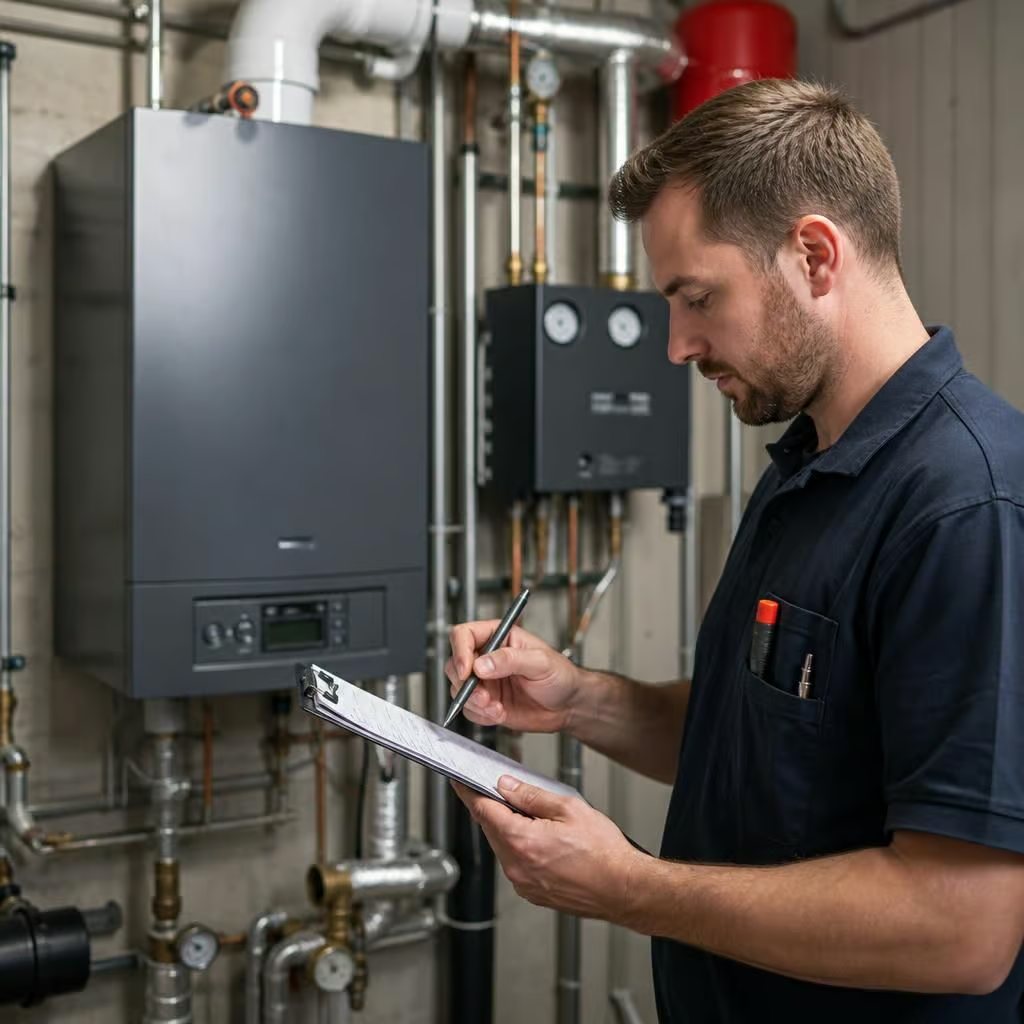
We verify the work on site, not just on paper. The engineer checks that the installed appliance matches the approved design and that the gas pipework, isolation arrangements, condensate disposal and electrical connections are suitable for the location. Combustion results and operating performance are measured using calibrated test equipment. Any result outside the manufacturer’s stated range is investigated before the boiler is accepted.
Controls need to operate as intended under normal and abnormal conditions. We test the boiler’s demand signal, time and temperature controls, frost protection where fitted, system interlocks and any connections to a wider building management system. If the boiler serves more than one circuit or operates alongside existing plant, we check that the sequence does not allow unsafe or wasteful operation.
Safety arrangements must also be usable by the people who manage the premises. We confirm that gas isolation points, emergency controls and warning labels can be identified and reached. We explain what the site team should do if they smell gas, the boiler locks out or an alarm indicates a fault. The responsible person should not need to search through technical manuals during an incident.
The paperwork should allow another competent person to understand the installation. Our handover records can include:
- the boiler make, model, serial number and location;
- the installation and commissioning details;
- combustion and operating test results;
- the gas installation and appliance safety records;
- details of any limitations, outstanding items or remedial work;
- manufacturer’s instructions, servicing information and warranty documentation; and
- the control settings and operating guidance needed by the site team.
For a managed property, these records provide evidence for the owner, landlord, facilities manager or insurer. They also give the next service engineer useful information. A file that only contains an invoice does not demonstrate how the boiler was installed or whether it was tested correctly.
The engineer’s competence is part of the compliance check. Gas work is carried out by an appropriately qualified Gas Safe registered engineer. This matters because Gas Safe registration is the legal requirement for anyone working on a commercial gas boiler. We use the engineer’s commercial appliance competence for the type of work involved, rather than treating general plumbing experience as sufficient.
After handover, compliance continues through proper servicing and record keeping. The operator should follow the manufacturer’s maintenance instructions and arrange inspections at intervals suitable for the appliance and its use. Changes to the flue, controls, building layout or ventilation can affect an installation that was safe when first completed, so alterations should be assessed before they are made.
If we find a defect or a requirement that cannot be met without additional work, we record it clearly and explain its significance. We do not describe an installation as compliant simply because the boiler fires. You receive a written account of what has been checked, what has been completed and what still needs attention.
A single certificate does not prove that a commercial boiler installation meets every requirement. The commissioning record shows that the appliance was installed, adjusted and tested against the manufacturer’s instructions. The gas safety record confirms the appliance and connected gas installation were safe when inspected.
These records should identify the exact boiler, its location, the test results and any restrictions on its use. We also separate completed work from items that need attention elsewhere, such as a required building control inspection or an unresolved ventilation issue. That gives the responsible person a clear basis for accepting the installation and arranging any remaining action.
Discuss your commercial gas boiler compliance requirements
If you’re planning a commercial gas boiler installation or reviewing an existing one, speak to us about the compliance requirements for your premises. We can discuss the building, the proposed work and the records needed before you approve the installation.