
How long does a commercial gas boiler installation take?
A commercial gas boiler installation may take from a single working day to several days, depending on the boiler size, flue arrangement, access and any pipework or control changes. We confirm the expected programme after assessing the site, then coordinate delivery, installation, commissioning and the required compliance paperwork.
The installation programme depends on the condition of the existing plant and the work around it. A straightforward replacement can follow a short, planned sequence. Changes to the flue, gas supply, heating circuit, controls or access can add work before the new boiler can operate safely.
Before agreeing the programme, we assess:
- the boiler output and whether it matches the building’s heating and hot-water demand;
- the route and discharge point for the flue;
- the size, condition and route of the gas pipe;
- plant-room access, lifting requirements and space for the replacement boiler;
- the condition of pumps, valves, expansion equipment, radiators and distribution pipework;
- the controls, zoning and any links to hot-water cylinders or building-management systems; and
- the condensate route, ventilation and safe access for future servicing.
This survey separates installation work from remedial work. If the existing gas pipe is undersized or the flue cannot be reused, we include the necessary changes in the quotation rather than discovering them after the job has started.
Preparation often affects the programme as much as the installation itself. The replacement boiler and associated materials need to reach the plant room, while the building may need a planned interruption to heating or hot water. For a business, landlord or managed property, we agree the shutdown sequence with the responsible person so occupants, tenants or staff know what to expect.
On the installation day, we isolate the relevant services, remove the old appliance and connect the new boiler to the gas, heating, electrical, flue and condensate systems. We protect the working route and keep removed equipment and materials under control. If the existing system needs cleaning, pipework alterations or new controls, those tasks form part of the agreed programme rather than being treated as an afterthought.
A boiler is not ready for use when it is merely connected. We test the gas installation, check the flue and ventilation arrangements, verify safety controls and commission the appliance in line with the manufacturer’s instructions. We also check operating temperatures, system pressure and control settings, then explain the normal operation to the person responsible for the building.
Commissioning and handover can take longer where the installation includes several boilers, a cascade arrangement, linked hot-water equipment or revised controls. Each part must work together before the plant is returned to service. We provide the relevant commissioning records and compliance paperwork when the work is complete.
Older commercial premises can reveal additional issues once the existing boiler is removed. Corroded isolation valves, damaged flue sections, poor access or unsupported pipework may need attention. If we find a problem that changes the agreed work, we explain what it means, provide the cost before proceeding and wait for approval where extra work is required.
Gas work must be carried out by an appropriately qualified engineer. Our Gas Safe-registered heating engineers complete the installation and safety checks, giving the person responsible for the property a clear record of what was installed, tested and handed over.
The most reliable way to establish the actual duration is a site assessment. Once we understand the boiler arrangement, flue, pipework, access and operating requirements, we can set out the work sequence and identify any decisions needed before installation begins.
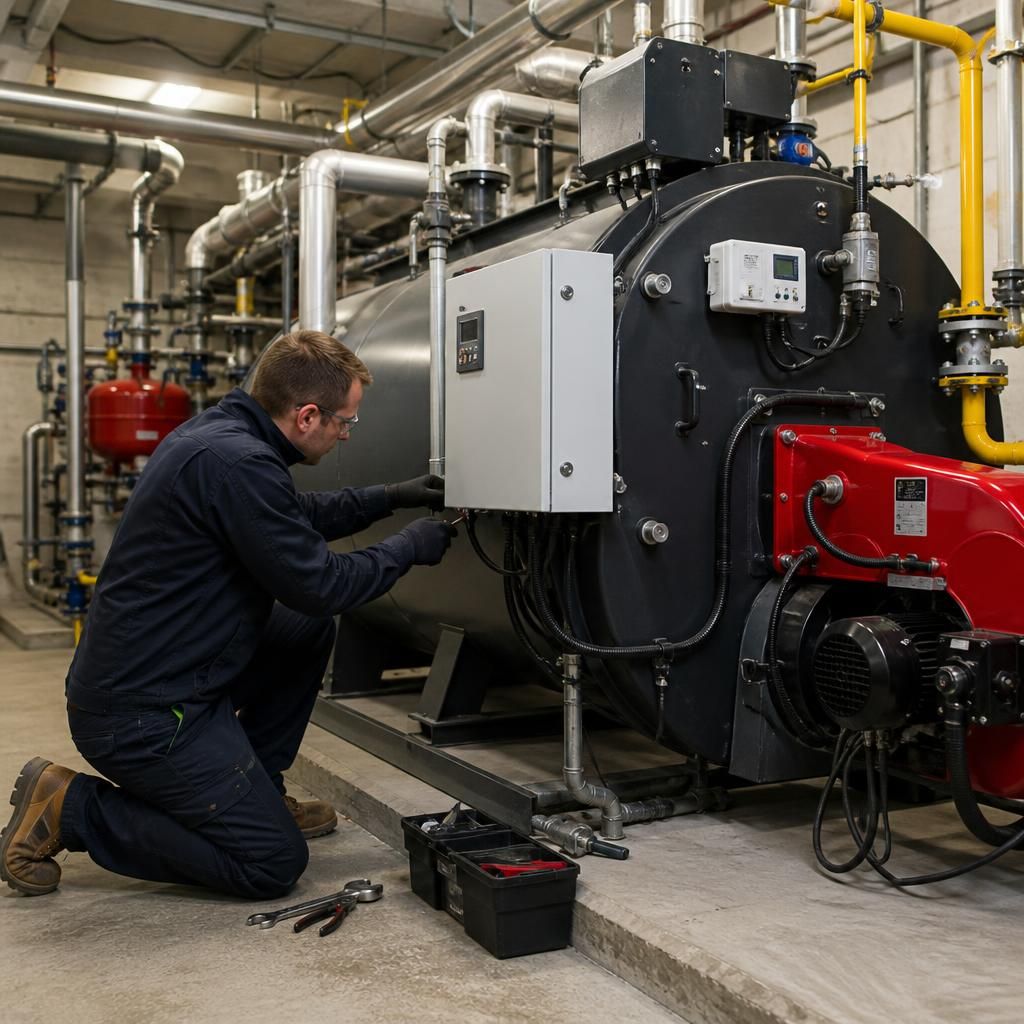
The calendar time from approval to a working commercial boiler includes more than the hours spent in the plant room. The site assessment, agreed quotation, equipment delivery and planned shutdown all form part of the programme.
If the replacement depends on decisions about flue routing, controls or connected equipment, making those decisions before the installation date prevents avoidable pauses. We set out the sequence clearly, so the person managing the building knows what needs to happen before the old boiler is removed and when the system can be put back into service.