
What should a commercial gas boiler quotation include?
A commercial gas boiler quotation should itemise the boiler specification, expected efficiency, flue and controls, installation work, commissioning, certification, costs and any exclusions. We explain what the price covers before work starts, so you can compare quotations without guessing what has been left out.
A useful commercial gas boiler quotation should let you understand the proposed system, the work involved, the conditions behind the price and the paperwork you will receive. It should also show which parts are fixed and which could change after further investigation. That gives you a sound basis for comparing quotations, rather than choosing the lowest unexplained figure.
The existing installation and the proposed replacement
Your quotation should identify the boiler or boilers being proposed, their output, fuel type and intended use. A commercial heating system may serve offices, shops, communal areas, workshops or process equipment, so the required output cannot be chosen from the building size alone. We assess the existing heating and hot-water demand, the building’s use and any areas that need separate control.
If the system needs more than one boiler, the quotation should explain the arrangement and how it will operate when demand is low or one appliance is unavailable. It should also state whether the proposal replaces the whole plant or only part of it. A replacement boiler may not correct poorly sized pumps, damaged valves, blocked pipework or inadequate controls elsewhere in the system.
The survey information behind the price
The quotation should be based on a site assessment, not just the model and price of a boiler. We look at the plant room, access route, existing flue, gas supply, ventilation, condensate drainage, electrical supply and the condition of connected pipework. The quote should record any assumptions made where parts of the installation could not be inspected.
Your building may have limited plant-room access, a flue that passes through occupied areas or an older gas supply that cannot support the new appliance. If those issues affect the cost, they should appear as identified works or clearly stated conditions. This is particularly important where the boiler is in a rented property, shared building or business premises, because access and disruption need planning before installation begins.
Gas supply, flue and ventilation work
A commercial boiler quotation should describe the proposed flue route, terminals, supports and any access equipment needed to install them. It should also explain whether the existing flue can be reused. Reusing it is not automatically suitable for a replacement appliance.
The gas pipe size and route should be checked against the new boiler’s requirements. If we need to alter the gas run, install isolation valves or carry out pressure testing, the quotation should say so. The same applies to plant-room ventilation, combustion air and any alterations needed to meet the appliance manufacturer’s requirements.
Controls and connected heating equipment
Your quotation should show which controls are included and what they will control. This might include time and temperature control, separate heating zones, weather compensation, frost protection, sequencing for multiple boilers or integration with a building management system.
It should also identify work to pumps, valves, expansion vessels, safety devices, filters, headers, hot-water cylinders and radiators where relevant. If existing components remain in service, the quotation should make that clear. An installer cannot price the risk of every old component as a replacement, but the written scope should distinguish included replacement work from items that have only been inspected.
Efficiency and running-cost information
A quotation should state the efficiency information available for the proposed appliance and explain how the controls affect operation. An efficiency rating describes the boiler under defined test conditions. It does not predict the gas bill for a building with changing occupancy, open doors, production loads or poorly insulated areas.
We can discuss likely operating considerations from the survey, but a responsible quotation should not present an unverified saving as a guaranteed result. If the proposal depends on lower flow temperatures, hydraulic balancing, insulation work or changes to operating hours, those dependencies belong in the written explanation.
Installation work and disruption
The price should describe what happens to the old equipment, how the new boiler will be positioned and which services will be isolated during the work. It should identify pipework alterations, flue installation, electrical connections, condensate drainage, system cleaning, filling, treatment and disposal of removed equipment.
Your staff, tenants or customers may need continued access to parts of the building. We explain the areas affected, the expected sequence of work and any preparation needed from the site team. If lifting equipment, scaffolding, a permit or out-of-hours access would be required, the quotation should state whether it is included, excluded or still to be confirmed.
Commissioning, testing and certification
Commissioning should be included as a defined part of the installation, not treated as an optional extra. We set up the appliance, check gas pressures and safety controls, test the flue and verify that the heating system operates correctly. The quotation should say which commissioning records and operating instructions you will receive.
Gas work on a commercial boiler must be carried out by an appropriately qualified Gas Safe registered engineer. The quotation should identify the certification that applies to the installation and any building or gas-safety records needed for the property. For a managed or rented building, ask whether the paperwork is suitable for your compliance file and who is responsible for arranging any separate inspection.
Costs, exclusions and possible variations
Ask for the total price to be separated into equipment, labour, materials, testing and any additional services. The quotation should state whether taxes, delivery, disposal, access equipment and remedial work are included. It should also list exclusions, such as asbestos investigation, structural repairs, making good, electrical upgrades or replacement of concealed pipework.
A clear quotation explains what happens if we uncover a defective valve, unsafe flue or unsuitable gas supply. We identify that work before carrying it out and provide a revised price for approval. This prevents an apparently cheap quotation from becoming expensive through undefined extras.
Warranty, maintenance and commercial responsibilities
The document should set out the equipment warranty, the installation cover, any registration needed and the conditions that apply. It should distinguish warranty work from planned servicing, repairs caused by other system components and statutory safety checks.
If maintenance is recommended, the quotation should show it separately from the installation price. That lets you decide what level of ongoing service suits the building without confusing future maintenance with the cost of fitting the boiler.
Before accepting a quotation, check that each installer has priced the same scope. Compare the appliance capacity, flue and gas work, controls, connected equipment, commissioning, certification, exclusions and variation process. A slightly higher figure may include work that another quotation has left as an assumption. We provide the written scope and cost before work starts, so the decision is based on the installation your building actually needs.
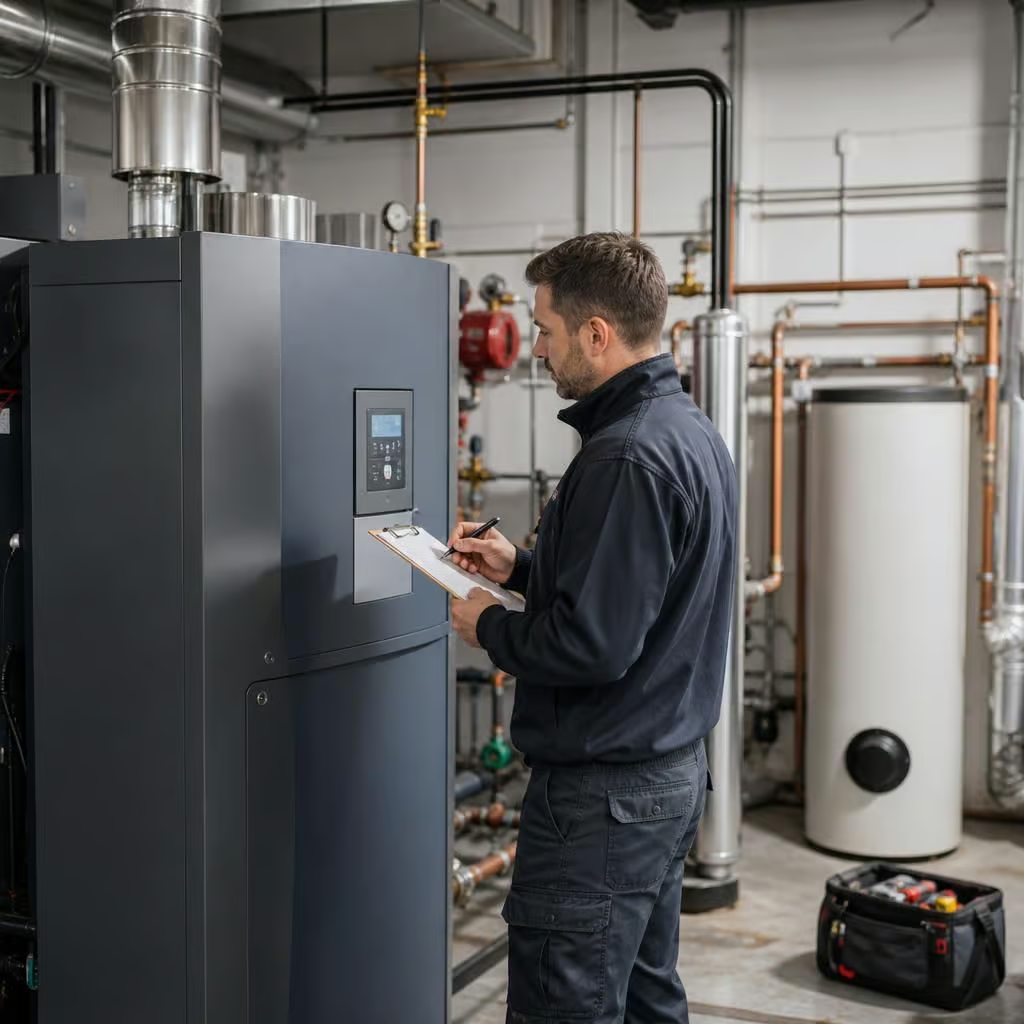
Once the installation is complete, the quotation should explain the handover, not just the fitting. It should say whether we will show the responsible person how to use the controls, identify isolation points and provide operating instructions.
If several people manage the building, ask whether control zones and plant-room labels will be recorded. That gives staff clear information for adjusting the heating safely and reporting a fault. The quotation should also state who receives the handover documents and appliance details, so they can be kept with the property’s compliance records.