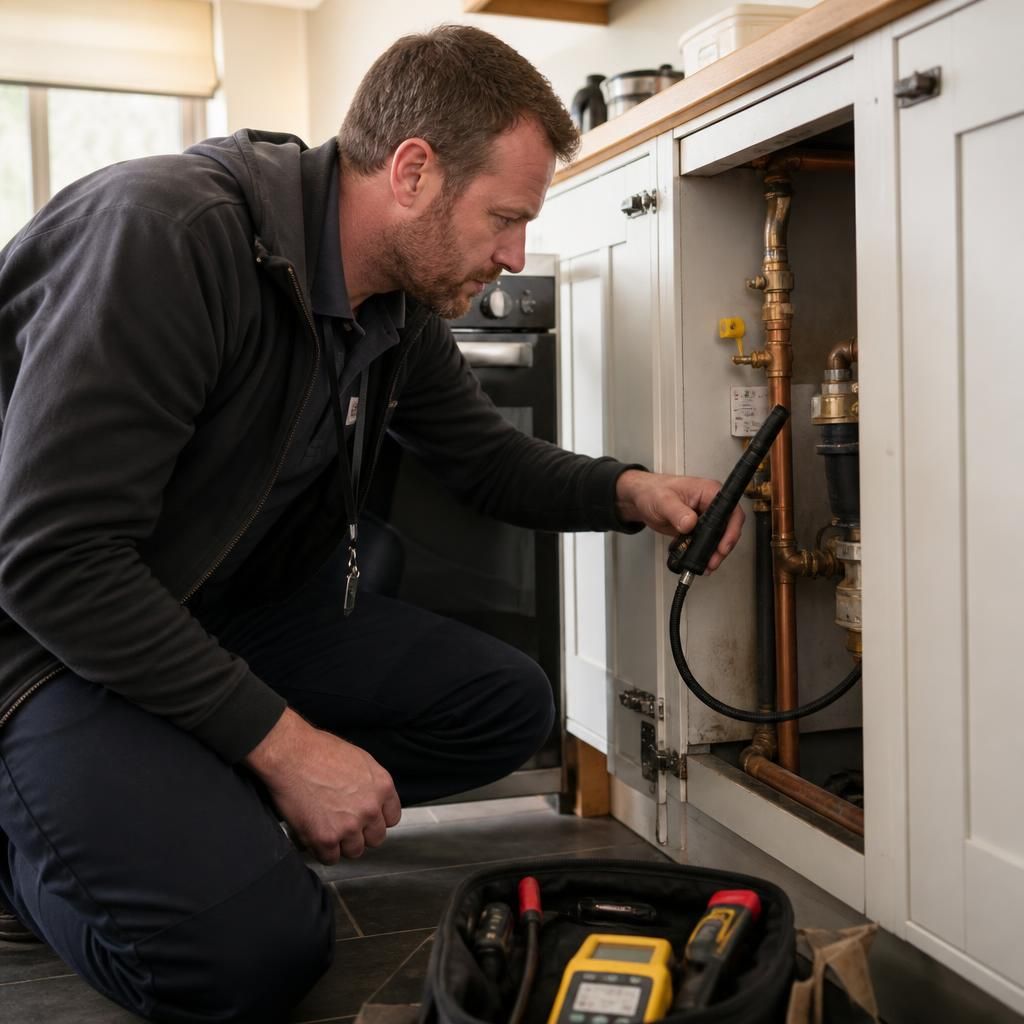
Can gas leak detection find a concealed gas leak?
Yes. Professional gas leak detection can identify escaping gas and help trace it to concealed pipework, using testing equipment rather than guesswork.
We then assess the risk, isolate the supply if needed and explain what repair is required before work begins.
A concealed gas leak can usually be located without immediately opening walls or floors. We combine a controlled pressure test with gas detection equipment and checks along the accessible pipe route. This shows whether gas is escaping and narrows down where the fault lies.
A pressure test is useful because it can confirm that the installation is losing gas, even when no smell is present. It does not identify the exact point of the leak on its own. We therefore test the system in sections and use a gas detector around exposed joints, meter connections, appliance connections and likely pipe routes.
Hidden pipework may run beneath floorboards, inside a wall, through a loft space or behind kitchen units. Older properties and later extensions can make the route less obvious. We inspect the accessible parts first, then use the test results to identify the smallest practical area that may need access.
Finding a leak safely does not normally mean drilling or lifting flooring straight away. We assess the readings, check the pipework layout and consider whether air movement, ventilation or nearby gas appliances could affect the result. If the leak cannot be pinpointed without opening up the building, we explain what access may be needed before any disruptive work starts.
Your immediate safety comes first. If we find that the installation is unsafe, we isolate the gas supply or the affected section where necessary and explain what must remain switched off. We do not leave a suspected leak in service simply because the source is hidden.
- If you can smell gas, do not use switches, plugs, naked flames or mobile phones inside the property.
- Open doors and windows if you can do so safely, then leave the building.
- Call the national gas emergency service from outside. Call 999 if there is an immediate danger to people or property.
- Do not try to locate the leak with a flame, dismantle fittings or bury the problem beneath new flooring or cabinets.
Gas work must be carried out by a Gas Safe registered engineer. That registration means the person working on the gas installation has the legal qualification required for the relevant work. We record the test findings and explain whether the next step is a repair, replacement section of pipework or further access investigation.
The final cost depends mainly on where the leak is, how accessible the pipework is and whether materials or building finishes need attention. Detection and repair are separate parts of the job, so we explain the proposed work before it begins. You can then decide whether to proceed with the repair or arrange the building access separately.
After the fault has been repaired, we repeat the relevant tightness checks and inspect the repaired joints. Any affected gas appliance is only returned to service after the engineer has confirmed that it can be used safely. If the concealed route cannot be repaired without substantial disruption, we may discuss a safer accessible replacement route instead.
A concealed leak is not always a sign that the whole gas installation needs replacing. The test results and condition of the pipework determine that decision. On an older home, we can explain the practical difference between repairing one failed joint, renewing a section and rerouting the pipework so future inspection is easier.
The strongest smell isn’t always where the leak is. Gas odour can travel through gaps, cupboards and floor voids, so checking only the nearest appliance may miss the source.
We trace the result back through the installation instead of opening up the most obvious area first. That helps limit unnecessary disturbance and gives you a clearer basis for deciding what access or repair is needed.