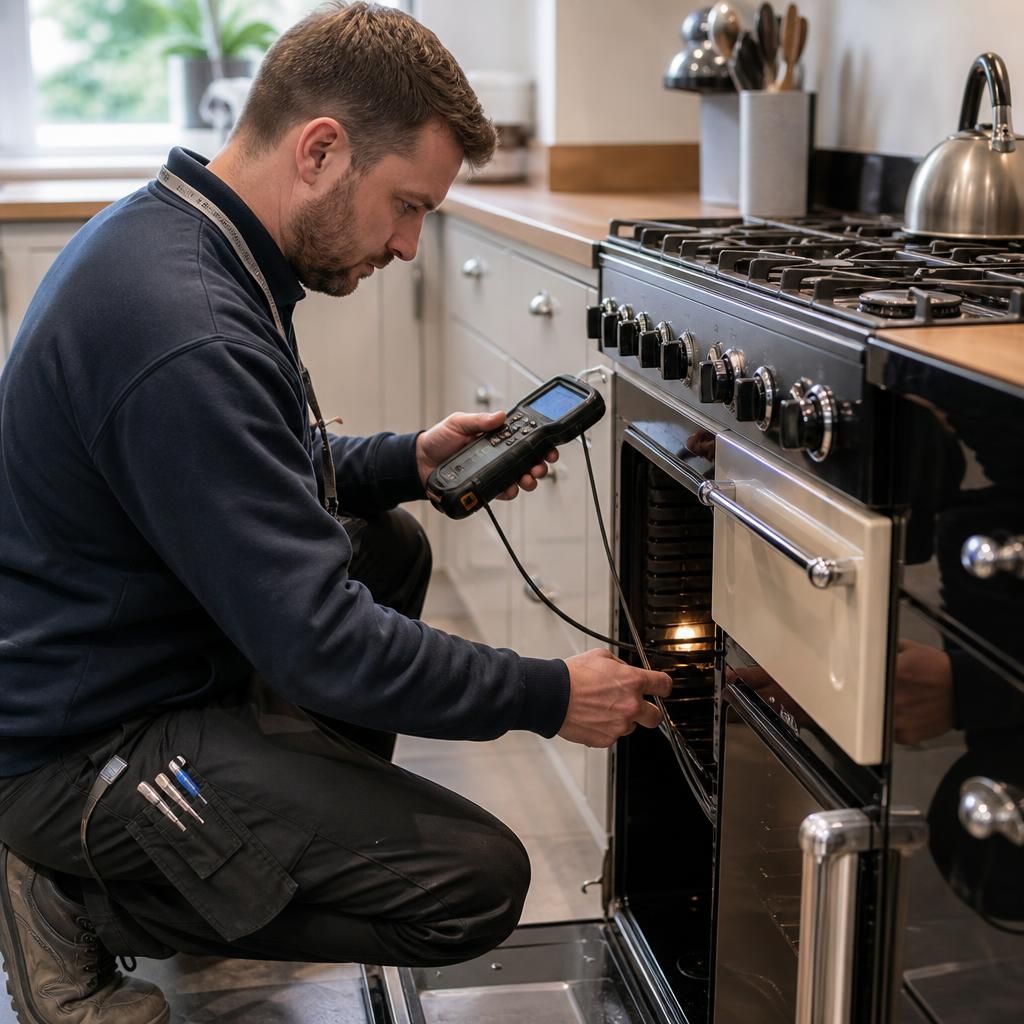
Can a gas safety inspection cover appliances other than the boiler?
Yes. A gas safety inspection can cover gas appliances such as cookers, fires, water heaters and boilers, along with their accessible flues and connections. We record each appliance checked and explain any safety issue or repair needed.
The important point is that a gas safety inspection is carried out appliance by appliance. The boiler is only one part of the gas installation. If the cooker, fire, water heater or another gas appliance is included in the agreed scope, we inspect it separately and record the result separately.
For each appliance, we look at the parts that affect safe operation, including:
- the appliance condition and visible signs of damage or deterioration;
- the gas connection, isolation valve and accessible pipework;
- the flue, where the appliance has one, including its route and termination where these can be inspected;
- ventilation openings required for safe combustion;
- evidence that combustion products are being removed safely;
- the appliance’s operation and safety controls; and
- any signs of gas leakage, unsafe installation or poor previous alteration.
A gas fire may need checks around its combustion chamber, burner and flue. A gas cooker or hob needs attention to its connection, burners and surrounding ventilation. A gas water heater may have additional flue and ventilation considerations. The exact checks depend on the appliance type and how it has been installed.
Access affects what we can inspect. If an appliance, isolation valve, flue or pipework is hidden behind fixed panels, stored items or furniture, we cannot safely assess that part without suitable access. We explain any limitation in the paperwork rather than treating an unseen component as checked.
For a landlord’s inspection, the scope normally includes the gas appliances and flues provided for the occupants’ use. That can include a boiler, gas fire, cooker, hob or water heater. A tenant-owned appliance is treated differently, although its connection and the installation around it may still need attention if they form part of the landlord’s gas system. We can clarify the scope before the inspection so the record reflects the right appliances.
The inspection is not the same as a full service. A safety inspection checks whether the gas installation and appliances are safe to use at the time of the visit. A service may involve more detailed cleaning, adjustment and manufacturer-specific maintenance. An appliance can therefore pass a safety check while still needing servicing or repair for reliability, performance or age-related wear.
It is also possible for one appliance to be safe while another is not. We do not let a satisfactory boiler result hide a problem with a gas fire or cooker. Each appliance is assessed on its own condition, and any concern is linked to the relevant appliance in the report.
If we find a fault, we explain what it means before recommending work. The issue may be recorded as a repair recommendation, or the appliance may need to be isolated where continued use would be unsafe. We never leave you to interpret a code or a vague note. You’ll be told which appliance is affected, what restriction applies and what needs to happen next.
Some findings relate to the wider installation rather than the appliance itself. An incorrectly sized flue, inadequate ventilation, damaged gas pipework or poor flue termination can make an otherwise functioning appliance unsafe. Those points belong in the inspection because safe operation depends on the complete installation, not just the visible appliance.
We use a Gas Safe registered engineer for gas safety work. That matters because the engineer is legally qualified to work on gas appliances and installations, and the inspection is carried out against the relevant safety requirements. For landlords, the completed gas safety record identifies the appliances checked, the results and any remedial action required.
If you want several appliances included, list them when arranging the inspection. Tell us about appliances that are unused, difficult to access or connected to a concealed flue. That gives us a clearer starting point and helps ensure the inspection covers the parts of the installation that matter to your home or rental property.
An appliance that is rarely used still matters if it forms part of the property’s gas installation. A gas fire left switched off, for example, can still have an issue with its flue, ventilation or connection. Tell us about every gas appliance supplied with the property, even if you normally rely on the boiler for heating.
This is particularly important before a tenancy starts or changes hands. We can match the inspection record to the appliances that occupants are entitled to use, rather than leaving an unused fire, cooker or water heater outside the agreed check.