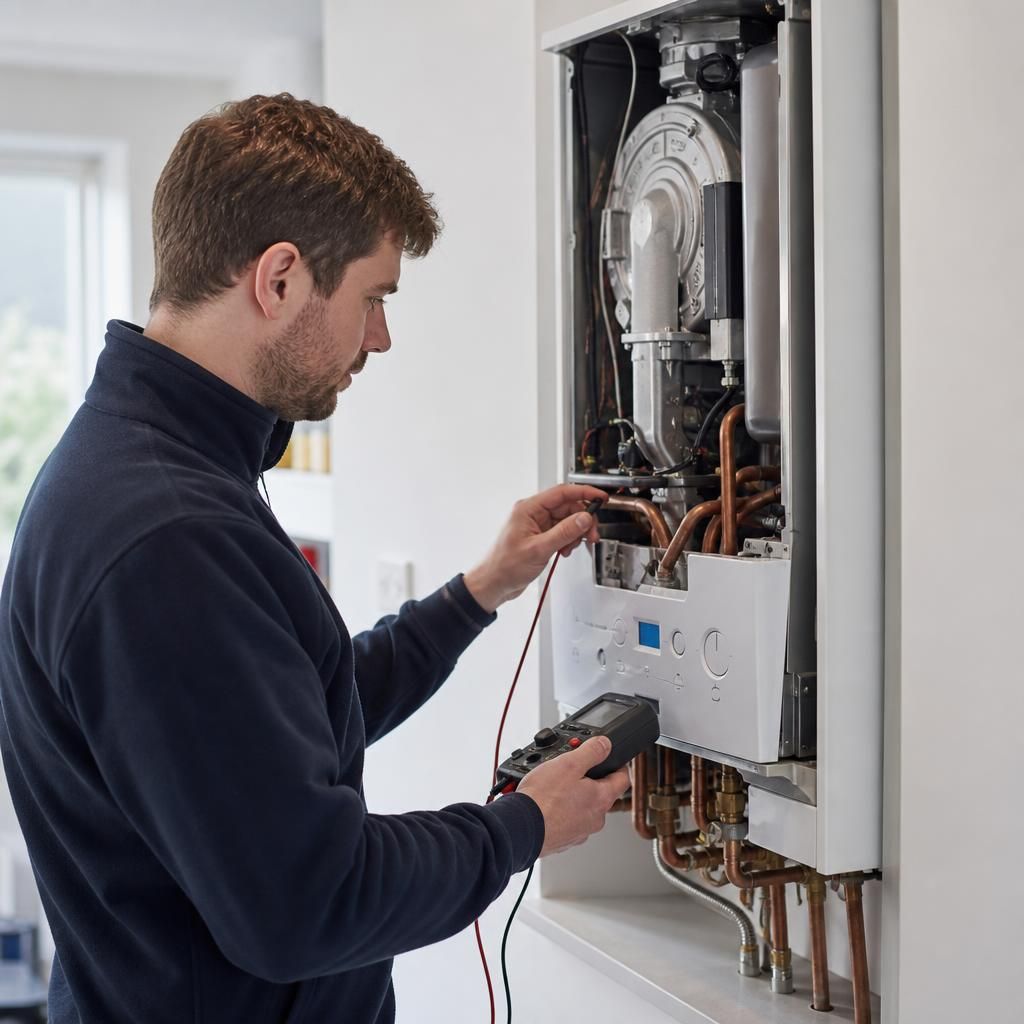
How often should heating systems receive professional maintenance?
Most domestic heating systems should receive professional maintenance once a year, including gas, oil, LPG and heat pump systems. Older equipment, heavily used systems or properties with recurring faults may need checks more often, so we can recommend an interval based on the system’s condition and service history.
The right maintenance interval depends on the appliance, its condition and how it is used. A professional visit should follow the manufacturer’s instructions, the system’s service history and any risks found in the property.
Gas boilers need more than a quick check of the pressure. We inspect the boiler, flue, combustion, safety controls, condensate route and visible pipework. We also look at how the boiler is working with the rest of the system. A boiler can appear to run normally while losing efficiency, developing unsafe combustion or allowing sludge to restrict circulation.
Gas work must be carried out by a Gas Safe registered engineer. If you rent out a property, the annual gas safety check and record are separate legal responsibilities from general heating maintenance. Servicing the boiler does not replace the required safety record, and a gas safety check does not necessarily amount to a full service.
Oil-fired systems need attention to the burner, nozzle, pump, combustion, flue and oil supply. We check for signs of poor combustion, restricted airflow, leaks and deposits that can cause the appliance to run inefficiently. Oil systems often serve properties away from the mains gas network, so the condition of the tank, filters and supply pipework matters as well. OFTEC registration means the engineer is working within the recognised requirements for oil-fired equipment.
Heat pumps benefit from maintenance that covers both the outdoor unit and the wet heating system inside the property. We inspect airflow around the unit, the coil and fan, electrical connections, circulation, filters, pressure and system controls. We also check that the heating and hot-water settings still suit the house. A blocked filter, restricted outdoor unit or poorly balanced circuit can make the system work harder without producing an obvious fault code.
Properties with radiators, underfloor heating or mixed heating circuits need the distribution system considered alongside the heat source. We can identify restricted circulation, air in the system, unsuitable pump settings, leaking valves and signs of corrosion. On an older house, this may reveal a system issue that an appliance-only service would miss.
Maintenance may need bringing forward when the boiler or heat pump shows changing behaviour. Arrange an assessment if you notice:
- new noises, vibration or repeated ignition attempts;
- radiators heating unevenly or taking longer to warm;
- pressure that keeps falling or rising;
- unusual smells, staining, soot or water around the appliance;
- higher energy use without a clear change in heating habits;
- fault codes, repeated resets or controls that no longer respond properly; or
- an outdoor heat pump unit becoming obstructed by leaves, vegetation or other debris.
A repair does not always count as maintenance. Replacing a failed component may restore heating, but it may not explain why the component failed or identify wear elsewhere in the system. During a maintenance visit, we use the service history and the condition of the equipment to separate a temporary fix from work that will reduce the chance of another breakdown.
Keep service records, invoices and any engineer’s recommendations together. They show what has been checked, which parts have been replaced and whether a recurring fault is developing. They can also help when you are assessing an older appliance for replacement, reviewing a property before letting it or deciding whether a larger upgrade is justified.
When we maintain a system, we explain any defect that needs attention, what can safely wait and what work would involve. You receive a written quotation before chargeable work starts, so routine maintenance does not turn into an unexpected repair bill.
A calendar date isn’t the only reason to review maintenance. If you change the heating controls, add radiators, alter the property or change how often the system runs, the previous interval may no longer suit it.
We can compare the changes with the service history and operating condition. That shows whether the existing annual visit remains appropriate or whether the system needs an earlier inspection after the work.