
Which heating faults need urgent attention?
A gas smell, carbon monoxide alarm, smoke or burning smell, electrical arcing, a major boiler leak, or water near electrics needs immediate attention. Turn off the appliance and relevant supply if it’s safe, leave the property if you smell gas or suspect carbon monoxide, and contact the appropriate emergency service or a qualified heating engineer.
Heating faults need urgent attention when they affect safety, risk serious water damage, or show that the appliance is operating outside normal conditions. A complete loss of heating is important, but it is not always an emergency. The urgency depends on the fault, the fuel type, the condition of the appliance and what else is affected in the property.
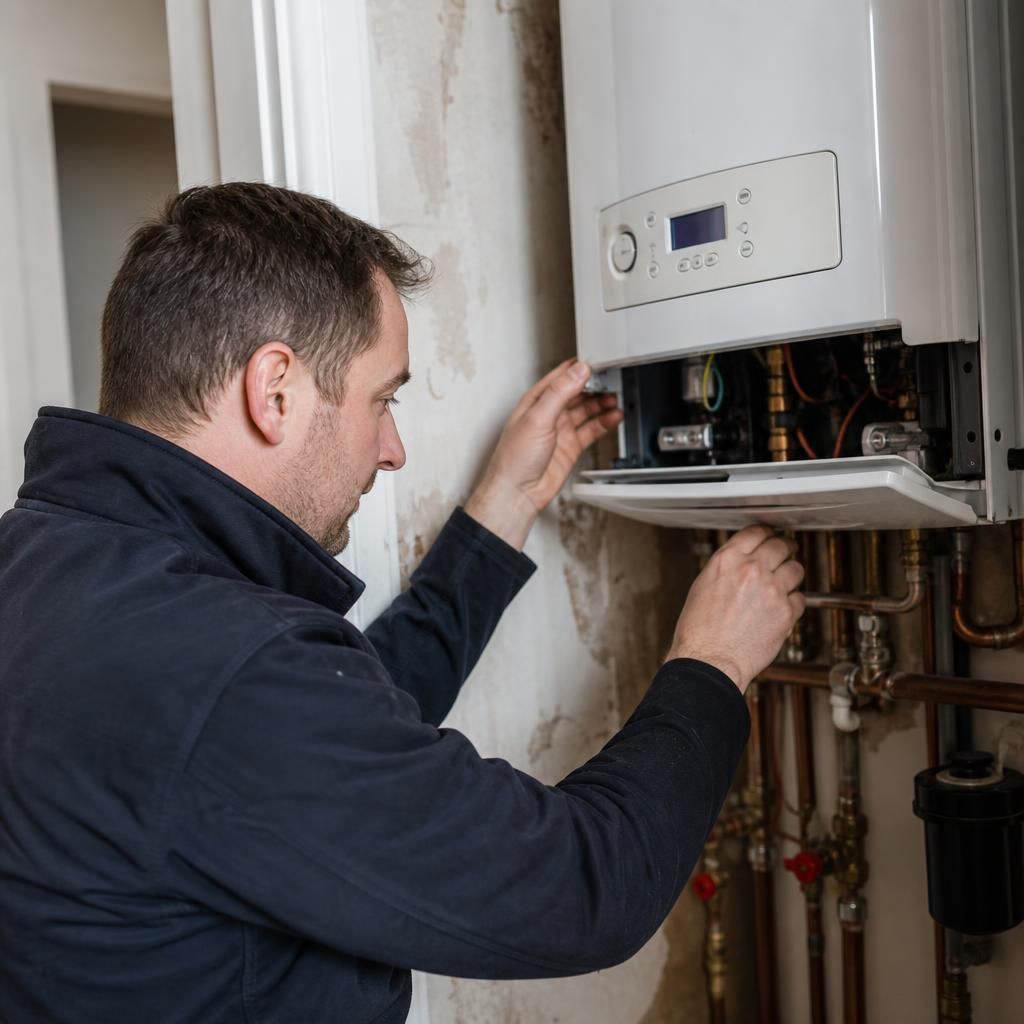
Once any immediate danger has been dealt with, avoid repeatedly resetting the boiler or removing its casing. Note what happened, which controls or displays showed an error, and whether the fault affects hot water, heating or both. That information helps us assess the problem without encouraging further unsafe operation.
A boiler that keeps shutting down needs investigation. One reset may clear a temporary lockout, but repeated lockouts can point to poor circulation, low system pressure, a faulty sensor, blocked condensate or a combustion fault. Continuing to reset it can hide a developing problem. Arrange an engineer’s inspection, particularly if the appliance is old or the fault returns after every restart.
Loss of pressure is not always urgent, but repeated pressure loss is. A sealed heating system may need occasional topping up, depending on its design. If the pressure falls again soon afterwards, water may be escaping from a radiator valve, pipe joint, pressure relief route or hidden section of pipework. We trace the cause rather than repeatedly repressurising the system, because the underlying leak can damage floors, ceilings or the boiler.
Water from the boiler or heating system deserves prompt attention. A small drip from a valve can worsen, while water near electrical equipment creates an additional hazard. If the leak is accessible and safe to isolate, turn off the relevant water supply or heating circuit and protect nearby surfaces. Do not open the appliance casing to find the source. We identify whether the fault is a simple connection, a component failure or evidence that replacement is more sensible.
Unusual banging, kettling, whistling or vibrating should not be ignored. These sounds can result from trapped air, restricted flow, scale, pump problems or a component working under strain. A single noise after bleeding a radiator may not indicate a major fault. Noise that is getting louder, occurs during every heating cycle or comes from the boiler itself needs a proper diagnosis.
A radiator that stays cold can be minor or can indicate a wider circulation fault. If only one radiator is affected, the cause may be a stuck valve, trapped air or balancing issue. Several cold radiators, slow heat-up times or rooms that no longer reach temperature suggest a pump, control, sludge or system-design problem. We test the system before recommending flushing, component replacement or changes to the controls.
Hot water that turns cold, fluctuates or takes much longer to arrive also needs checking. On a combi boiler, this may involve the diverter valve, heat exchanger, temperature sensor or incoming water flow. On a system with a cylinder, the fault may sit in the programmer, immersion heater, cylinder controls or circulation circuit. The correct repair depends on the type of system, so changing a control without testing the rest can waste money.
A condensate problem can stop a modern boiler operating. A frozen or blocked condensate pipe may cause a lockout, especially in exposed locations. Do not pour boiling water over the pipe or dismantle it. If the route is accessible, the manufacturer’s instructions may allow safe thawing with warm water, but an engineer should investigate if the fault returns or the pipework is damaged.
Oil-fired and LPG systems have their own warning signs. Repeated burner lockouts, a sudden change in burner noise, poor hot-water performance or an unusual smell around the appliance all need professional attention. An oil boiler may also be affected by fuel contamination, a blocked filter, a supply problem or a burner fault. We use the appliance type and fuel arrangement to decide what can be safely tested and repaired. Work on an oil-fired system should be carried out by an OFTEC-registered engineer.
Older homes need a wider check when faults keep returning. Solid-wall houses, barn conversions and properties with long pipe runs can have circulation, insulation or control issues that make an otherwise serviceable boiler appear unreliable. A repair may restore operation, but recurring faults can make a replacement, system alteration or radiator upgrade more practical. We explain the options and the likely disruption before work starts.
Some faults are urgent because of the people or property affected. A failed heating system needs faster attention in a home with vulnerable occupants, exposed pipework or a risk of freezing. A fault in a rented property also needs clear records, because the landlord or agent may need evidence of the diagnosis and repair. We can provide the paperwork associated with work we carry out, including details of the fault and the action taken.
Our engineers begin by establishing the system type, fault history and symptoms rather than replacing parts by guesswork. We inspect the appliance, controls, pumps, visible pipework and relevant safety components. Gas boiler work is carried out by Gas Safe-registered engineers, while oil-fired work is covered by OFTEC registration. You receive a written quotation before chargeable work starts, so the repair decision is based on the condition of the system rather than an unexpected bill.
If the repair is not sensible, we explain why and identify what a replacement would involve. That may include changes to flues, controls, radiators, pipework or electrical supplies. A clear diagnosis helps you decide between repairing the existing system and planning an upgrade, without treating every heating fault as a reason to replace the boiler.
A heating fault that repeatedly trips an RCD or fuse needs attention, even if the boiler still produces heat. The problem may be in the pump, controls, wiring or another connected component. Don’t keep resetting the protection or bypassing it. If the circuit can be isolated safely, leave it off and note which appliance or control was running. We test the electrical and heating sides together, so the repair addresses the cause rather than restoring power temporarily.