
What running costs can I expect from an air source heat pump?
An air source heat pump’s running cost depends on your electricity tariff, the heat your home needs and how efficiently the system is designed and operated. We assess heat loss, radiators and controls so we can estimate the likely electricity use for your property rather than rely on a generic figure.
Most of the running cost comes from the electricity used to heat the rooms and hot water. The amount on your bill will reflect how much heat the property needs, how the system is set up and the tariff you pay.
An air source heat pump moves heat from outside into the home rather than burning oil, LPG or gas. It still uses electricity, but its electrical input is used to run the compressor, fans and circulation pumps. The system’s seasonal efficiency determines how much heat it produces for each unit of electricity over the year.
The design temperature matters. A heat pump works most efficiently when it can run at a lower, steadier temperature. Large radiators, underfloor heating and good insulation make that easier. Smaller radiators, draughts or poorly insulated rooms may require hotter water, which increases electricity use.
That does not automatically rule out an older house. Solid-wall homes, barn conversions and properties with oil or LPG heating can work well with a heat pump, but we need to assess the building properly. We check room-by-room heat loss, radiator output, pipework, hot water requirements and the available electrical supply. If improvements or radiator changes would materially affect the forecast, we explain those costs before you decide.
Controls affect the bill as well as comfort. Weather compensation can adjust the flow temperature as outdoor conditions change. This helps the system avoid producing hotter water than the house needs. Leaving the heat pump to maintain a steady temperature is often more suitable than making large, frequent adjustments, although the right settings depend on the property and the occupants.
Hot water can use more electricity than expected if the cylinder is reheated frequently or if the immersion heater is used as the main source. The system may also carry out occasional higher-temperature cycles for stored hot water. We explain how the cylinder, controls and immersion heater work together, so you can see what is included in the running-cost estimate.
Your electricity tariff is part of the calculation. A change in unit price changes the cost of running the same heat pump. Standing charges remain separate from the heat pump’s consumption. We can show the estimate against the tariff information you provide, but no installer can guarantee a future bill when energy prices and household use change.
Solar panels and a battery may change how much electricity you buy from the grid, but they do not make heating free. Their effect depends on the system size, the home’s electricity demand, the heat pump’s operating pattern and how much energy can be used or stored when it is generated. We consider those interactions when they form part of the same project.
Maintenance is usually modest, but it still affects performance. The outdoor unit needs clear airflow and the coil must remain free from leaves, mud and other debris. We check the condensate route, electrical connections, controls and system pressures during servicing. A blocked coil, restricted airflow or poorly set control can make the compressor work harder and raise consumption.
We also commission the system rather than treating installation as the end of the job. We check the design settings, balance the emitters, confirm that the hot water programme operates correctly and show you how to use the controls. A clear handover helps prevent settings being changed in a way that increases electricity use.
Before installation, we set out the assumptions behind the forecast. This includes the property’s heat demand, proposed flow temperatures, hot water use, expected control settings and the electricity tariff used for the calculation. You can then compare the heat pump’s likely electricity cost with the fuel and maintenance costs of the existing system on the same basis.
The useful figure is therefore not a generic annual headline. It is a property-specific estimate with its assumptions visible. If the building would need major insulation work, higher-temperature radiators or a change to the electrical supply, we identify that before installation rather than hiding it inside an optimistic running-cost prediction.
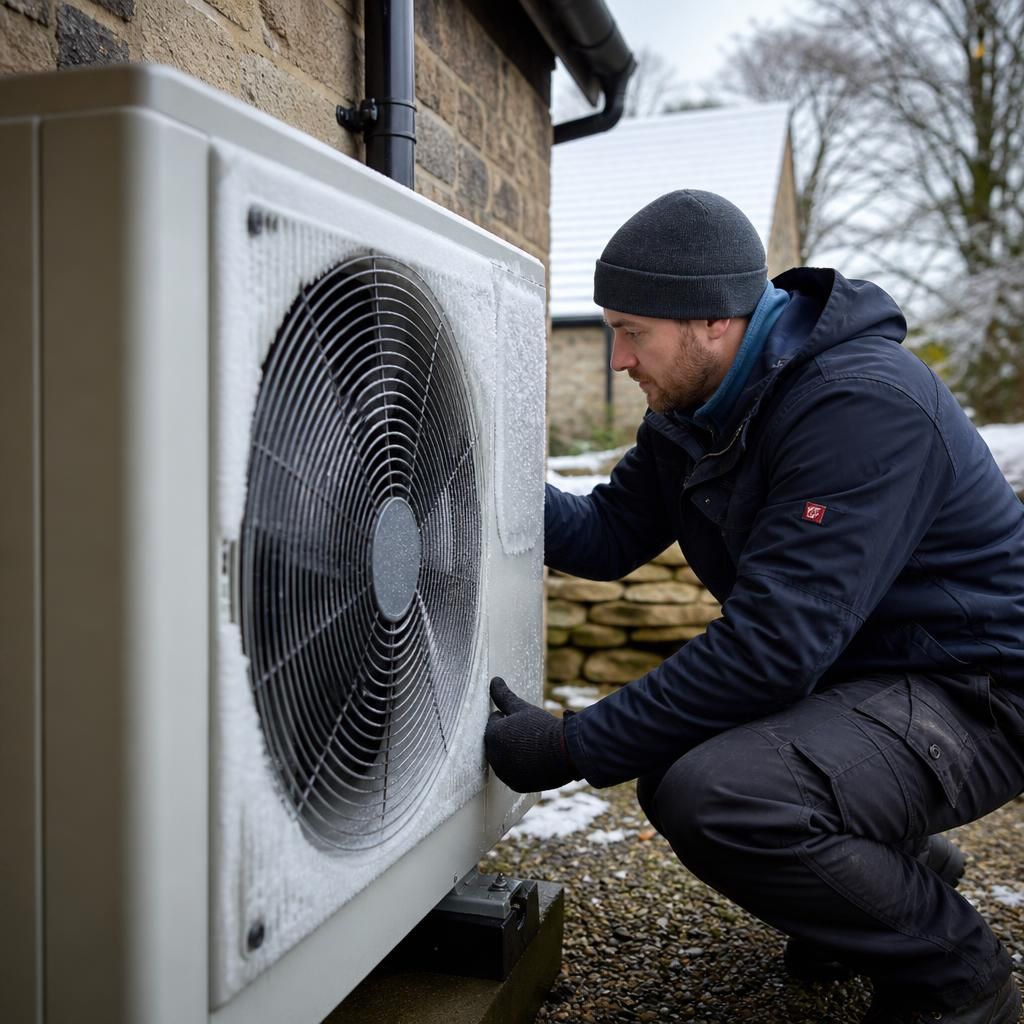
Cold, damp weather can make the outdoor unit collect frost. The heat pump then uses a short defrost cycle to clear the coil, which temporarily increases electricity use. That does not necessarily indicate a fault or poor performance.
We explain how defrosting appears during normal operation and include its effect when we assess seasonal electricity consumption. This gives you a more realistic expectation than judging the system from one cold day or a single electricity reading.