
Does a heat pump need a thermal store?
No. A heat pump does not automatically need a thermal store; many homes work well with a correctly sized hot water cylinder and heating system without one.
A thermal store can be useful where the system combines several heat sources, needs hydraulic separation or has particular heating and hot water demands. We assess the property and system design before recommending one.
A thermal store is optional in many heat pump installations, but it can be important when the system needs extra water volume, hydraulic separation or a way to combine different heat sources. It is not automatically required simply because the property has a heat pump.
The term thermal store is used for more than one type of cylinder. A buffer vessel stores water in the heating circuit. A thermal store cylinder can also provide domestic hot water through a heat exchanger, rather than storing hot water ready for use. That is different from a standard hot-water cylinder, which stores water for taps and showers.
Some heat pump systems connect directly to the radiators or underfloor heating circuits. This arrangement has fewer components and can reduce standing heat losses. It works well when the system has enough water volume, suitable pipework and emitters, and controls that allow the heat pump to run steadily.
A store becomes more useful when the heating circuit is small or divided into several independently controlled zones. Closing radiator valves or switching zones off can leave too little water moving through the heat pump. A correctly sized buffer can provide the required volume and help maintain the flow rate when parts of the system stop calling for heat.
It can also help where the property has different heating circuits. Underfloor heating, radiators and fan convectors may each need different flow temperatures or pump arrangements. A store can separate those circuits hydraulically, allowing each one to work with suitable controls.
Several heat sources may be another reason to consider one. A heat pump working alongside solar thermal, a boiler, a wood-burning appliance or another heat source may need a common place to transfer and manage heat. The store does not produce heat itself. It holds heat so the system can use it at a different time or through another circuit.
Storage can also help manage changing demand. For example, the heat pump may run during a period when the house needs less heat, while the stored water supplies a later demand. This needs careful control. If the store is heated to a higher temperature than the radiators require, the heat pump may work harder and lose some of its efficiency.
That is why adding a buffer is not automatically an improvement. A poorly sized or poorly connected vessel can cause unnecessary mixing, extra pump operation and heat loss from the cylinder and pipework. The design needs to balance the heat pump’s minimum output, the system volume, the emitter demand and the control settings.
Older homes need the same assessment. A solid-wall house, barn conversion or property with several extensions may have different radiator sizes, pipe routes and heating zones. Some rooms may already have enough emitter capacity, while others may need larger radiators or pipework changes. A thermal store cannot correct undersized radiators or poor insulation on its own.
A heat pump may also need a separate cylinder for domestic hot water, even when it does not need a buffer for space heating. The hot-water cylinder stores water for baths, showers and taps. Its size and recovery rate depend on household demand and the available space, rather than on whether a buffer vessel is needed for the radiators.
During a survey, we assess:
- the heat loss from each room and the capacity of the existing emitters;
- the total water volume and flow available through the heating circuit;
- the number of zones, valves and circulation pumps;
- the pipework layout and any separate underfloor heating circuits;
- the heat pump manufacturer’s minimum flow and volume requirements;
- the position, insulation and access requirements for any cylinder or store; and
- whether another heat source or a future change to the system needs to be allowed for.
The result may be a direct connection to the heating circuits, a small buffer vessel, or a larger thermal store serving several circuits. We explain why that arrangement suits the property instead of adding storage by default. If the existing radiators, valves or pipework limit the heat pump, we identify those issues before installation work begins.
For many homes, the simplest system is the better system. A store earns its space and cost when it solves a clear design problem, such as insufficient system volume, several heating circuits or multiple heat sources. The survey and system design determine whether that applies to your home.
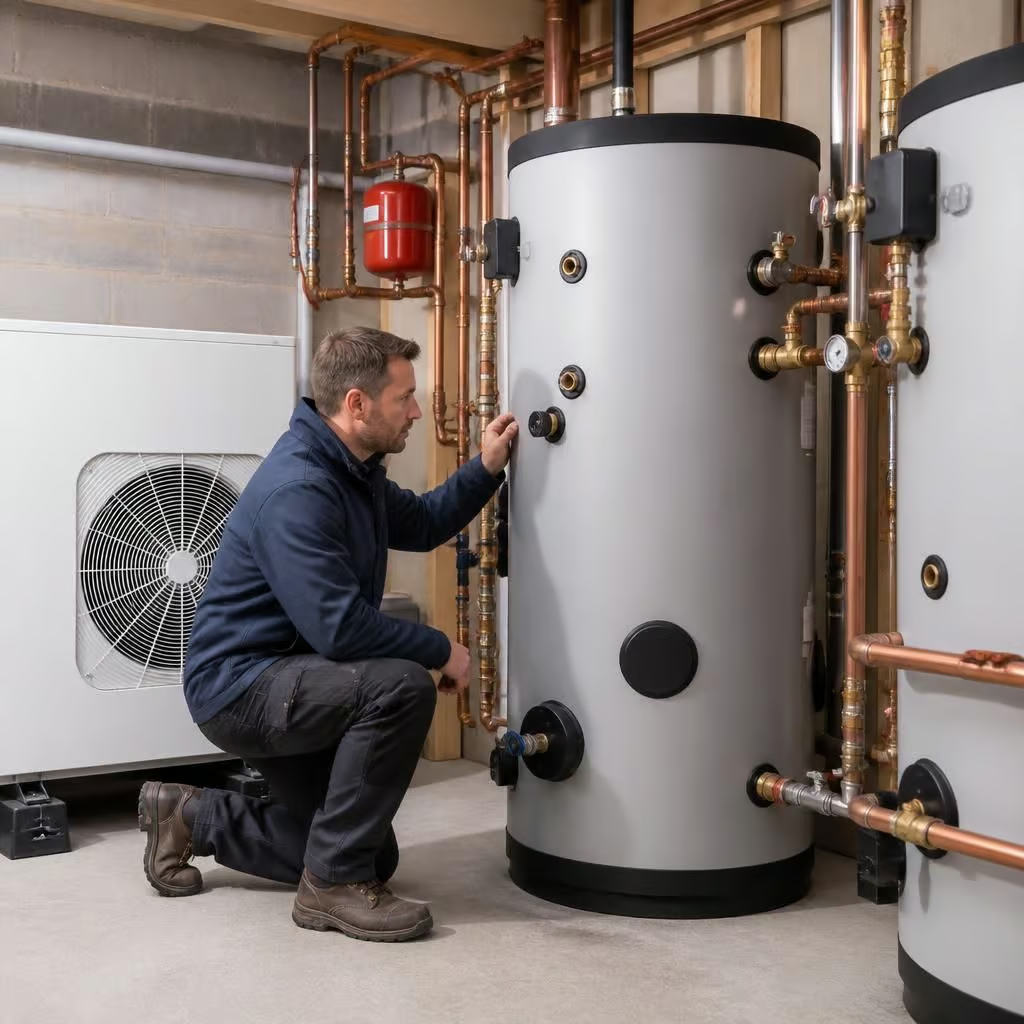
If a thermal store is included, the commissioning matters as much as the vessel itself. We set the sensors, pumps and flow temperatures so the heat pump responds to the home’s demand rather than repeatedly starting and stopping.
That gives you a system that behaves predictably: rooms reach the temperatures set on the controls, and the store does not become an unnecessary source of heat loss. We explain what each control does before leaving, so you know when the store is supplying heat and when the heat pump is running.