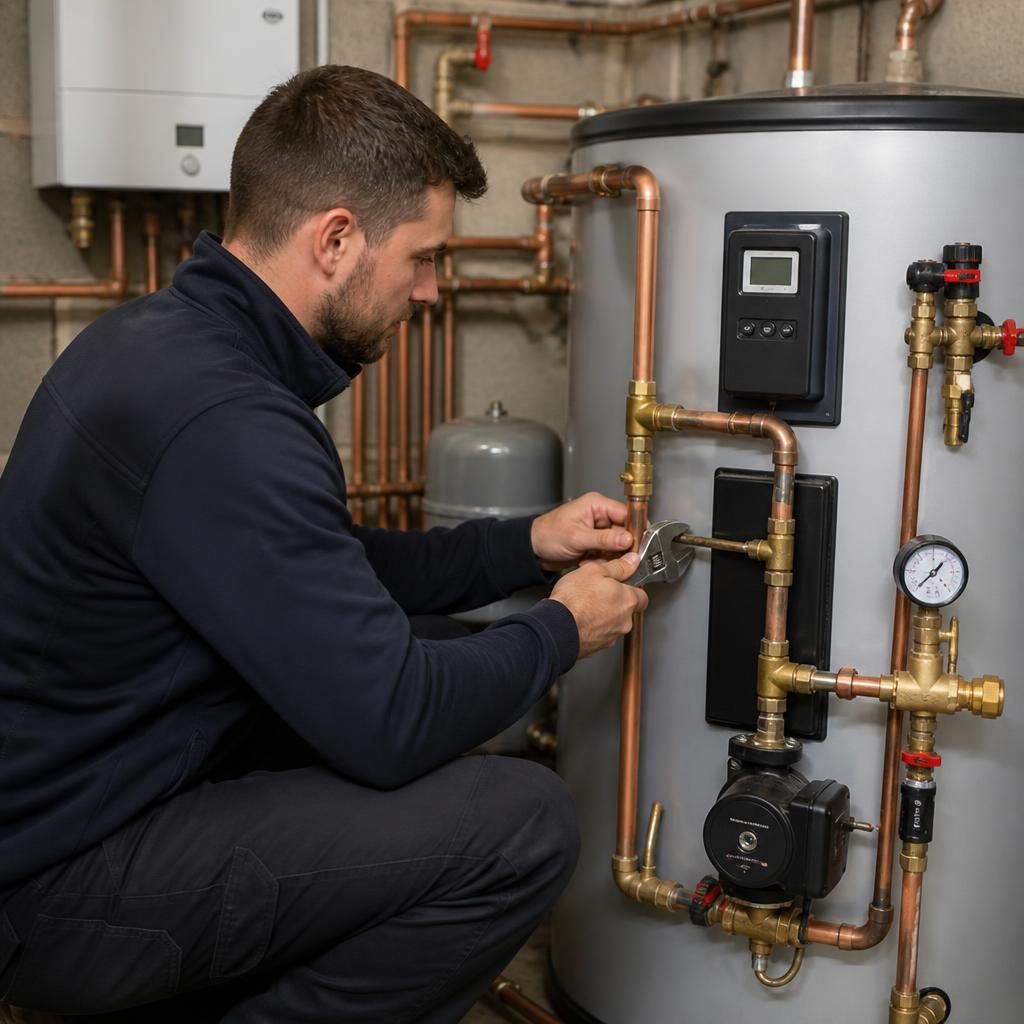
What maintenance does a heat pump thermal store require?
A heat pump thermal store needs regular checks of its connections, valves, insulation, sensors and controls, with the wider heat pump system serviced at suitable intervals. We check the store as part of that service, clean or adjust components where needed, and investigate any drop in performance, unusual noise or visible leakage.
In normal use, a heat pump thermal store needs little day-to-day maintenance. Most of the important work is carried out during a planned service, when we assess the store as part of the whole heating system rather than treating it as an isolated cylinder.
The correct service interval depends on the store design, the heat pump and the manufacturer’s instructions. Many households arrange this check annually, alongside the heat pump service. Your commissioning documents should show the recommended interval and any specific maintenance requirements.
What we check during a service
- Your store may contain several pumps, sensors, valves and heat exchangers. We check that these components respond correctly and that the controls are using the stored heat in the intended order.
- If the heating circuit has a filter, we inspect and clean it where necessary. Debris or magnetite can restrict circulation and make the heat pump work harder.
- We test the heating water and add or renew inhibitor where the system requires it. This helps limit internal corrosion and sludge in the pipework, radiators and store connections.
- Where the system uses antifreeze, we check its condition and concentration. This is particularly important for installations with exposed external pipework or a separate outdoor circuit.
- If the store includes a domestic hot-water cylinder, we follow the maintenance requirements for that cylinder as well. Anodes, valves and other components are only inspected where that type of cylinder includes them.
- We compare the control readings with the actual system behaviour. This can identify a sensor that is drifting before it causes poor heating or unnecessary heat-pump operation.
A thermal store itself is not normally drained and cleaned as routine maintenance. Draining it removes usable system water and may introduce air or contamination. We only recommend that work when the system design, water condition or a repair makes it necessary.
What you can do between services
Keep the cupboard or plant room accessible and avoid storing items against the store, pumps or pipework. Space makes it easier to spot a problem and gives an engineer safe access without moving household belongings.
Pay attention to changes in performance. If the house takes longer to warm, hot water recovery becomes noticeably slower or the heat pump runs for much longer than usual, note when the change began. The pattern can help us distinguish a control issue from a circulation or heat-transfer problem.
Do not alter advanced heat-pump or store settings without understanding their effect. A higher store temperature does not automatically improve comfort. It can increase electrical use and may interfere with weather compensation or the heating schedule. We can review the settings against the way the household uses the property.
Does maintenance cause disruption?
A routine service is usually planned around the plant room and controls. We may need access to the store, the heat pump, filters, pumps and the main heating circuits. The heating or hot water may need to be paused while we test components, but the work does not normally involve removing the store or opening walls.
Older homes can have long pipe runs, mixed radiator sizes or several heating zones. In those systems, a maintenance visit may reveal a balancing or control issue rather than a fault with the store itself. We explain what needs attention and separate essential repairs from improvements that can wait.
When to arrange a check sooner
Contact an engineer if the system repeatedly shows a fault, a valve or pump is not operating, hot water becomes unreliable, or water appears around the plant. Do not remove covers or repeatedly reset the heat pump to conceal the symptom. A fault left unresolved can affect the compressor, circulation equipment or stored-water temperature.
We record the service findings and identify any parts that need replacing. If the store is sound but the controls or surrounding heating system are limiting performance, we explain that distinction clearly. This means you can decide whether to repair the immediate problem or plan a wider upgrade.
The maintenance your thermal store needs depends on what it stores. A buffer store holding heating water does not require the same checks as a cylinder containing domestic hot water. We identify the arrangement first, then follow the relevant manufacturer’s instructions.
If the store also provides hot water, we inspect the cylinder controls and safety components as part of the service. That keeps the maintenance plan appropriate to the equipment, rather than treating every thermal store as the same.