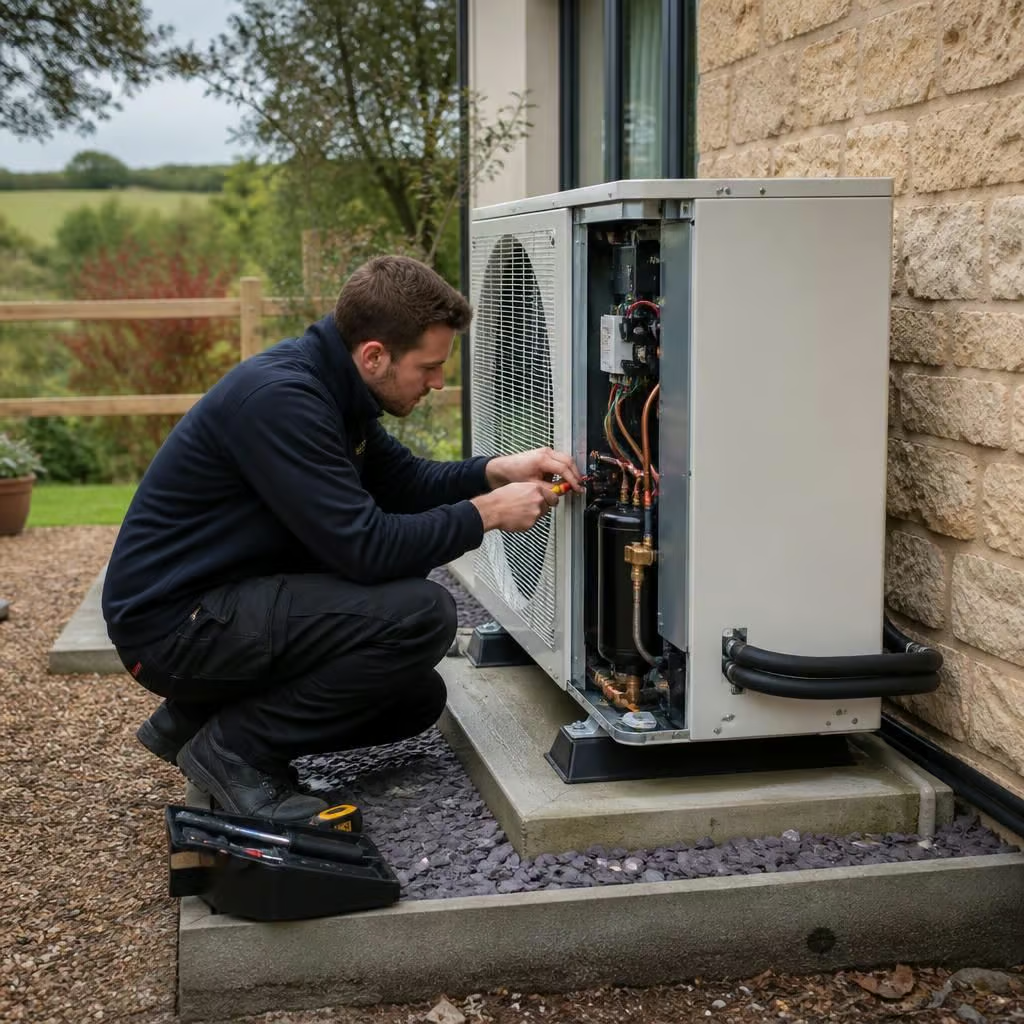
How long does a heat pump heating system last?
A well-designed and properly maintained heat pump heating system can last for many years, with the outdoor unit usually needing replacement before the radiators, underfloor heating and pipework. Its lifespan depends on correct sizing, installation quality, workload, maintenance and exposure to weather.
A heat pump heating system can remain in service for many years, but its lifespan depends on more than the outdoor unit. The design, installation, controls, electrical supply, water quality and maintenance all affect how long the system works reliably. When a component eventually wears out, the whole heating system does not usually need replacing at once.
What tends to wear out first?
An air source heat pump has several separate parts, each with a different service life. The outdoor unit contains the compressor, fan, heat exchanger and refrigeration components. It works throughout the heating season and is exposed to rain, frost, dust and falling leaves, so its condition depends partly on its location and the quality of airflow around it.
Indoor components can include a hot water cylinder, buffer vessel, pumps, valves, expansion vessels, filters and electrical controls. Radiators, underfloor heating circuits and pipework may last much longer than the heat pump itself when they are correctly installed and protected from corrosion. Controls can often be repaired or replaced without disturbing the main heating equipment.
This means that a heat pump system’s lifespan is not a single figure. The outdoor unit may eventually need major repair while the radiators, pipework and hot water cylinder remain suitable for continued use.
Why installation quality matters
Your system works harder than necessary if the heat pump is incorrectly sized, the radiators cannot emit enough heat or the controls cause frequent starts and stops. That extra cycling can increase wear on the compressor and reduce efficiency.
We size the system against the heat loss from the property rather than choosing equipment from the boiler’s rating. We also check radiator outputs, pipe sizes, cylinder capacity, electrical requirements and the proposed outdoor unit position. These details help the heat pump run for longer periods at a steady output instead of repeatedly switching on and off.
An older home may need radiator or pipework changes before the heat pump is installed. Solid-wall houses, barn conversions and properties with extensions can lose heat in different ways from room to room. We identify those differences during the survey, so the system is not expected to cover an unrecognised heat loss.
The outdoor unit needs clear airflow and a suitable route for condensate water. Leaves, stored items or a restrictive enclosure can make the fan work harder. Poor drainage can also allow ice to build up around the base during cold weather. A sensible position and regular checks reduce those risks.
Maintenance that helps the system last
Regular maintenance does not make a heat pump immune to wear, but it can identify problems before they damage other components. We check the outdoor coil, fan, mounting, condensate route, electrical connections, water pressure, filters, pumps and controls. We also look for signs that the system is short-cycling, struggling to reach its target temperature or using auxiliary heating more often than expected.
Keep the area around the outdoor unit clear of vegetation and stored items. Do not wash the coil with a pressure washer, as the fins and electrical parts can be damaged. If the system shows a fault, unusual noise or a change in performance, switch to the manufacturer’s recommended procedure and arrange an inspection rather than repeatedly resetting it.
Water quality matters in systems connected to radiators. Sludge, magnetite and corrosion can restrict circulation and place additional load on pumps and valves. We check the heating circuit and can recommend filtration, cleaning or water treatment where the condition of the system calls for it.
Follow the maintenance instructions for the specific equipment, including the manufacturer’s recommended service arrangements. Keeping service records also helps when diagnosing a fault and shows how the system has been operated over time.
Signs that a component may be nearing replacement
A gradual change in performance is more useful than a single breakdown as an early warning. Contact an engineer if the system takes much longer to heat the home, struggles to produce hot water, develops persistent unusual sounds or shows repeated fault codes.
- Repeated trips on the electrical supply can indicate a fault that needs proper testing.
- Ice that does not clear through the normal defrost cycle may point to an airflow, sensor, refrigerant or drainage problem.
- Water leaks can come from valves, pumps, joints or the cylinder and should not be ignored.
- Rising electricity use may result from a control problem, poor circulation, a blocked filter or inadequate heat delivery, rather than an ageing compressor alone.
- Unstable room temperatures can indicate incorrect settings, failing controls or a change in the home’s heat loss.
These symptoms do not automatically mean that the heat pump needs replacing. We test the system and identify whether cleaning, a control adjustment, a replacement pump or a more substantial repair is appropriate.
When replacement becomes the sensible option
Replacement is more likely to make sense when a major refrigeration or compressor fault occurs, suitable parts are no longer available, or several expensive components are failing together. The age of the equipment is only one part of that decision. A newer unit may not solve the problem if the original radiator sizing, pipework or controls were unsuitable.
We review the existing installation before recommending a replacement. That includes the heat loss, emitter temperatures, cylinder, electrical capacity, outdoor unit position and control strategy. Reusing suitable radiators and pipework can reduce disruption, while necessary upgrades can be planned before the old system is removed.
On an older or off-gas-grid property, we also compare the practical condition of the existing oil or LPG system with the requirements of a replacement heat pump. A heat pump is not automatically suitable for every building, and we will explain any insulation, radiator, electrical or planning work that affects the decision.
For a new installation, our MCS-certified renewable energy installers can assess the design and handle the technical paperwork needed for an eligible Boiler Upgrade Scheme application. MCS certification also supports eligibility for the Smart Export Guarantee where the installation includes generation that exports electricity.
The best way to estimate how long a particular system has left is to inspect its condition, operating history and design rather than relying on a standard lifespan. A properly assessed system can often have individual parts repaired or renewed while the rest of the heating installation continues working.
A heat pump does not have a fixed expiry date. If it is heating the property consistently and its running behaviour has not changed, age alone is not a reason to replace it.
When a repair is needed, we separate the failed part from the rest of the installation. That helps you avoid replacing working equipment unnecessarily and gives you a clearer comparison between repair and renewal. If replacement is the better choice, we can plan the work around the components that remain suitable, rather than starting again with the whole heating system.