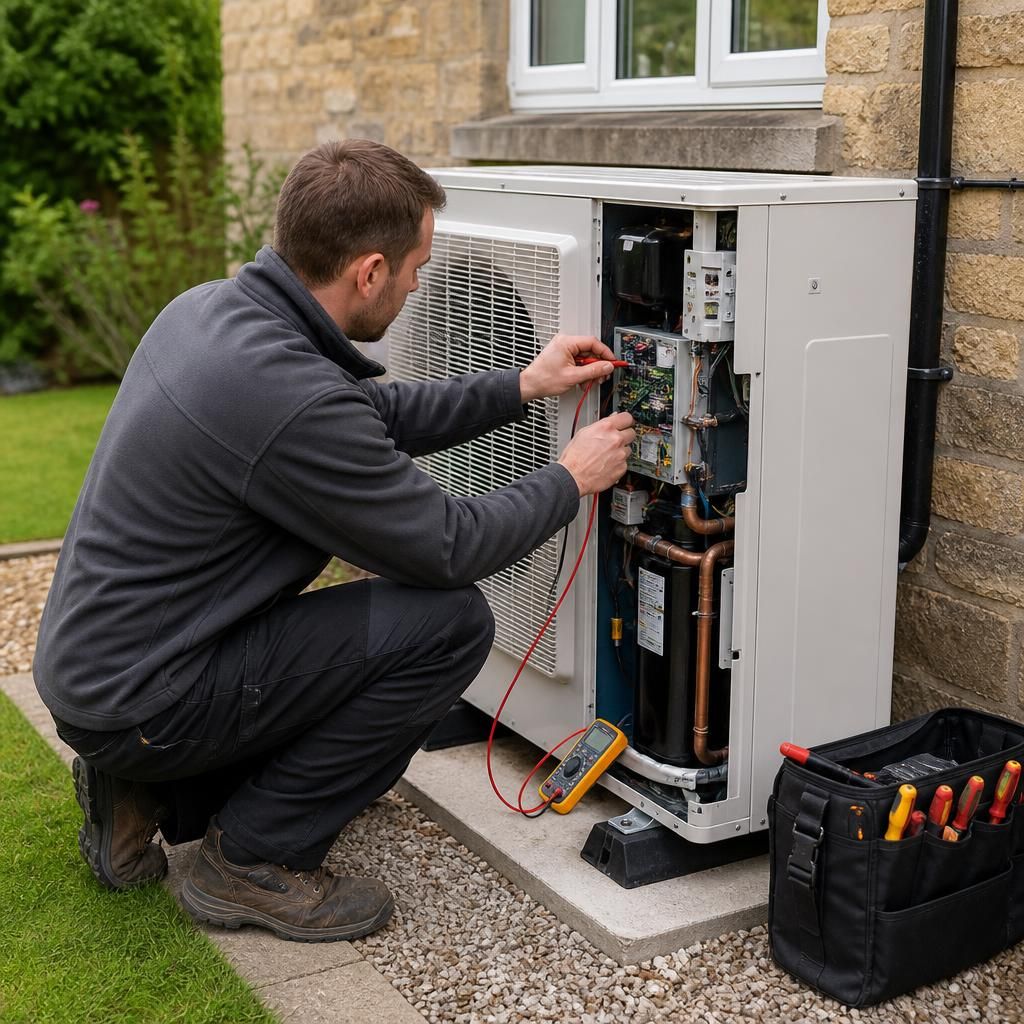
Can you repair a heat pump installed by another company?
Yes, we can often diagnose and repair an air source heat pump installed by another company. We assess the system as a whole, identify the fault and explain the repair before any work begins.
The deciding factors are the fault, the condition of the installation and access to suitable parts and technical information. We start with the system in front of us rather than assuming that work must return to the original installer.
We begin with the fault history. Error codes, unusual noises, pressure changes, poor heating, icing or a loss of hot water can point to very different causes. A heat pump that has stopped heating may have a control fault, sensor problem, circulation issue or electrical supply fault. It may also be working correctly but struggling because of an installation or system design problem.
That distinction matters. Replacing a component will not resolve undersized radiators, restricted pipework, incorrect flow settings or air trapped in the system. We test the equipment and the wider heating circuit before recommending work. This helps separate a failed part from a problem that would make another part fail.
Our assessment can include:
- the outdoor unit, fan, casing and visible pipework;
- the indoor hydraulic components, pumps, valves, filters and expansion vessel;
- flow and return temperatures, system pressure and circulation;
- controls, sensors, wiring and the electrical supply;
- the cylinder, immersion heater and hot-water controls where they form part of the system;
- defrost behaviour, condensate drainage and signs of icing; and
- radiators, underfloor heating and other emitters connected to the heat pump.
The result may be a straightforward repair, a control adjustment, a clean or reset, or a recommendation to correct part of the original installation. If the equipment itself has failed, we identify the component involved and check whether the correct replacement is available.
Parts and technical information can affect what we can do. Some systems use standard heating components, while others depend on manufacturer-specific boards, sensors, software or communication modules. If the original model is discontinued, we may need to establish whether an approved replacement exists. We will explain that before ordering anything, rather than fitting an unsuitable substitute.
A repair by another company can also involve warranty considerations. The heat pump, controls or installation may still have manufacturer or installer cover. It is worth checking the warranty terms before authorising work, especially if opening the equipment or changing a component could affect that cover. We can use the model details and available paperwork to help establish what needs checking, but the warranty provider may still need to approve the repair.
Previous installation problems need a different approach. A failed heat pump may be linked to poor drainage, inadequate electrical protection, dirty system water, incorrect pipe sizing or settings that do not suit the building. Older homes can also have radiators that are too small for low-temperature heating. We explain which issue is causing the current fault and which issue is separate, so you can decide what needs doing now.
Some systems cannot be repaired responsibly without information that is no longer available, or without parts that cannot be sourced. In that situation, we will tell you what has been established and why further work is not appropriate. A replacement or return to the original manufacturer may be more sensible than repeated attempts to keep unsupported equipment running.
Once the diagnosis is clear, we set out the recommended repair and any related work in writing before starting. The quotation separates essential fault correction from optional improvements, so the decision does not depend on accepting unrelated upgrades. If the system is repairable, the aim is to leave you with a clear explanation of the fault, the work completed and any follow-up checks the system needs.
An inherited system may have been altered since it was installed. Controls, sensors or wiring may no longer match the original drawings. We trace the connections and record the existing settings before changing anything, so the repair does not create a second fault.
If several parts appear to be involved, we separate the heat pump from connected controls and heating components. That shows whether the appliance needs repair, another part needs attention, or the original manufacturer must be involved because specialist information is required.