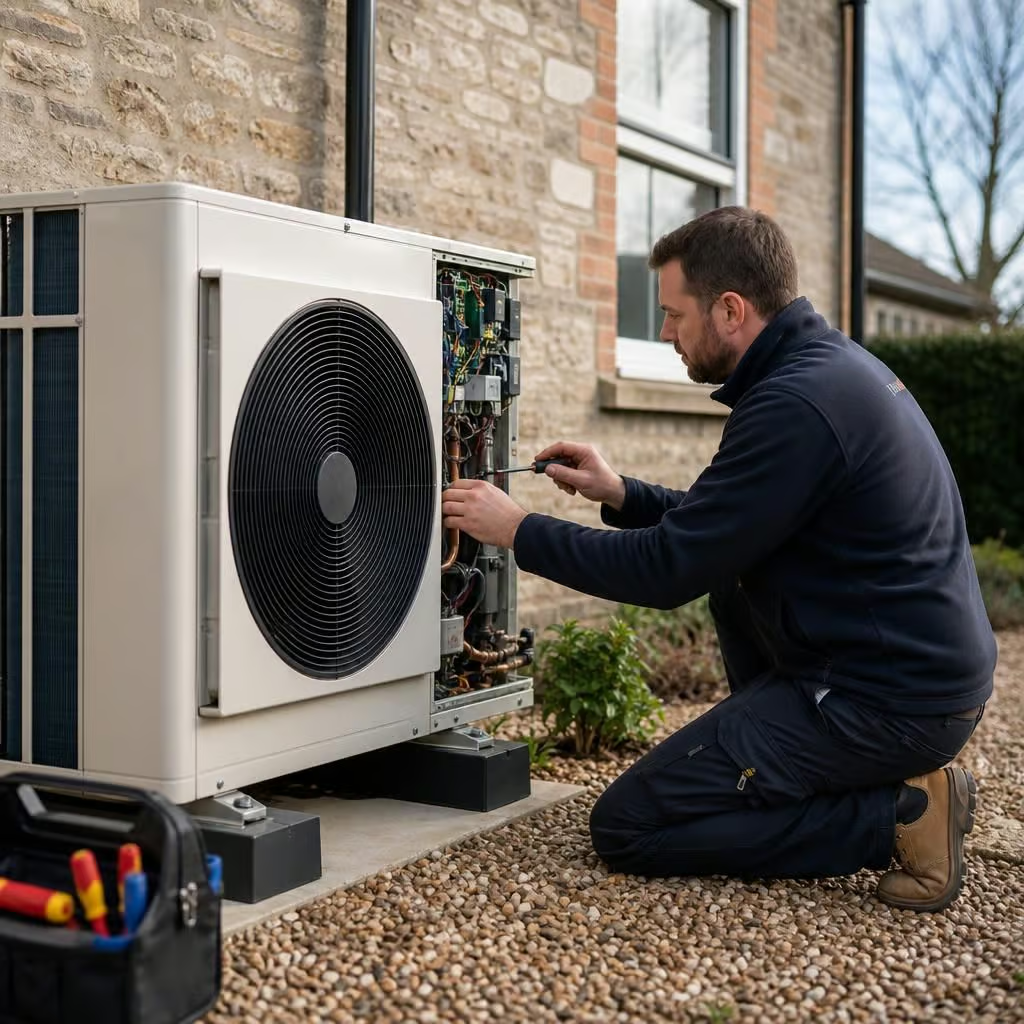
Can you repair an air source heat pump in an older home?
Yes, an air source heat pump can often be repaired in an older home. We’ll assess the heat pump, controls, radiators and pipework to identify the fault and confirm the repair is suitable for the existing system.
An older home does not automatically rule out repair. The important question is whether the fault sits in a replaceable component, or whether the system’s performance is being limited by its design, emitters or pipework.
Older properties can place different demands on a heat pump. Solid walls, exposed rooms, high ceilings and extensions may increase heat loss. Existing radiators may have been sized for a boiler running at a higher temperature. Narrow pipework, restricted filters or poorly balanced circuits can also reduce water flow. These issues can look like a failed heat pump when the equipment itself is working correctly.
We separate a component fault from a system performance problem before recommending work. That prevents you paying for a replacement heat pump when the real cause is a sensor, circulation issue or control setting.
Common faults we investigate include:
- Fault codes caused by temperature sensors, flow restrictions or communication problems
- A circulation pump that has stopped, is noisy or cannot maintain the required flow
- Air or debris in the heating circuit, blocked strainers and dirty filters
- Valves that are stuck, incorrectly positioned or no longer responding to the controls
- Frozen or poorly routed condensate drainage
- Electrical faults affecting the outdoor unit, immersion heater, controls or protective devices
- Defrosting problems, unusual noise or repeated shutdowns in cold weather
- Heating that runs but leaves rooms, hot water or parts of the property below the expected temperature
Your heat pump may be showing a fault code, but that code does not always identify the failed part. We check the readings around the fault, including flow and return temperatures, pressure, circulation and control signals. We also look at what the system does before it stops. That gives us a better basis for deciding whether a repair is sensible.
If the equipment is sound but the house is not heating properly, we assess the wider installation. We look at radiator output, underfloor heating circuits, thermostats, zoning, pipework and the weather-compensation settings. A small control adjustment may be enough. In other cases, the system may need a larger radiator, improved circulation or changes to the hydraulic balance.
That distinction matters in an older home. Replacing a part will not solve rooms that have always been undersized for the heat loss. Equally, increasing insulation or changing a radiator does not help if a sensor or pump has failed. We explain which problem we have found and which work is optional, necessary or unlikely to improve performance.
Some repairs are relatively contained. We may isolate the heat pump, replace a control, sensor, valve or pump, then refill and test the heating circuit. We check the fault has cleared and that the system responds correctly through its normal operating cycle. If the repair involves the outdoor unit, we allow for access around the equipment and protect nearby surfaces while working.
A repair can be more involved when the fault is within the sealed refrigeration circuit, when a major electronic component has failed or when a suitable replacement part is no longer available. We will explain that before work starts. If the cost or likely reliability of repair does not make sense, we can set out the case for an upgrade instead of presenting it as a straightforward repair.
Missing records do not necessarily prevent an investigation. If another company installed the system, we work from the equipment information, wiring, pipework and observed operation. Any manuals, fault history, service notes or photographs you can provide help us reach the cause more efficiently, but we do not rely on a particular installer’s paperwork.
Older and off-gas-grid homes are familiar territory for our heating engineers. Oil or LPG equipment may have been replaced or retained alongside a heat pump, so we consider how the systems interact rather than treating the heat pump in isolation. A backup heater, hot-water cylinder and controls all affect what happens when the heat pump stops or cannot meet demand.
We give you a written quotation before chargeable work begins. It sets out the proposed repair and any wider recommendations, so you can decide whether to repair the existing system, improve part of the installation or plan a replacement. The aim is to leave you with a system that suits the house, not simply one with a cleared fault code.
Older homes are often altered in stages, so a heat pump may now be working with radiators, controls or room layouts that differ from the original design. An extension, replaced radiator or moved thermostat can change how the system behaves without the heat pump itself being faulty.
We trace those changes before recommending work. That helps us identify a repair that restores the existing system, rather than disturbing sound parts or suggesting improvements that will not address the fault.